Anti-poaching mission in Chitwan National Park
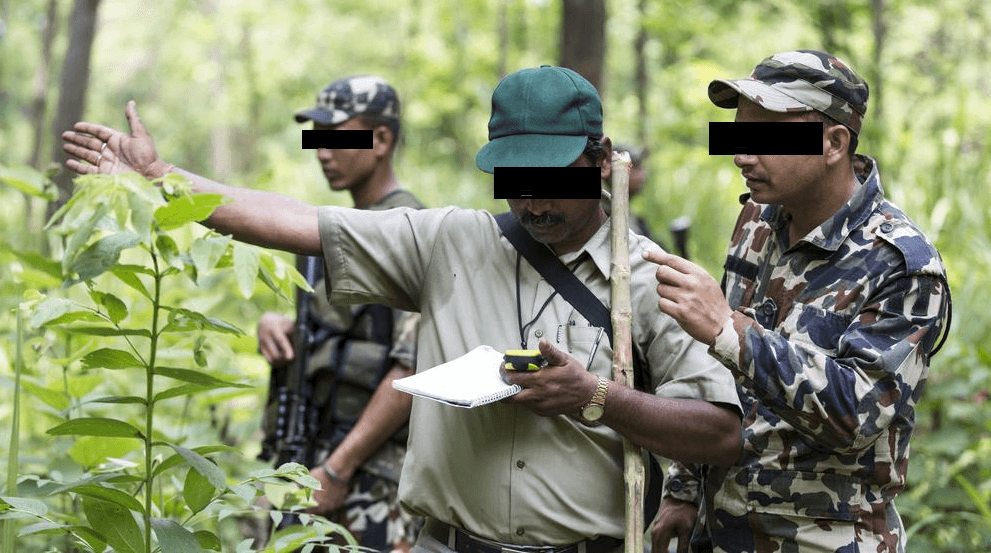
Dressed in a simple black T-shirt, khaki combat trousers and a pair of Rangers boots, Upendra, 54, greets us with a smile. He is one of 300 rangers at Chitwan National Park.
Dressed in a simple black T-shirt, khaki combat trousers and a pair of Rangers boots, Upendra, 54, greets us with a smile. He is one of 300 rangers at Chitwan National Park and has agreed to meet with us to talk about his work in the reserve: This is our portrait of the week. We walk through one of the botanical gardens at Kasara Jungle Resort, one of the most luxurious hotels in the Chitwan National Park. Behind a colourful shrub bed, we meet "Upendra" from the Tharu caste. (To protect his identity, we are calling him Upendra). Chitwan National Park in Nepal is one of the country's main tourist attractions. Located in the south of the country, thousands of tourists flock there every year to observe in their natural habitat the famous Bengal tiger, Indian rhinoceros, wild elephant herds and the very rare Gharial, a species of 6-metre-long crocodile that is harmless to humans. Between marshland, wetlands and sal forests, the rangers of the national park must patrol an area of 932 km² for conservation and protection missions. Upendra was born in the small village of Thori. Bordering India, his village is nestled between the protected reserve of Chitwan and the Indian Valmiki reserve. He has known nature since early childhood. As he tells us with a thoughtful gaze, he still remembers clearly the hunting trips he used to go on with his father and uncles. In search of tigers for their pelts, 45 years ago, he rarely came back empty-handed. If it wasn't a tiger, it was crocodiles for their skins, or wild boar for meat. He still remembers the vast plains untouched by human activity, teeming with life, where coming face to face with an Indian leopard was not uncommon. At the age of 10, searching for wood with his father, Upendra comes face to face with a tiger just a few months old. Without its mother, the young predator is hiding in the hollow of a tree trunk. Not particularly comfortable with hunting, Upendra stares at the animal, himself stared at by the yellow, terrified eyes of the tiger. And so for 5 minutes.
"the tiger's head had
completely exploded"
"Suddenly, my father came and knocked me aside. Rifle in hand, without even having time to stop him, he fired. The tiger's head had completely exploded. It shocked me and from that moment on I stopped following my father into the forest. Sometimes I think about that tiger. I feel sad for him, but in another way, it's because of my father's violent act that I decided at 19 to become a Ranger. At the time I was torn between the military, but guns were never my thing." Even though Upendra didn't join the military, half of his missions are with soldiers. "I am a coordinator. I train rangers but also soldiers in the field. We are not allowed to carry weapons and that poses a problem for us in half of our operations. Fortunately we work with soldiers who protect us and help us track down poachers and animals." The biggest problem in the nature reserve is poaching. The wildlife reserve is home to rare animals that are currently being hunted down for their pelts (tiger), their horns (rhinoceros)... "Our missions are very numerous. We monitor and maintain the park's boundaries, we patrol with soldiers from our army, we keep an inventory of the species we observe, and we also meet with local populations. I think the last mission is the most interesting and useful. I grew up in a village where hunting tigers was normal. As a result, there are hardly any left today. By talking to villagers and educating children, no one hunts tigers anymore."
"Paramilitary poachers equipped with automatic rifles"
Indeed, most of the poachers recently captured by the anti-poaching unit teams and their dogs were Chinese and Vietnamese. Ultra-organized, international networks, often better equipped than the military, are wreaking havoc across the world. In Tanzania, for example, rangers in national parks armed with hunting rifles inherited from the colonial era must face groups of paramilitary poachers equipped with sniper rifles and automatic weapons aboard helicopters. 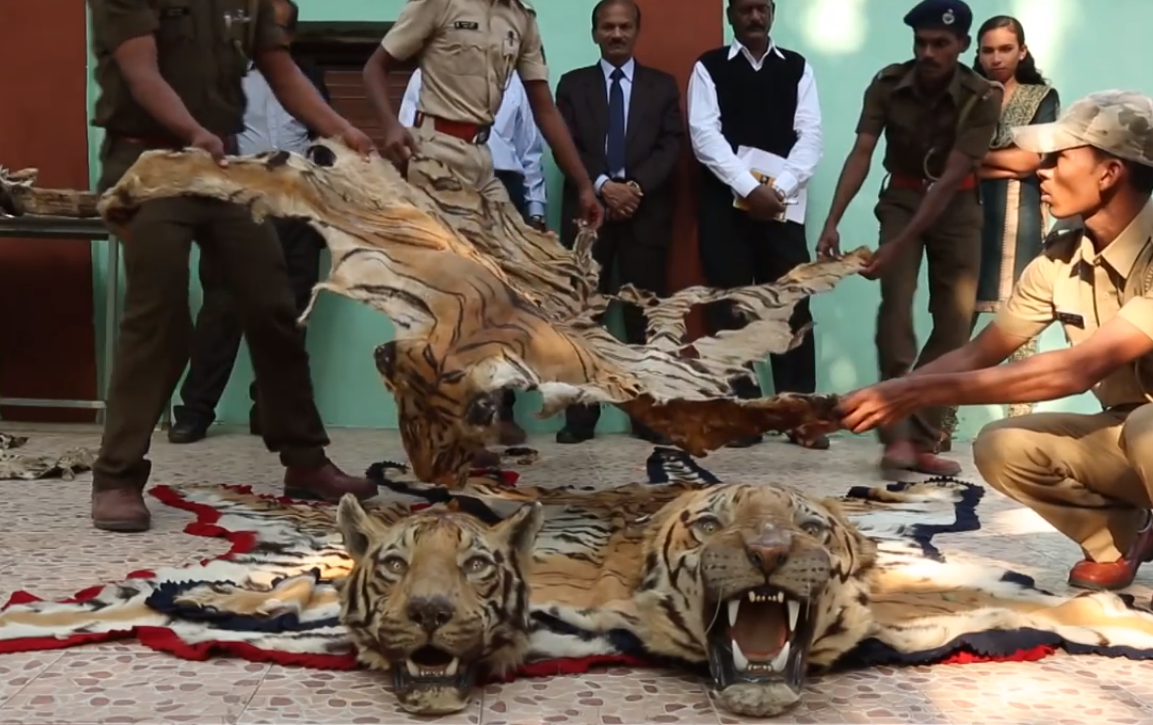 Seizure by the Indian Army at New Delhi Airport (2015) Nepal is not in this extreme situation: financial and human resources are becoming increasingly important and judicial penalties are becoming increasingly severe. There is still much work to be done, but Upendra is proud of his work and his men: "When I see that over the last 4 years, the tiger population in Nepal has increased by 64% and no rhinoceros has been poached, it motivates me to make even more effort to protect these animals." Upendra is right to be motivated: In South Africa, despite the resources deployed by government and NGOs, 1,028 rhinoceros were killed in 2017. The situation is so desperate that the country is considering sending some of its rhinoceros to Australia. The same critical situation exists with South China tigers. Completely extinct in the wild in China, the only wild population in freedom today is found in South Africa, 11,000 km from its native land. (programme Save China's Tigers) "Since my childhood, I have always loved wildlife and my job today allows me to work in a field I love: nature is my passion, and for nothing in the world would I stop."
Frequently asked questions
Some lodges and accommodations in the park, such as the Kasara Jungle Resort, organize activities in contact with conservation teams. Safaris with local guides from the Tharu communities also provide insight into the daily work of the rangers.
Chitwan National Park is home to exceptional fauna: Bengal tiger, Indian rhinoceros, wild elephant, Indian leopard, and the rare Gharial (crocodile that can reach 6 metres). It is one of the best destinations in Asia for observing wild fauna.
Nepal has made significant progress in combating poaching. The tiger population there has increased by 64% in 4 years and no rhinoceros have been poached during this period thanks to the efforts of rangers and soldiers. International networks of poachers, often better equipped, remain a permanent threat.
Chitwan National Park covers an area of 932 km², between marshland, wetlands and sal forests. It is classified as a UNESCO World Heritage Site and is one of the most important nature reserves in South Asia.
Rangers work in coordination with Nepali military forces. Their missions include monitoring the park's boundaries, regular patrols, inventorying species, and raising awareness among local populations and children in neighbouring villages. Specially trained dogs are also used to track down poachers.