Man VS Nepal, alone in the wilderness
Nepal, from the towering peaks of the Himalayas to the tropical forests of the Terai, has fueled the dreams of mountaineers and explorers from around the world.
Nepal, from the towering peaks of the Himalayas to the tropical forests of the Terai, has fueled the dreams of mountaineers and explorers from around the world. Since Europeans first discovered Mount Everest in 1847, thousands of courageous climbers have challenged this mountain of rock. In search of glory and thrilling experiences, generations of adventurers have faced nature, some carrying their dreams into the silent death of the mountain. From the icy peaks of the north to the inhospitable jungle of the south, facing nature alone, I will explain how to survive.
No matter what type of environment or exploration you undertake, you must carry the basics of survival gear: a lighter and a knife.
Alone in the Forest
You set out on a solo excursion to the national parks of Chitwan or Bardia and you get lost. What are the dangers? Wildlife : The Terai plains, which blend marshes, tropical forests and savannas, harbor a biodiversity as exceptional as it is hostile. Among mammals, we can mention the Bengal Tiger, bears, water buffalo, leopards, rhinoceroses and Asian elephants. Reptiles are also a potential threat, with a large population of crocodiles and venomous snakes (Indian cobra, bungarus, etc.). 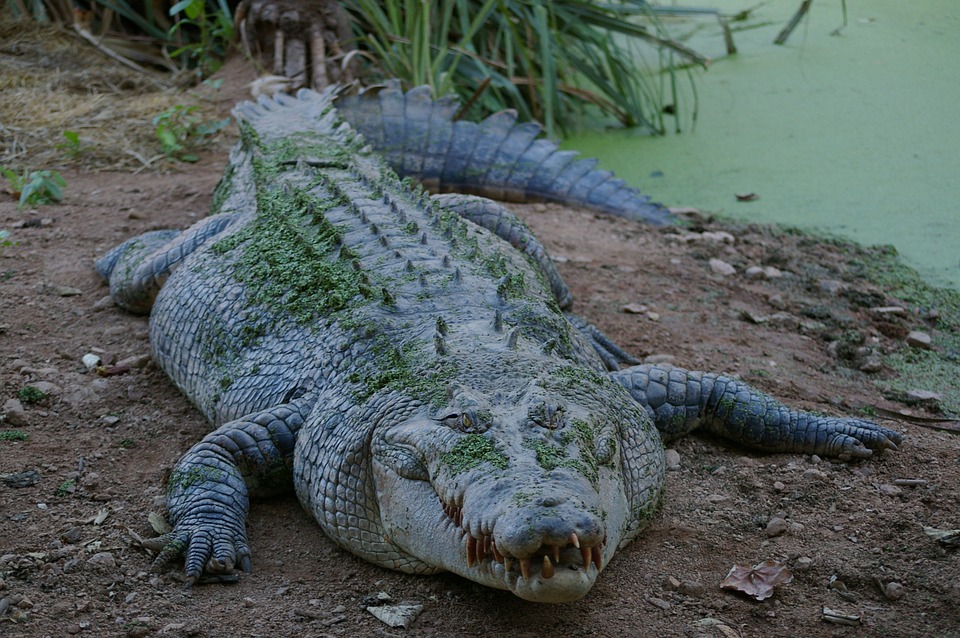 Beyond the insects and various arachnids that infest these forests, the greatest danger comes from mosquitoes, which can weaken or even kill you by transmitting diseases. Natural hazards : During the monsoon season, there is a real risk of sudden floods, and in the event of strong winds, falling trees.
Alone in the Mountains
In 2013, a few hundred courageous climbers attempted to summit K2, the second-highest mountain in the world but without question the most difficult to climb. Only 306 mountaineers reached the summit, but 89 people also lost their lives. In terms of causes of death, most are related to falls, avalanches, rockfalls and the infamous altitude sickness. Climbing Everest or the peaks of Annapurna is less dangerous, but dozens of fatal accidents are still recorded each year. In high mountains, wildlife is not particularly a threat.
Survival Tips
Stay hydrated : The human body can survive 3 days without water. But already by the 2nd day, the effects of dehydration become noticeable: headaches, fatigue, blurred vision. Whether you're lost in the mountains or the forest, finding a water source is your priority. Favor running water over stagnant water, which can be contaminated. In a survival situation, consuming your own urine can also save you. In fact, finding a water course might be your path to salvation: Most towns and villages have been built near rivers and streams. Following them will inevitably lead you to civilization. Finding food : Food will provide you with energy. A person can survive approximately 3 weeks without eating. But by the 2nd week of fasting, your strength will gradually leave you. It is therefore necessary to eat. I can only recommend insects to you: 3 times more protein than meat, you will find these little creatures all around you. If you have the time, equipment and skills, build snares that you will set up in areas frequented by small mammals. Be careful at night to keep your food resources away from your campsite as they risk attracting scavengers and opportunistic species like bears. Protect yourself from the weather : prepare a fire every night (hence the importance of the lighter); besides warming your body, it will warm your spirit and motivate you for what comes next. Fire can also be used to cook game hunted during the day and to boil water to make it drinkable. Fire also has a protective role as it will drive away mosquitoes and predators. In the forest, to avoid being surprised by a sudden rise in water levels, find or build a shelter at height and at some distance from rivers. (Just because it's not raining here doesn't mean there aren't torrential rains upstream). Avoid sleeping on the ground, as countless snakes, insects and arachnids live there. To keep wildlife away, move noisily. In the mountains this is not necessary, but instead make sure you're easily spotted: make a fire and add green vegetation that will produce lots of smoke. You can also write the famous SOS on the ground using stones, easily recognizable by helicopters. Final advice: don't put yourself in danger. An injury in the middle of the jungle or mountains, and death is assured within 48 hours.
Life-saving actions in case of attack
A wild animal attacks you, what do you do?
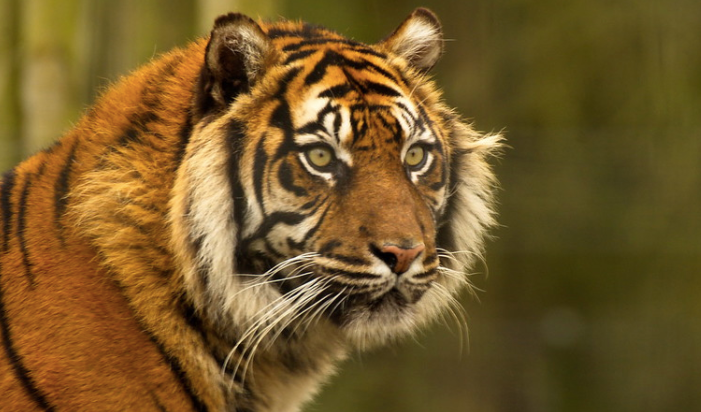
Tiger or leopard : If you are lucky enough to spot a tiger in its natural habitat, stay calm and still, and try to hide. Also, stay face to face with the feline and stare at it. Turning your back or lowering your eyes will be a sign of weakness it will sense. If the animal is about to attack, scream as loudly as possible and make yourself big by raising your arms toward the sky. Crocodile : Measuring more than 5 meters long, this killing machine protected by a thick scaly shell lives in the marshes, lakes and rivers of India, Nepal, Pakistan and Sri Lanka. Extremely fast physically, if you see it coming, the best thing to do is to scream and run in a zigzag. Very comfortable in water, it tires very quickly on dry land. If it nonetheless holds you in its jaws, strike it in the eyes. Indian rhinoceros : A solitary animal, intensive poaching has nearly wiped it out. The survivors are the most fearful and attacks on humans are therefore rather rare but not impossible. The animal's weak point: its vision. In a face-to-face situation, try to disappear from its field of vision by hiding in a nearby bush or tree. The elephant : Countering a charging elephant's attack is impossible, and fleeing is too. The solution is to find shelter and protect yourself there: a tree, a rock, or even your jeep. The bear : the technique is to make it believe you are more powerful than it. Howl, raise your arms, use a stick… If it charges anyway, run and get rid of any object you have on you. Your backpack, for example. Being a very curious animal, there is a good chance it will stop its attack to be concerned with the biscuits hidden inside. You are now ready to face all the hostile environments of Nepal. From crocodile-infested marshes to the deadly mountains of the Himalayas, the English-speaking team wishes you good luck !
In any case, no need to panic, we'll be there to protect you !
Charlène Nomadays
An SEO writer from the very beginning at Nomadays, who has become a content manager and head of the communications team, Charlène has supported the adventure with passion and loyalty since its inception. After living seven years in Asia – from China to Thailand, passing through Mongolia and South Korea – she has made travel a way of being in the world. A lover of words, nature and human connection, she is committed to conveying in her writing a sensible, engaged and responsible vision of tourism. For her, every article is a bridge between curiosity, respect and wonder.