In Nepal, the wild tiger population is thriving
Over a decade, the conservation efforts implemented in Nepal's national parks to protect tigers have borne fruit, as the country has nearly doubled its tiger population.
Over a decade, the conservation efforts implemented in Nepal's national parks to protect tigers have borne fruit, as the country has nearly doubled its tiger population.
Endangered wild Bengal tigers are now nearly twice as numerous as they were ten years ago.
According to census results conducted by the Nepalese Department of National Parks and Wildlife Conservation, along with conservation organizations, a 19% increase in the tiger population was recorded in just 4 years.
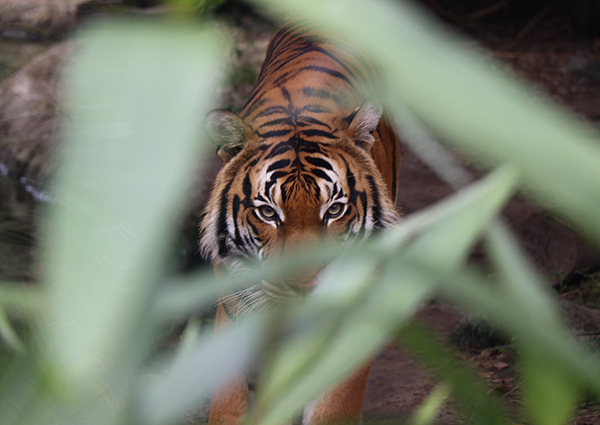
Indeed, 235 individuals were counted in Nepal's jungles, whereas there were only 121 ten years ago. If these numbers are so precise, it is thanks to 3,200 hidden camera traps deployed across five national parks, including the Chitwan National Park. These devices are equipped with motion sensors and temperature detectors. Over 4,000 photographs were collected in just one year.
Nepal's commitment to conserving its tigers
Civil war and poachers had nearly decimated Nepal's tiger population; but ten years ago, the government took action and recruited hundreds of volunteers to carry out anti-poaching patrols.
The government also encouraged willing residents to settle away from tiger zones and provided support to mitigate real human-tiger conflicts. Awareness-raising sessions with local communities have been organized, and today local attitudes are evolving. It is now practically impossible for poachers to enter the parks. On one hand, security is strong, and on the other, young people from the communities are actively engaged against poaching.
This news is also a boon for the tourism sector. Nepalis are well aware of it: if the tiger population increases, so do the chances of spotting them during a safari, making a compelling argument to attract travelers to the national parks.
An agreement to increase the tiger population
In 2010, Nepal and 12 other countries signed an agreement under the Global Tiger Initiative, a program created by the World Bank, aimed at doubling the tiger population by 2022. By then, Nepalis should be the first to reach their target. "If a country like Nepal—small, less developed, with many challenges—can do it, so can others," says Ghana Gurung, local representative of the World Wildlife Fund (WWF).
Parsa National Park, a shining example
In 2010, tigers were nearly absent from Parsa National Park located in the Terai plains at the foot of the Himalayas. While it had only 7 in 2013, its tiger population is now estimated at 18 individuals.
This notable increase is explained by all the measures put in place by the government. Parsa National Park was expanded and the number of forest rangers significantly increased.
Frequently asked questions
According to the latest available census, 235 wild tigers have been recorded in Nepal, compared to only 121 ten years ago. This 19% increase in 4 years is the result of conservation policies implemented by the Nepalese government.
Wild tigers in Nepal are mainly concentrated in Chitwan and Parsa National Parks, located in the Terai plains at the foot of the Himalayas. These two parks are equipped with motion-detection cameras to monitor wildlife populations.
The best time to observe tigers in Nepal is the dry season, from March to May, when vegetation is lower and animals gather around water sources. The winter season (October to February) also offers good viewing conditions.
The Global Tiger Initiative is a program created by the World Bank and signed in 2010 by 13 countries, including Nepal, with the goal of doubling the global tiger population by 2022. Nepal is regarded as one of the countries most advanced in achieving this objective.
The Nepalese government has recruited hundreds of volunteers to carry out anti-poaching patrols in the national parks. Awareness-raising sessions have also been organized with local communities, and young residents are now actively engaged against poaching.