Pilgrimage to Muktinath
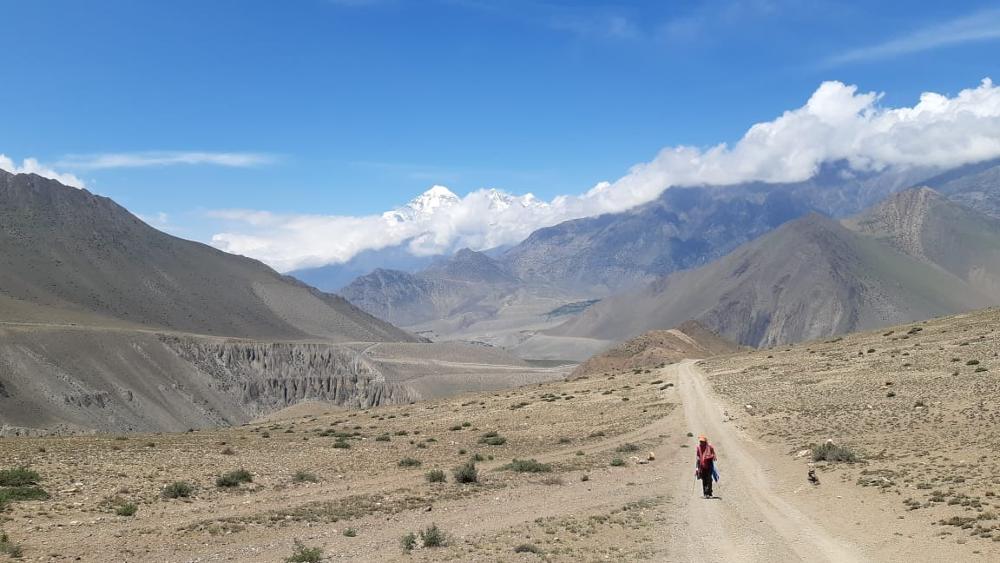
Muktinath is one of the oldest temples dedicated to Lord Vishnu, located at 3,710 meters altitude. It sits between the Thorong La Pass and the Kali Gandaki Valley
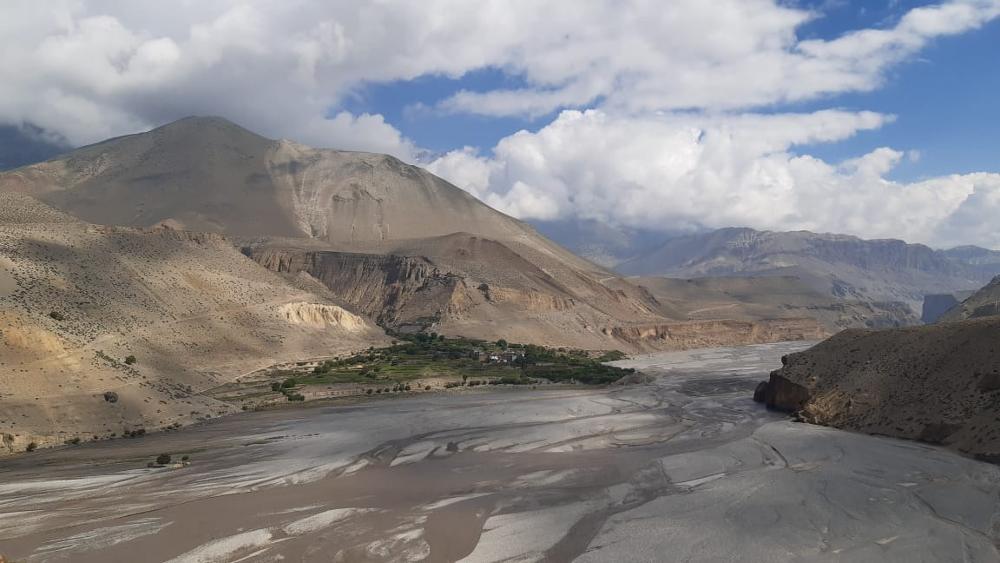
Muktinath is one of the oldest temples dedicated to Lord Vishnu, located at 3,710 meters altitude. It sits between the Thorong La Pass and the Kali Gandaki Valley
The Hindu Legend
According to Hindu mythology, a tremendous war took place between Lord Shiva and Jalandhar, the mighty king of demons. The demon was vile and, to reach the goddess Parvati, Shiva's wife, he attacked the sacred Mount Kailash.
Using his immense power, he transformed himself into Shiva, but he could not deceive the goddess Parvati, who immediately realized it was not her husband. She called him for help and a battle erupted. The trust and faithfulness of his wife prevented Lord Shiva from being killed.
Shiva could not, however, defeat Jalandhar. He then asked Vishnu—the preserver of the Trinity—to find a solution. Vishnu disguised himself as Jalandhar and deceived Vrinda, Jalandhar's wife, by touching her. She realized too late that it was not her husband. With his wife's chastity destroyed, Jalandhar lost his power and was killed by Shiva.
Vrinda cursed Lord Vishnu to spend the rest of his life as Shila (a stone from a river in the Mustang region). After cursing Lord Vishnu, Vrinda took her own life, and from her ashes, a Tulsi plant grew.
The Buddhist Legend
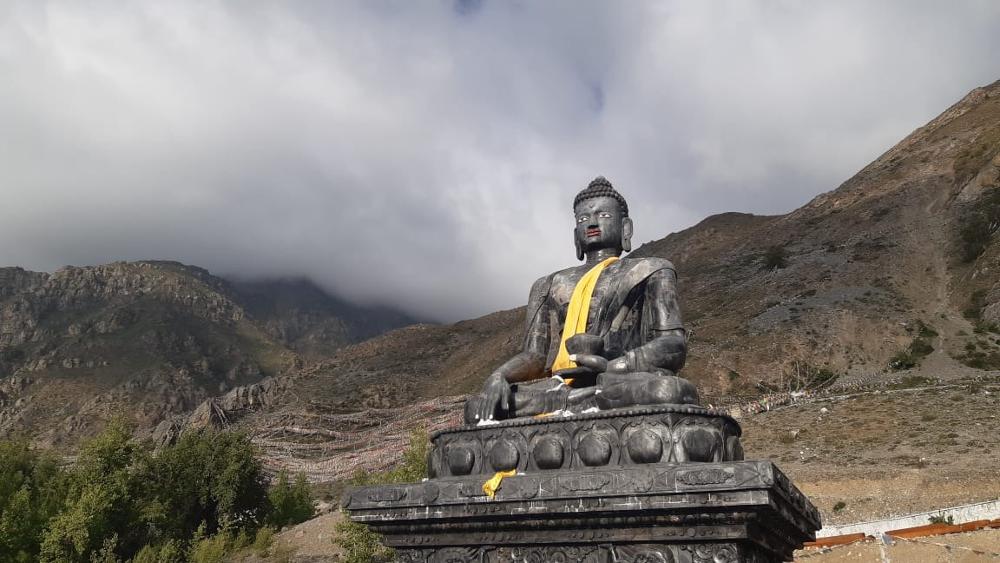
Buddhists call it Chumig Gyatsa, which in Tibetan means 'Hundred Waters.' Chumig Gyatsa is a sacred place of the goddesses Dakinis, known as the Sky Dancers, and also one of the 24 tantric sites. According to tradition, Guru Rinpoche, also known as the second Buddha, meditated here before traveling to Tibet.
The Number 108
The number 108 represents the totality of existence, a figure found repeatedly in nature: the distance from the Sun to Earth equals 108 times the Sun's diameter; 108 pressure points have been identified on the human body; Indian medicine has identified 108 energy lines throughout the body; at 108 degrees Fahrenheit, vital organs in humans overheat. In Hindu astrology, twelve zodiac signs and nine planets represent 108 potential combinations.
And Today?
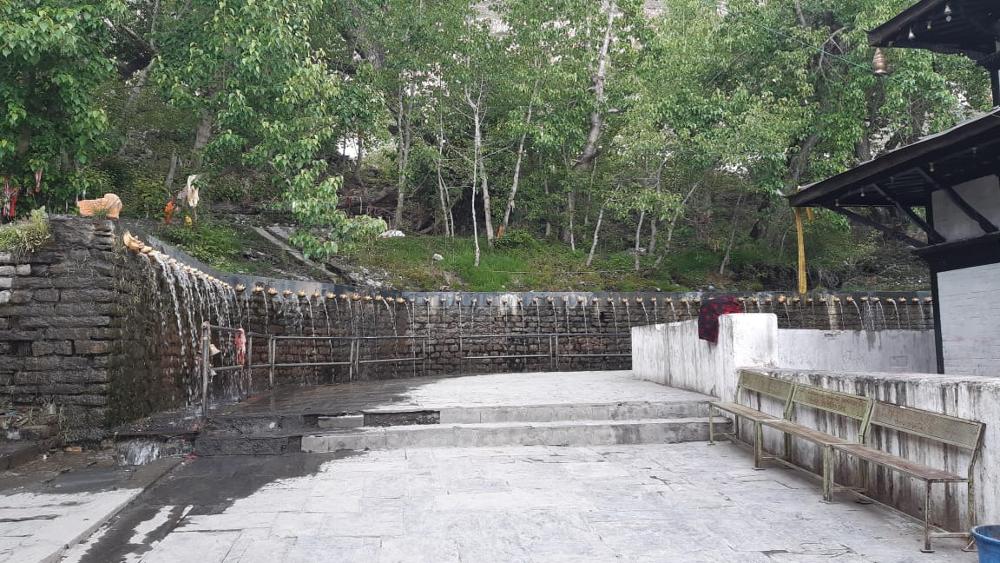
Hindus call the site Mukti Kshetra, which literally means 'the place of salvation.' The sanctuary is considered one of eight sacred places known as Svayam Vyakta Ksetras as well as one of the 108 Divya Desams, or sacred places of worship for Lord Vishnu. Thousands of pilgrims flock here each year to visit this remote region of Népal. They then immerse themselves in natural pools fed by 108 waterfalls cascading down behind the temple: the water purifies and grants salvation.
Followers of both religions believe it is one of the rare places where all five elements converge: fire, water, sky, earth, and air.
How to Get There?
Several treks make stops at Muktinath.
It marks the end of the grueling Thorong La Pass crossing (5,416 meters) on the Annapurna Circuit.
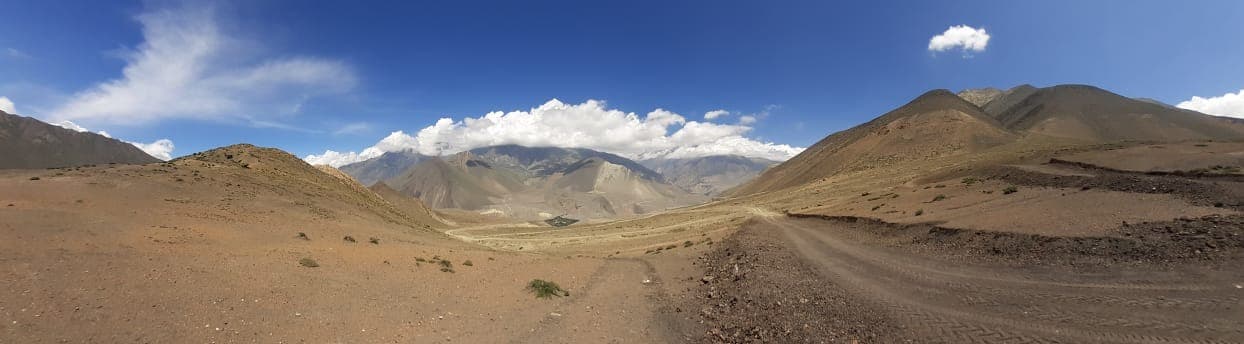
You can also visit it if you find yourself in Lower Mustang, one of the few treks doable in summer in Népal.
If you're heading to Lo Manthang, you can make a detour there on the return.
Frequently asked questions
Muktinath temple is located at 3,710 meters altitude, in the Mustang region of Népal, between the Thorong La Pass and the Kali Gandaki Valley.
The 108 waterfalls at Muktinath temple are sacred because the number 108 is fundamental to Hindu and Buddhist cosmology. It represents the totality of existence and appears throughout nature and Indian spirituality. Pilgrims bathe under these 108 fountains to purify themselves and achieve salvation (moksha).
From Pokhara, you can take a flight to Jomsom (approximately 20 minutes), then reach Muktinath on foot in about 3 hours of hiking or by jeep. It is also possible to include Muktinath in a longer trek such as the Annapurna Circuit or the Mustang trek.
No, Muktinath is a sacred place for both Hindus and Buddhists. Hindus venerate it as a temple dedicated to the god Vishnu, while Buddhists know it as Chumig Gyatsa ('Hundred Waters' in Tibetan) and consider it one of the 24 sacred tantric sites where Guru Rinpoche is believed to have meditated.
Muktinath is accessible almost year-round. The best periods are spring (March-May) and autumn (September-November) for clear skies and optimal trekking conditions. Summer (June-August) is also possible since Mustang lies in a semi-arid zone protected from monsoon rains by the surrounding mountains.
To visit Muktinath, you need at minimum the Annapurna Conservation Area Permit (ACAP) and the TIMS card (Trekkers' Information Management System). If you wish to venture further into Upper Mustang to Lo Manthang, an additional special permit is required as it is a restricted zone.