Kathmandu
Kathmandu
Seven UNESCO sites, three royal cities, thousand-year-old temples and intense street life: everything you need to know to visit Kathmandu, capital of Nepal.
Name: Kathmandu
Nepali name: काठमाडौं, काठमान्डु
Status: City/Capital
Population: 1.5 million inhabitants
Area: 570 km²
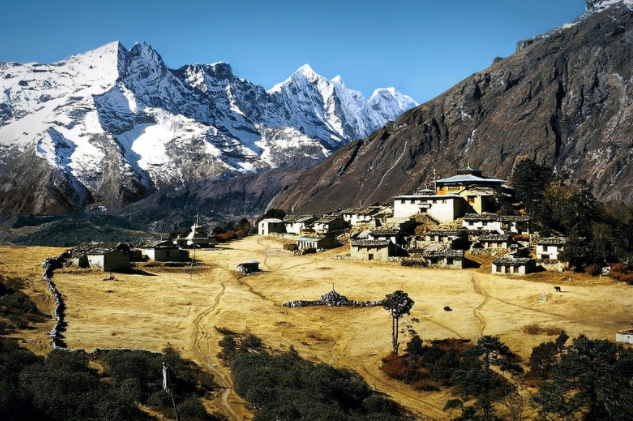
Also called the cradle of Nepal, Kathmandu is the political capital of Nepal. Surrounded by a crown of medium-sized mountains (3,000 meters maximum) in the foothills of the Himalayas, we often speak of the Kathmandu Valley, which includes Patan and Bhaktapur.
Although Kathmandu is the capital, the city has remained quite rural and its inhabitants, who still hold strongly to their traditions, do not push the city toward modernity. However, Kathmandu can boast a unique charm and great hospitality. During your trip to Nepal, let yourself be swept away by the beauty of Kathmandu and the vibrancy of its streets and neighborhoods.
History
Legend has it that the city of Kathmandu was already inhabited around 900 BC. In the archives about the city of Kathmandu, inscriptions dating from 185 BC were found. The oldest buildings in Kathmandu are said to be nearly a thousand years old.
It is said that the Kirats were the first rulers of the valley. Then, the Licchavi dynasty succeeded the Kirats. After the Licchavi, Prithvi Narayan established the Shah dynasty and took control of the valley in the 17th century and unified the kingdom of Nepal.
A few years later, in 1768, Kathmandu was conquered by the army of Gorkha King Prithvi Narayan and became the capital of Nepal. This was followed by the war between Nepal and Great Britain, which ended with the signing of the Treaty of Sugauli in 1816.
From 1816 until 1951, the Rana clan controlled the Nepalese state, and Kathmandu became a free state.
The city was hit by a major earthquake in 1934, which caused extensive damage. From 1996 to 2005, the people's war erupted and the Maoist communist party of Nepal rose up against the central authorities. In April 2006, strikes and street protests erupted, and Girija Prasad Koirala, president of the Congress party, was named Prime Minister. In March 2015, Kathmandu was again shaken by a major earthquake that destroyed much of the city and damaged many historical and cultural sites.
Kathmandu the City
Kathmandu is a city where constant agitation reigns among inhabitants, cars, motorcycles and tourists. Still living in a rather old way of life, the capital is trying its best to modernize.
Kathmandu, then renowned for its authenticity, reveals to its visitors a wealth of historical and cultural sites. The vast majority of the city's temples allow visitors to admire Newar deities, which for the most part display the mark of the third eye. The Newars thus always associate their daily life with these invaluable cultural treasures.
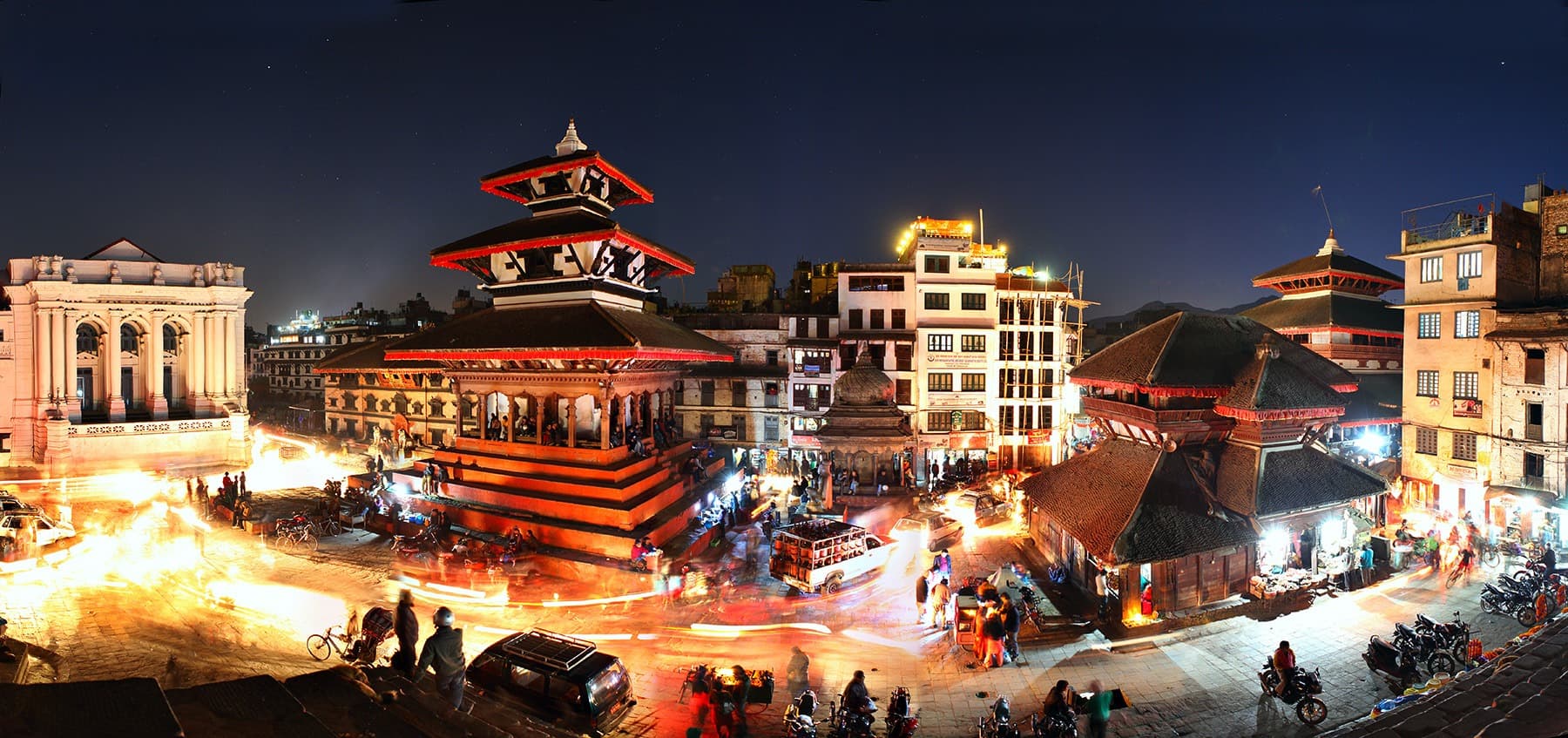
Kathmandu is full of narrow streets where locals, rickshaws and vehicles circulate, creating very rhythmic street life. Some historical sites are only accessible on foot, squeezed between two tiny alleys and buildings with somewhat dilapidated facades. It must be said that infrastructure is not the strong point of this capital, which gives a preview of incompleteness.
Poverty and declining living conditions were certainly not improved by the last tremors of 2015, but the smile of the inhabitants is no less present, bringing some light to these dark and dusty landscapes.
Beyond inhabitants, tourists and street vendors, the streets are shared with cows, which, sacred in Nepal, walk through the streets, allow themselves small naps in the middle of the road or cross it, thus giving quite folksy scenes.
Many neighborhoods and squares not to be missed during your stay in Kathmandu:
Thamel
The Thamel neighborhood is the most well-known and most popular neighborhood for travelers. Indeed, it is in Thamel that you will find the vast majority of hotels, restaurants and also shops to equip yourself for a future mountain trek. The neighborhood, formed of small streets, is very pleasant, and you can also take the opportunity to do some souvenir shopping and taste some local or international dishes. Many small street vendors will try to attract you with their jewelry, hats or postcards with prices that are fairly easy to negotiate.
In Thamel, you will have no trouble meeting trekkers returning from their trek in the Annapurna or in the midst of preparing their stay in Pokhara and exchanging a few tips and advice.
Durbar Square
Kathmandu has three major squares in total: Basantapur Square, Durbar Square and Makhan Tole. Small alleyways from Thamel lead to Durbar Square. Indeed, it is located south of Thamel, in the heart of old Kathmandu. Durbar Square is a large plaza where travelers can immerse themselves in the city's history and discover important monuments. You can then see the former Hanuman Dhoka royal palace, the house of the goddess Kumari and the statue of the demon-fighting god Kala Bhairab.
The square is also home to the famous wooden pavilion Kasthamandap, which gave its name to the valley as well as temples of the gods and goddesses most venerated in Nepal, Shiva and Ganesh. Permanent guardians of the city, many Nepalis come from afar to honor them.
A little further on, the markets of Asan Tole or Indra Chowk will give you a good overview of what life in Kathmandu is like.
Famous Temples and Monuments of the Capital
Swayambhunath
It is located on a hill in the western part of Kathmandu and offers a breathtaking panorama of the city. The immense stupa of Boudhanath makes the temple of monkeys, also called Swayambhunath, very popular with travelers. It is also among the oldest Buddhist temples in the valley but also the most sacred of all. It is therefore an important place for Buddhist and Hindu religion.
Krishna Mandir Temple
The Krishna Mandir Temple is located in the western part of Durbar Square. Created in 1637, it was built in a Shikhara style from India. It consists of 21 gold pinnacles and three floors. The first floor is dedicated to Krishna, the second to Shiva and the third to Lokeshwor. Inscriptions describing scenes from the Ramayana adorn the interior of the temple.
Nyatapola Bhaktapur Temple
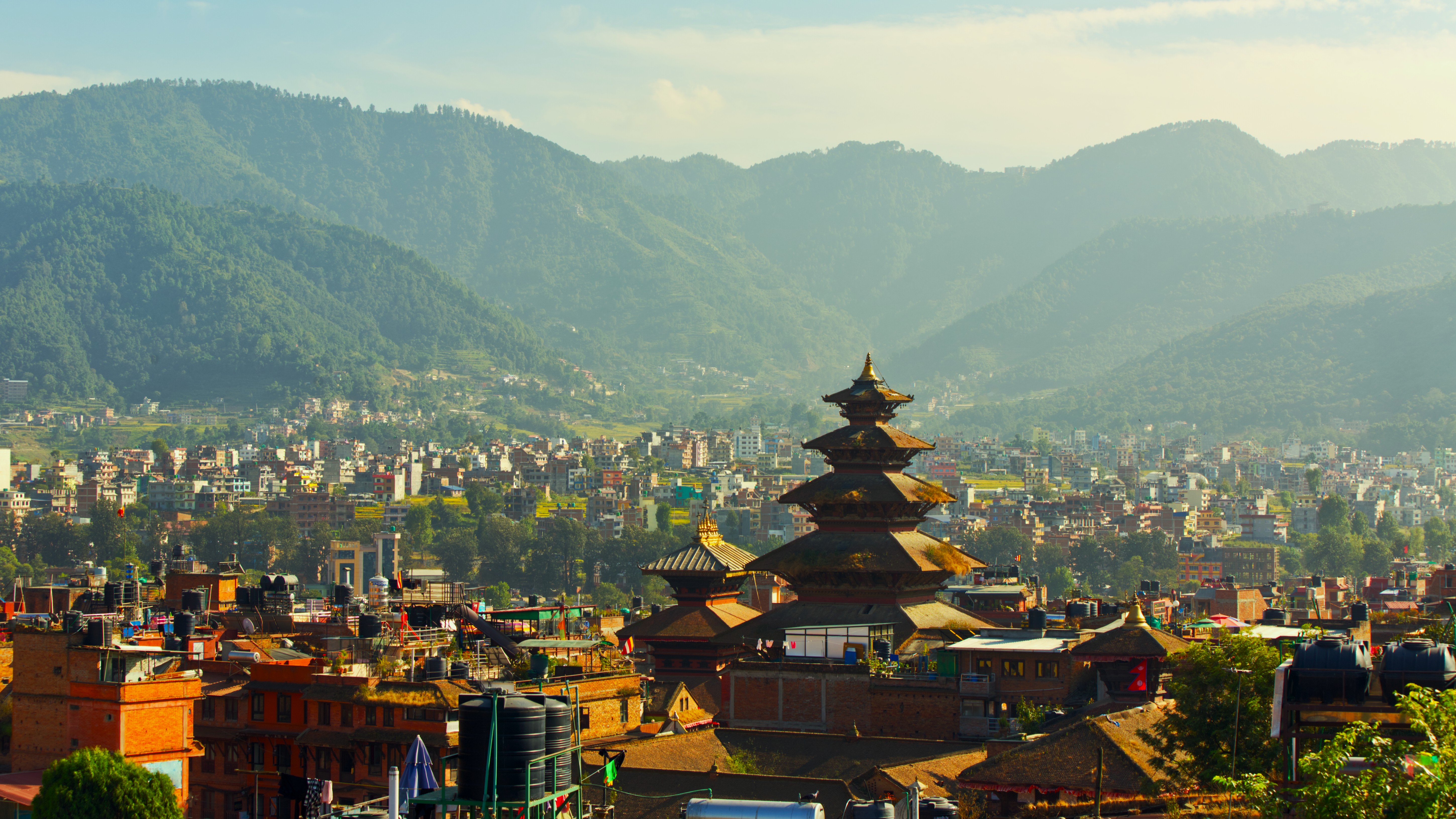
The temple was built in 1702 AD under the reign of King Bhupatindra Malla. It is said to be one of the highest pagodas in Nepal with its five stories and five-level roof. This pagoda is thirty meters high and is equipped with several staircases leading to its summit. There are statues on each side of the temple terraces.
Sankhu
Sankhu is an old porter relay station toward Tibet. To this day, it still preserves its medieval character and consists of small narrow streets and several traditional buildings. It is also home to the ancient Changu Narayan temple, which is located east of the valley, 19 kilometers away. It also has the temple of the goddess Vajra Yogini, scattered stelae of Vishnu as well as the monkey god Hanuman.
Pashupatinath
Pashupatinath is also an important Hindu temple in Nepal located on the banks of the sacred Bagmati River. The temple and its surroundings, namely the six buildings named the "Kathmandu Valley," were inscribed on the UNESCO World Heritage List in 1979. The site is especially famous because Hindus regularly perform cremations there.
Boudhanath
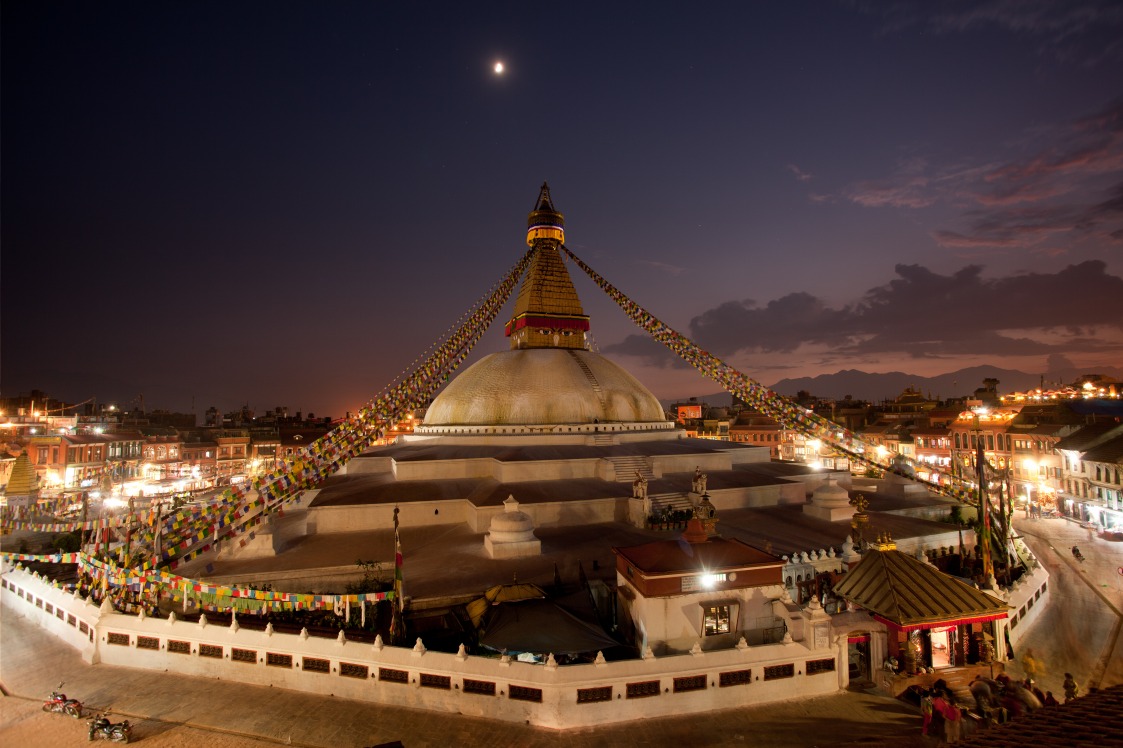
Boudhanath is an immense stupa located east of the Kathmandu Valley. It is said to be the largest stupa in Nepal but also in the entire world. It is also the home of Tibetan Buddhism, closely linked to the founding of Lhasa, in Nepal. About fifty important temples surround the great stupa. It is said that many Tibetan refugees joined this great stupa during the flight of the 14th Dalai Lama around 1959, and that it was during this period that many monasteries were built.
Visiting the Kathmandu Valley
The Kathmandu Valley is composed mainly of Kathmandu, Bhaktapur and Patan. Surrounded by several towns, municipalities and villages, some places offer splendid views of the mountain and its terraced crops. Other cities are home to famous sanctuaries and historical sites.
Bhaktapur
Ranking among the three ancient royal cities of Kathmandu, it turns out that Bhaktapur is the best-preserved city in its medieval aspect. The majority of Newars living there are Hindus. The neighborhood is composed of several buildings made of red brick equipped with carved wooden windows. It is rare to see cars circulating in this area, which is exclusively pedestrian. As in other neighborhoods of Kathmandu, the streets and squares are enlivened by numerous activities. In particular, there is the manufacture and drying of pottery, wool yarn dyeing sessions, women doing laundry at fountains, and the drying of rice and wheat when harvest time comes. This city also extends over a large area of cultivable land, hence the very rural atmosphere that prevails there. Beyond the beauty of the city, Bhaktapur is full of historically significant squares and monuments of great artistic and cultural value.
Patan
In the south of Kathmandu is the small city of Patan. It was formerly called Lalitpur, translated as the "Beautiful City." It is said to be the cradle of Newar arts and architecture, marking the imprints of the entire valley. It has also well-preserved its cultural heritage and several craftspeople still maintain and practice the tradition of blacksmithing and goldsmithing. There are more than 50 temples in Patan, several stupas, chaytyas and bahals or ancient Buddhist monasteries. Indeed, through these temples we reflect the maintenance of Buddhist religion in this part of the valley.
Climate
Nepal experiences a monsoon climate in summer and a dry climate in winter. For the Kathmandu Valley, the climate is influenced by the summer monsoon and thus records high humidity but little rain. It enjoys milder temperatures with 20°C during the day but which can sometimes drop to zero at night.
By Plane
Tribhuvan International Airport is the only airport in Kathmandu. However, many international flights flow into the valley. This airport is also the platform dedicated to local flights to other major cities such as Pokhara, Jomsom, Bharatpur, etc. The most famous airlines are Nepal National Airlines, Yeti Airlines or Buddha Air. Flights over Kathmandu are often impressive. If you're lucky, you may also catch a glimpse of the Himalayan range and treat yourself to a first taste of the beauty of Nepalese landscapes.
By Bus
Many local or tourist buses allow you to reach Kathmandu. Depending on where you are, the buses will be more or less slow and the journeys quite long.
Buses from India also reach Kathmandu. Take some precautions before taking the bus. Make sure you have your valuables on you and motion sickness tablets.
The capital has several means of transport so that tourists can visit the city more easily. Indeed, travelers can move around the city by bus, taxi, or even rent a car.
For buses, the city offers internal networks but also long-distance buses that serve the city and its surroundings. As for taxis, they are numerous throughout the city and rates can be negotiated. A taxi can also be rented for the day or for long-distance trips.
What to Do in Kathmandu?
- Immerse yourself in the traditional life of Nepal by visiting the neighborhoods of Thamel, Bhaktapur and Patan.
- Visit all the temples and pagodas of the city and its surroundings.
- Visit the famous sites of the valley listed as UNESCO World Heritage.
- Discover the beauty of Durbar Square and its monuments with impressive architecture as well as the markets of Asan Tole and Indra Chowk.
- Taste local dishes by visiting the many restaurants of the capital.
- Buy souvenir items at low prices and visit the numerous shops in the Thamel neighborhood.
- Make a visit to Swayambhunath temple and contemplate the beauty of the immense
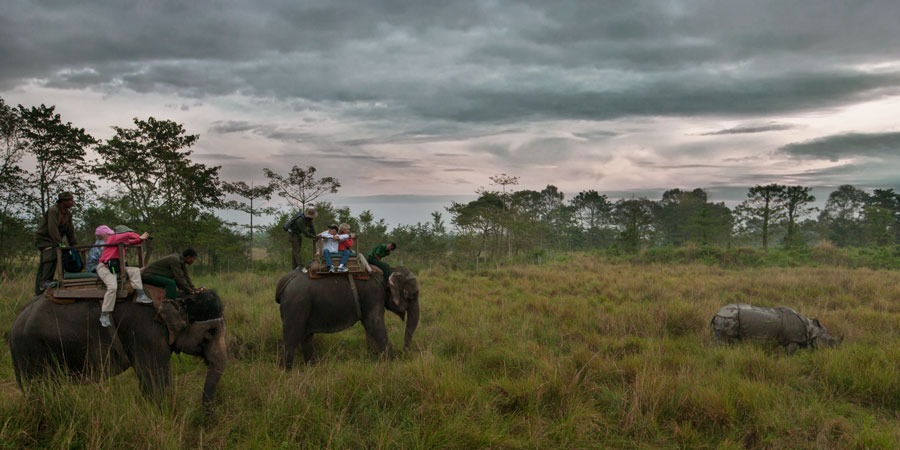
- Don't forget to visit Chitwan National Park and museums dedicated to Nepal's kings such as Tribhuvan, Mahindra and Birendra.
- Head to the foot of the gigantic Boudhanath stupa and visit the monasteries in the area.
Attractions in Kathmandu
See all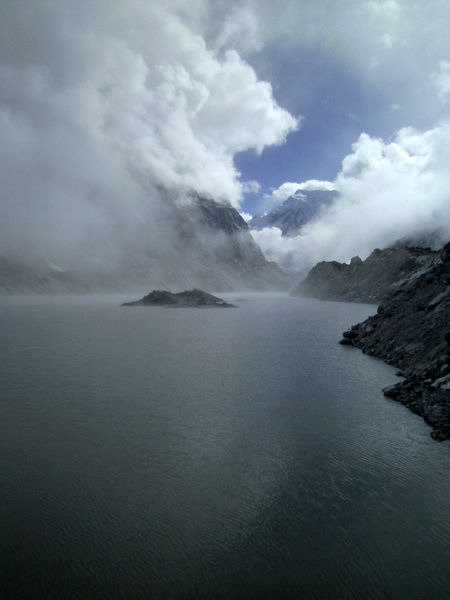
Lac de Tsho Rolpa
Lac glaciaire à 4 580 m d'altitude dans la vallée du Rolwaling, le Tsho Rolpa se rejoint par un trek de 7 à 10 jours depuis le district de Dolakha.
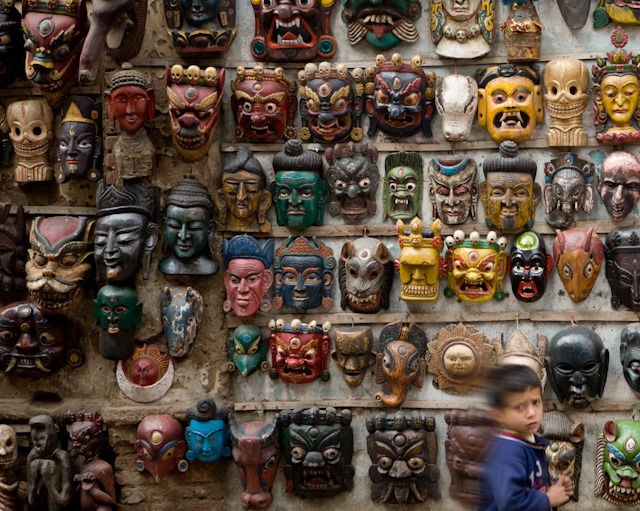
Thamel
Thamel, quartier historique de Katmandou et plaque tournante du trekking au Népal : équipement, hébergement, restaurants et accès en un seul lieu.
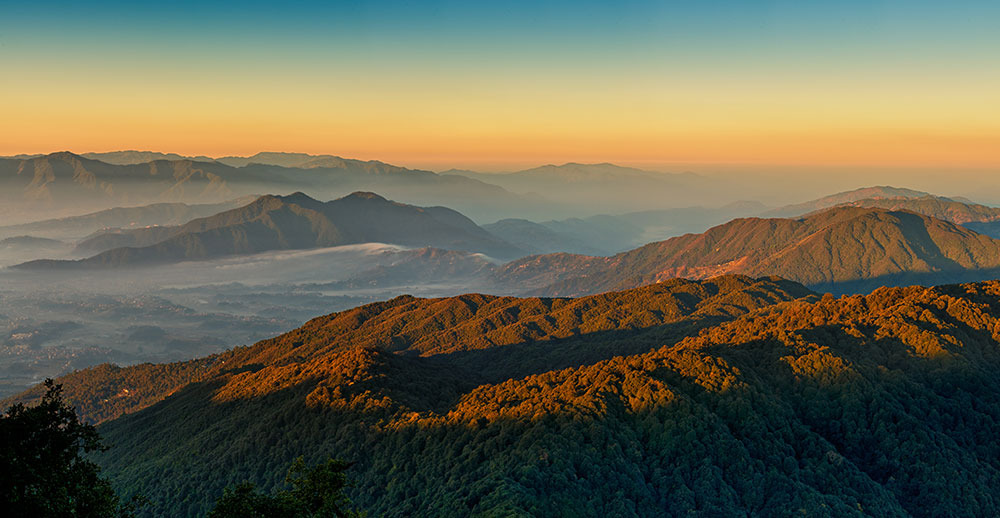
Colline de Nagarjun
À 2128 m d'altitude, la colline de Nagarjun domine Katmandou et appartient au parc national de Shivapuri-Nagarjun, riche en faune, sentiers et sites bouddhistes.
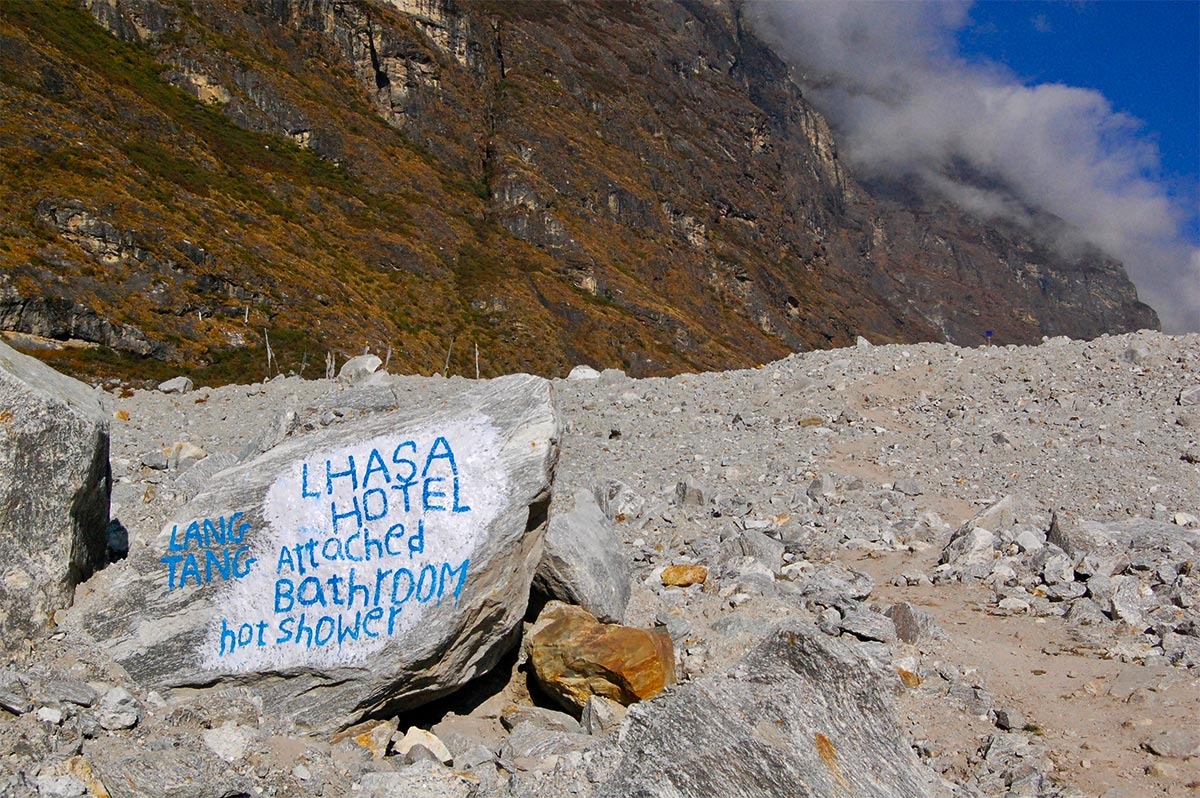
Langtang
À 50 km au nord de Katmandou, la vallée de Langtang offre l'un des treks les plus accessibles du Népal, entre forêts, alpages à yaks et sommets himalayens.
Bouddhanath
Plus grand stupa du Népal et cœur du bouddhisme tibétain en exil, Bouddhanath se visite à 6 km de Katmandou, entouré d'une cinquantaine de monastères.
Kirtipur
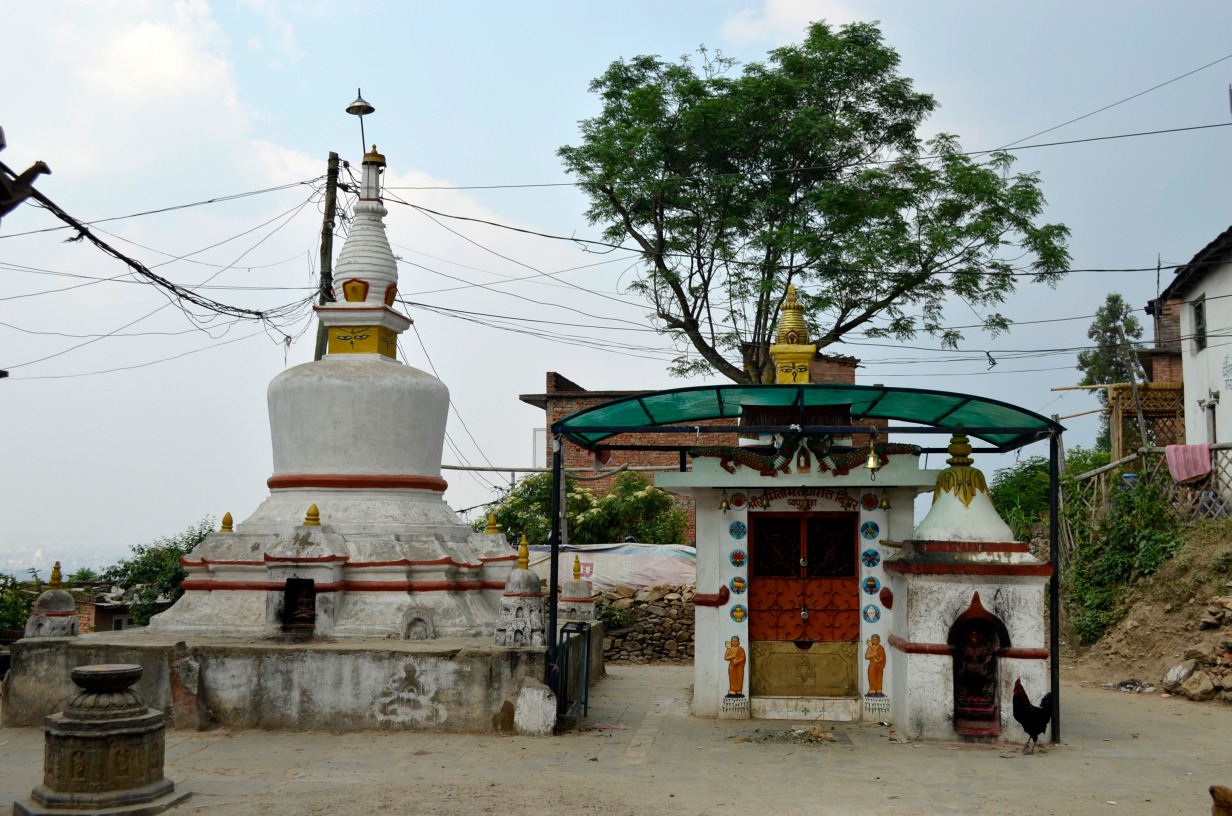
Ancienne forteresse newar perchée au sud-ouest de Katmandou, Kirtipur conserve ses temples, ses ruelles pavées et une atmosphère villageoise rare dans la vallée.
Accommodation in Kathmandu
See all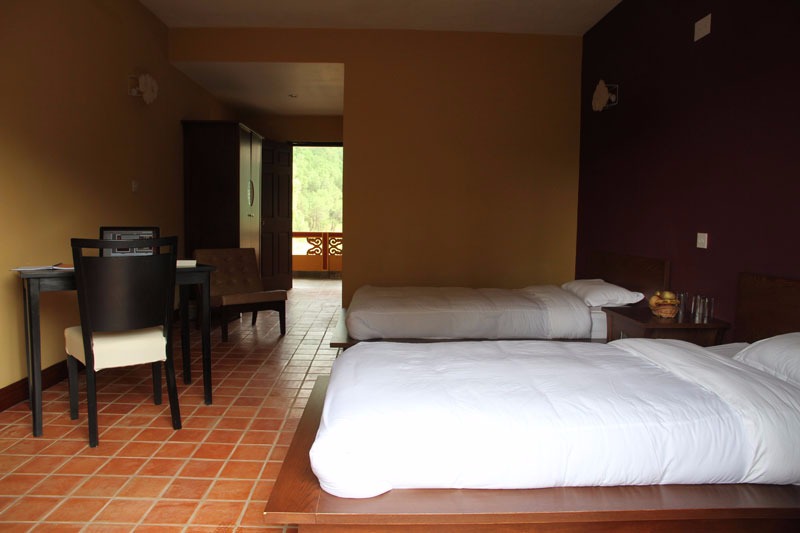
Hotel Neydo
À Pharping, près de Kathmandu, l'Hotel Neydo occupe une aile d'un monastère bouddhiste actif et propose une immersion rare dans la vie monastique tibétaine.
Thorong Peak Guesthouse
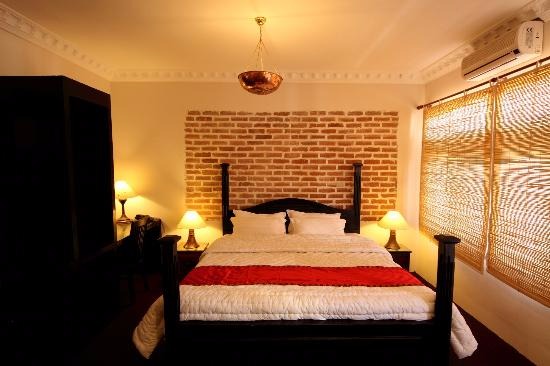
Fondée en 1988 à Thamel, la Thorong Peak Guesthouse est une adresse familiale de 22 chambres avec jardin et restaurant, au cœur historique de Katmandou.
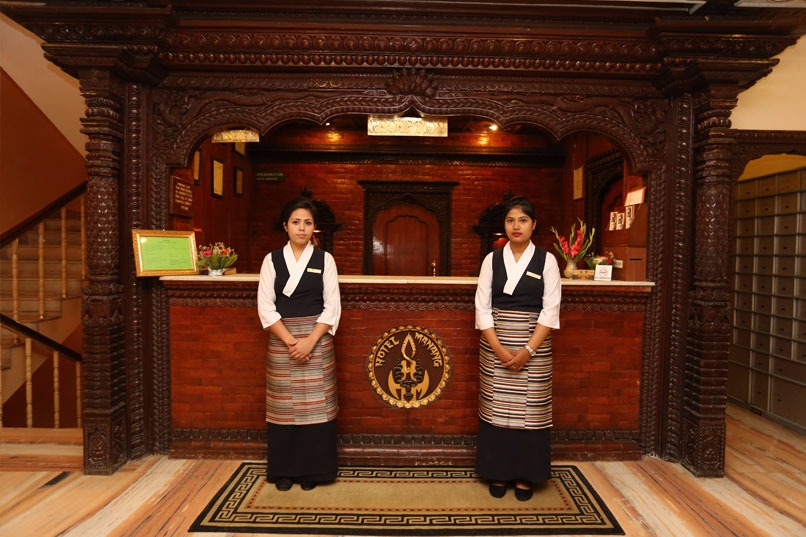
Hotel Manang
Want to discover this destination?
Our local advisors design your tailor-made trip.