The Prehistoric Mysteries of Mustang
"We are politically Nepalese but naturally Tibetan." The adage of Jigme Singi Palbar Bista, last king of the Mustang kingdom, stripped of its monarchical status in 2008 and administratively attached to Nepal, describes a people fundamentally
"We are politically Nepalese but naturally Tibetan." The adage of Jigme Singi Palbar Bista, last king of the Mustang kingdom, stripped of its monarchical status in 2008 and administratively attached to Nepal, describes a people fundamentally rooted in Tibetan traditions and culture. The border between northern Nepal and southern Tibet is largely linear, but extends into the lands of this Chinese region since Mustang became part of Nepal.
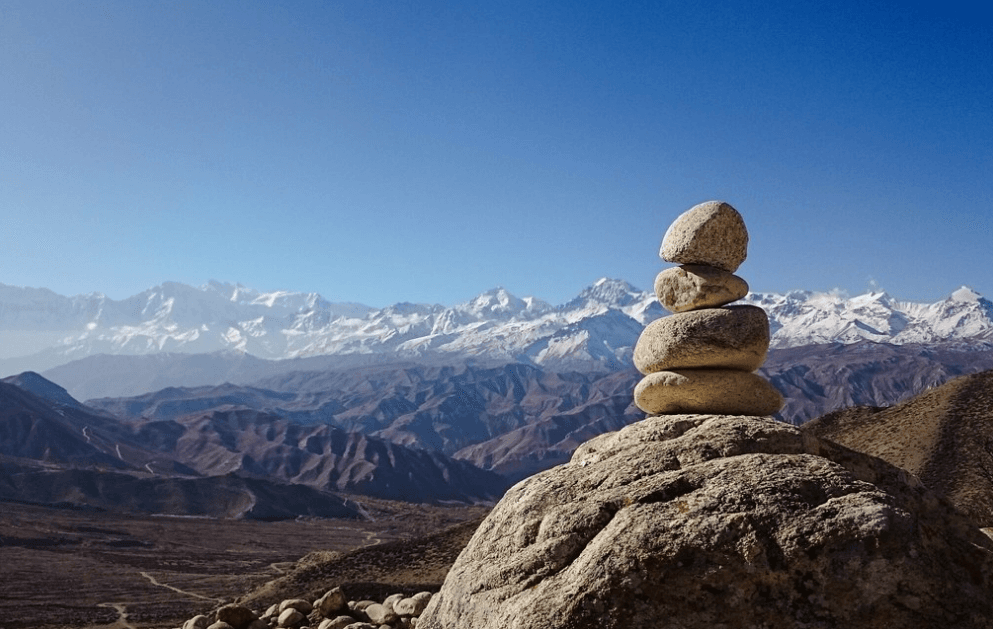
The territory of the Mustang kingdom, formerly called the kingdom of Lo, is isolated from the rest of the country as it lies beyond the northern face of vertiginous Himalayan peaks such as Annapurna or Dhaulagiri. Four other mountains in the Asian range, rising above 4,000 meters in altitude, further isolate the area to the north. It is almost certainly this isolation that allowed the kingdom, today inhabited by only 10,000 people, to remain autonomous for 6 centuries, from its founding in 1380 until its integration into Nepal in 1951.
The Gandaki River that crosses and divides this region from north to south originates in the Himalaya, in the heights of the Nhubine Himal glacier, at the heart of this former kingdom. It flows through the rest of the country toward the Terai to eventually end in the Ganges in India. The lowest lands of Mustang, which averages around 2,500 meters in altitude, are found on the banks of this watercourse, separated to the west and east by mountain massifs.
A kingdom beyond time
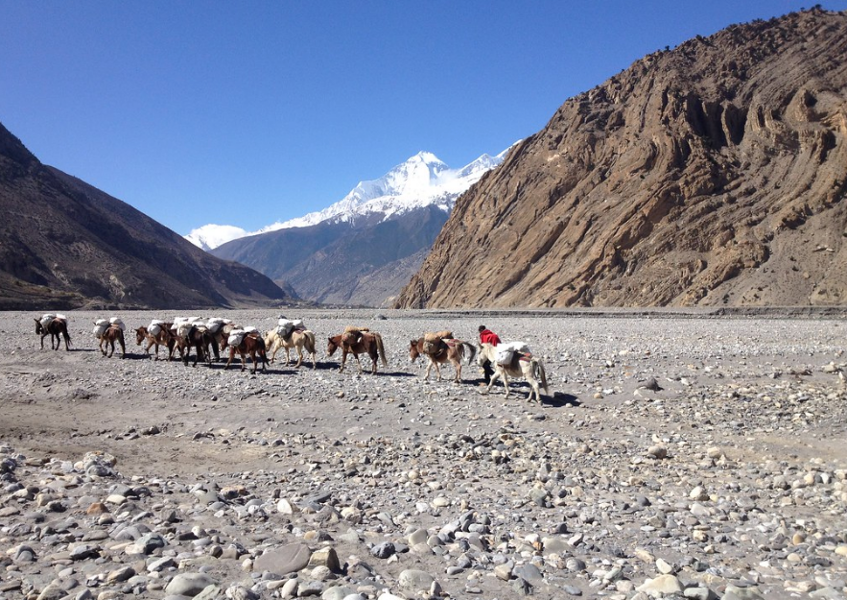
Tourism, still quite nascent in the region, became authorized starting in 1992. Before that, no tourist could be permitted to enter the Mustang kingdom. The countryside in the region is completely devoid of roads, so travel between villages can only be done on horseback or on foot. Modernity has not yet taken hold of the places, proof of this, the Dalai Lama considers Mustang to be one of the last Himalayan territories that has preserved its Tibetan culture unchanged.
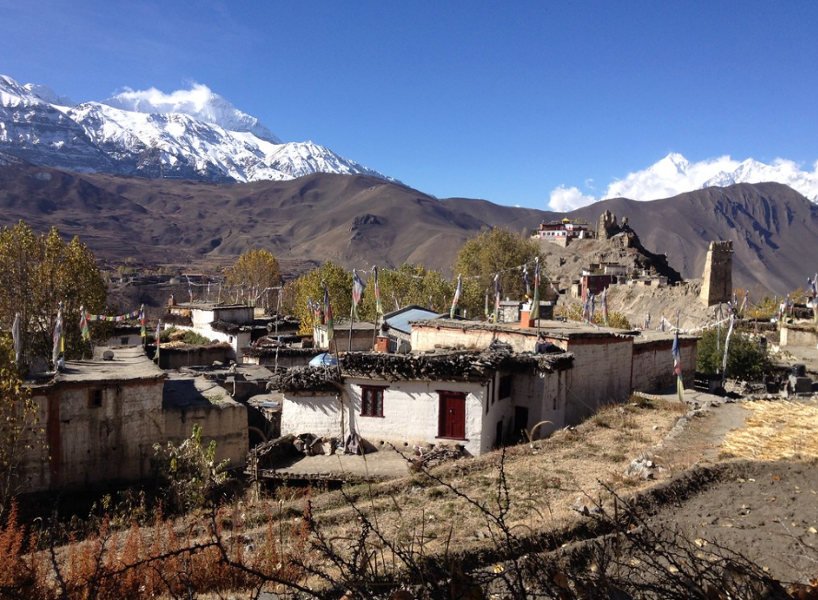
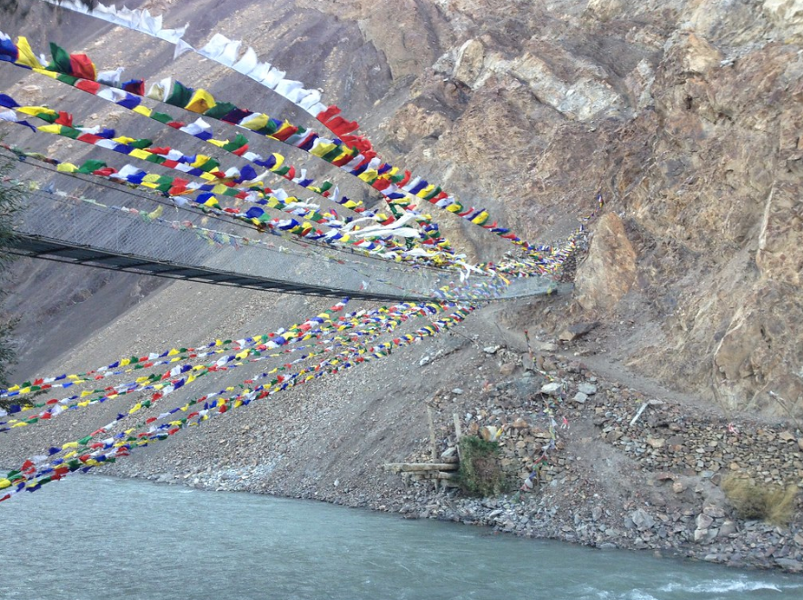
The only accessible route to the region can be made via the district highway, the sole axis in the area, which leads to the small town of Jomoson, the capital of the Mustang district. There is also a minimal airport. Then nothing more; paved roads are generally only traveled by shoes and hooves. For example, it takes 5 days of walking, or 3 days on horseback to cover merely forty steep and rolling kilometers and finally reach the capital of the former Mustang kingdom, Lo Mantang, on the northern border with Chinese Tibet. The city is home to about 600 inhabitants, a hundred houses, and a royal palace. A few still-inhabited villages border the route between the two largest towns in the region, but that's all. Fascinating. Access, much more tedious from an administrative standpoint, is also possible via Tibet to the north by descending on foot toward the capital or toward the gorges of the Gandaki River. However, the Himalayan peaks strictly prohibit access to the east and west.
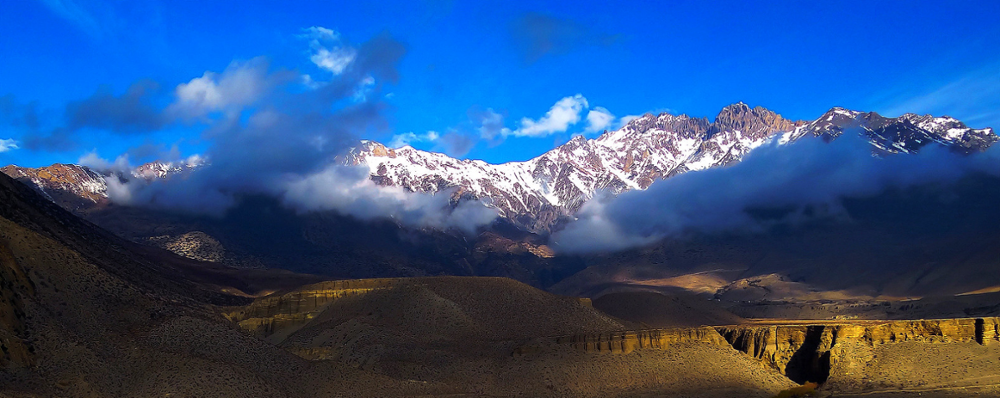
On these steep paths you can discover villages impossible to date today but equipped with cave dwellings, carved into rock, rudimentary, and typical of prehistory. The Tibetologist Michel Peissel discovered 29 of them in 1964, and a rockfall that occurred in 1994 allowed analysis of some bones and pottery dating back more than 3,000 years. The Mustang region itself is part of Asia's most mysterious and secret archaeological sites.
An arid climate
The preservation of these historical artifacts can certainly be attributed to the isolation of this region from the lower Nepalese lands but also to the particularly arid climate that prevails there. Completely protected from Indian monsoons due to its elevation and position between the peaks of Annapurna, Dhaulagiri, and Tibetan lands, Mustang receives only between 250 and 400 millimeters of precipitation per year. The resulting lack of forests and vegetation from this aridity favors very violent winds that can be problematic for walkers and riders venturing onto the desert territories between the mountain massifs. The absence of precipitation means there is very little snowfall in the cities and villages despite their altitude. But cold is definitely present, with temperatures varying year-round in the capital between -8 and 6 degrees.
May festivities
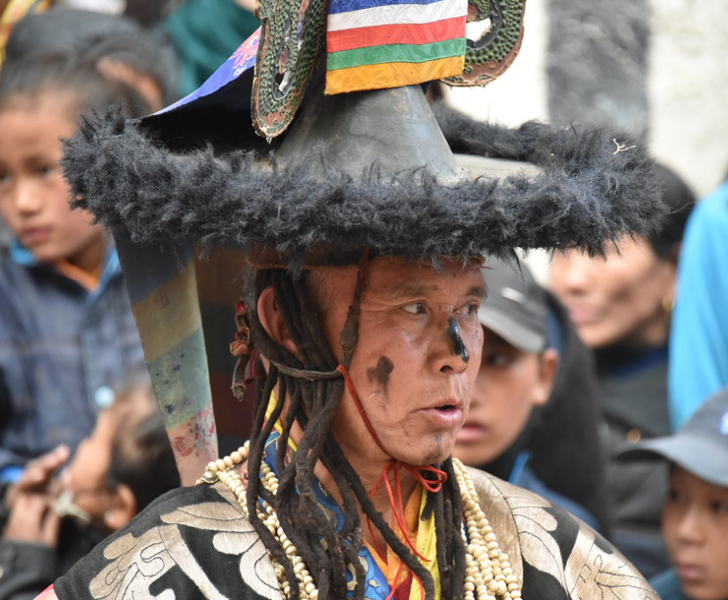
Mustang tends to warm up during the month of May and hosts the annual Tiji festival in the heart of the capital Lo Mantang. The majority of inhabitants from the region converge on this city bringing human warmth and an atmosphere of celebration for three days. This religious festival commemorates the victory of a Buddhahood incarnation: Dorje Sonam, against the demon Matamruta. Populations migrate bringing provisions: wood, food, and some money for the monks on site. An activity worth seeing if you wish to venture into this so mysterious region.
Frequently asked questions
Access to Mustang is mainly via the small town of Jomoson, reachable by plane from Pokhara. From Jomoson, expect approximately 5 days of trekking or 3 days on horseback to cover some forty kilometers and reach the capital Lo Mantang. Paved roads end at Jomoson; beyond that, only trekking paths allow you to progress.
Yes, Upper Mustang is a restricted zone requiring a special permit, distinct from the standard TIMS permit. This permit is issued by the Nepalese government and must be obtained before departure, generally through a licensed trekking agency. Its cost is significantly higher than for other regions of Nepal.
Mustang enjoys an arid microclimate that makes it accessible almost year-round. Spring (March to May) is the ideal season, notably to witness the Tiji festival in Lo Mantang in May, which celebrates the victory of Dorje Sonam against the demon Matamruta over 3 days. Autumn (September to November) is also pleasant. Winter is harsh with temperatures potentially dropping to -8 degrees.
Mustang harbors cave-dwelling villages carved into rock whose origins remain difficult to date precisely. Tibetologist Michel Peissel discovered 29 of them in 1964. A rockfall that occurred in 1994 allowed analysis of bones and pottery dating back over 3,000 years. These caves, known as 'Sky Caves', make Mustang one of Asia's most mysterious archaeological sites.
Mustang is protected from Indian monsoons by the Annapurna and Dhaulagiri massifs, giving it a very arid climate with only 250 to 400 mm of precipitation annually. Despite minimal snowfall in towns, cold is present year-round with temperatures in the capital Lo Mantang varying between -8 and 6 degrees. Violent winds can make trekking difficult: prepare with appropriate wind-resistant equipment.