Chitwan National Park
Chitwan National Park
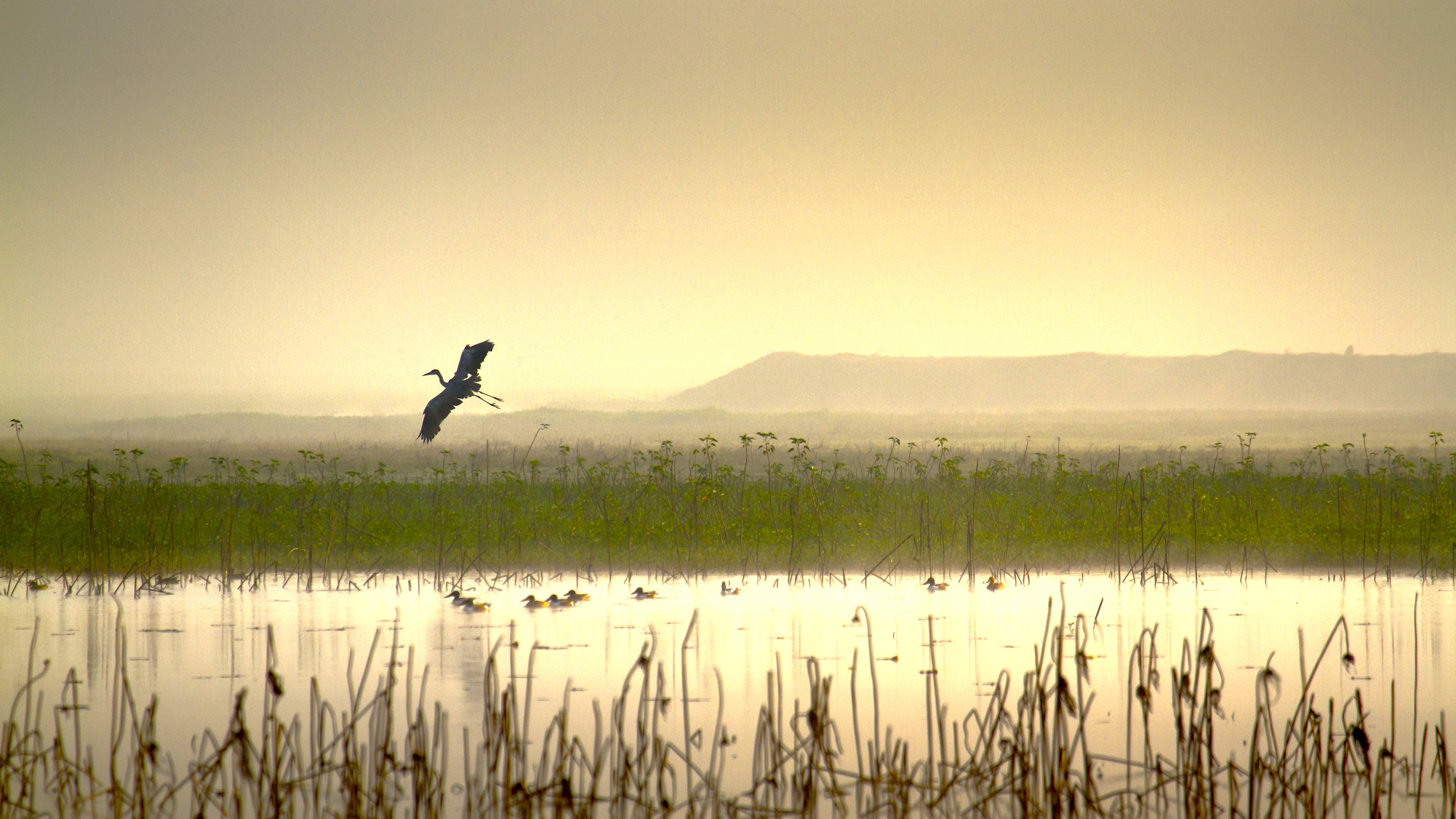
At the foot of the Himalayas, Chitwan National Park is home to one-horned rhinoceros, Bengal tigers and Tharu villages nestled within a subtropical jungle designated as a UNESCO World Heritage Site.
At the foot of the Himalayas, in the Terai region, one of the last pristine wilderness areas endures. Chitwan reveals itself through lush flora that shelters one of Asia's remaining populations of one-horned rhinoceros and stands as one of the final strongholds of the Bengal tiger.
Chitwan National Park ranks among Nepal's oldest protected areas and has been designated a UNESCO World Heritage Site since 1984.
History
Chitwan National Park was established in 1973.
Once a hunting reserve for Nepalese and foreign aristocrats, the park witnessed King George V and his son, Edward VIII, kill 39 tigers and 18 rhinoceros during a single 1911 safari. Despite these bloody hunts, its status as a hunting reserve paradoxically protected it from destruction and deforestation.
It wasn't until the 1950s that peasants began settling in the Chitwan Valley. This triggered widespread poaching of the valley's wildlife. In 1957, the country's first conservation law was enacted, aimed at protecting rhinoceros and their habitat.
By 1960, the dramatic decline in the rhinoceros population and the scale of poaching prompted the government to establish an armed patrol unit dedicated to rhinoceros protection and prevention of their extinction. Chitwan National Park was formally demarcated in 1973 across 544 km².
In 1977, it was expanded to 932 km² of protected territory.
Today
At the foot of the Himalayas, Chitwan National Park now spans 93,200 hectares. Recognized by UNESCO as one of the last remaining natural vestiges of the Terai region, Chitwan boasts abundant flora and unique fauna.
Chitwan, meaning "heart of the jungle," lives up to its name with tropical and subtropical forests that harbor numerous animal species. Its ecosystem centers around the Churia hills, oxbow bends of the Trishuli River, the floodplains of the Rapti River, and those of Reu and Narayani.
With its grand landscape, lush vegetation and the Himalayas as a backdrop, the park is a domain of rare beauty that we invite you to explore with us. Forest-clad hills and diverse river landscapes make Chitwan one of Nepal's most beautiful and captivating regions in the lowlands.
Flora and Fauna of Chitwan National Park
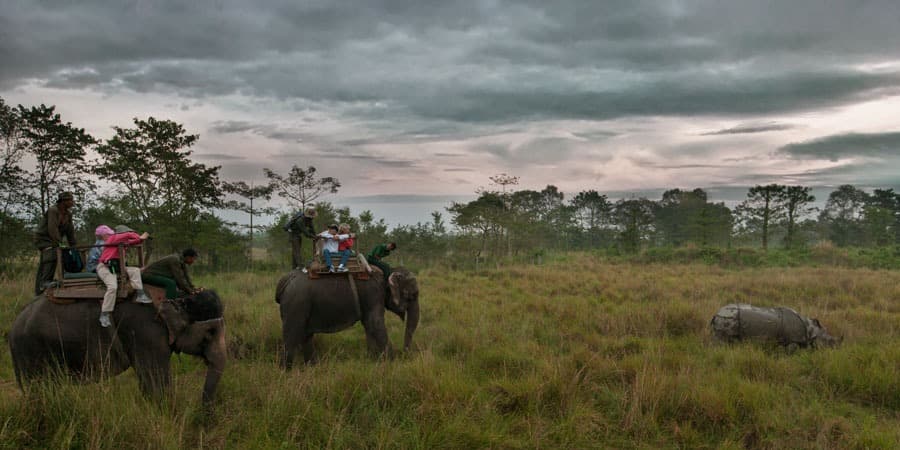
A sanctuary for Asia's remaining one-horned rhinoceros, Chitwan National Park also stands as one of the last habitats of the Bengal tiger. Despite numerous government measures to combat poaching, illegal hunting persists in the region, threatening the survival of these two species.
During your safari, you'll observe numerous wild mammals: hyenas, leopards, elephants, wildcats, macaques and sloth bears inhabit the forests. Vigilance and respect are essential during your visit to ensure complete safety.
Along the riverbanks, during your boat excursion, you'll likely spot crocodiles basking on the sandy shores.
As for flora, it flourishes abundantly. Today, 570 different plant species have been recorded. Sal forests, which cover much of the territory, along with grasslands and riverine forests, create a splendid mosaic. In spring, flowering trees reveal their full beauty, adding vibrant touches of color to the verdant jungle.
Safari in Chitwan National Park
Chitwan National Park is a must-visit destination on any Nepal itinerary and can be explored over several days on safari. Multiple options await you: 4x4 safari, jungle trekking, or boat excursions on the river.
A safari offers the perfect opportunity to immerse yourself in the heart of the jungle and observe rare and endangered wildlife. Your English-speaking guide will share the park's history and inform you about the different animals you encounter. He will outline the rules for exploring the park with complete respect for nature.
To reach Chitwan from Kathmandu or Pokhara is straightforward. Numerous tourist buses depart from Kathmandu or Pokhara daily. Plan for approximately 6 to 8 hours of travel.
Greenline buses offer a more comfortable alternative, including a lunch break en route.
Accommodation in Chitwan National Park
See all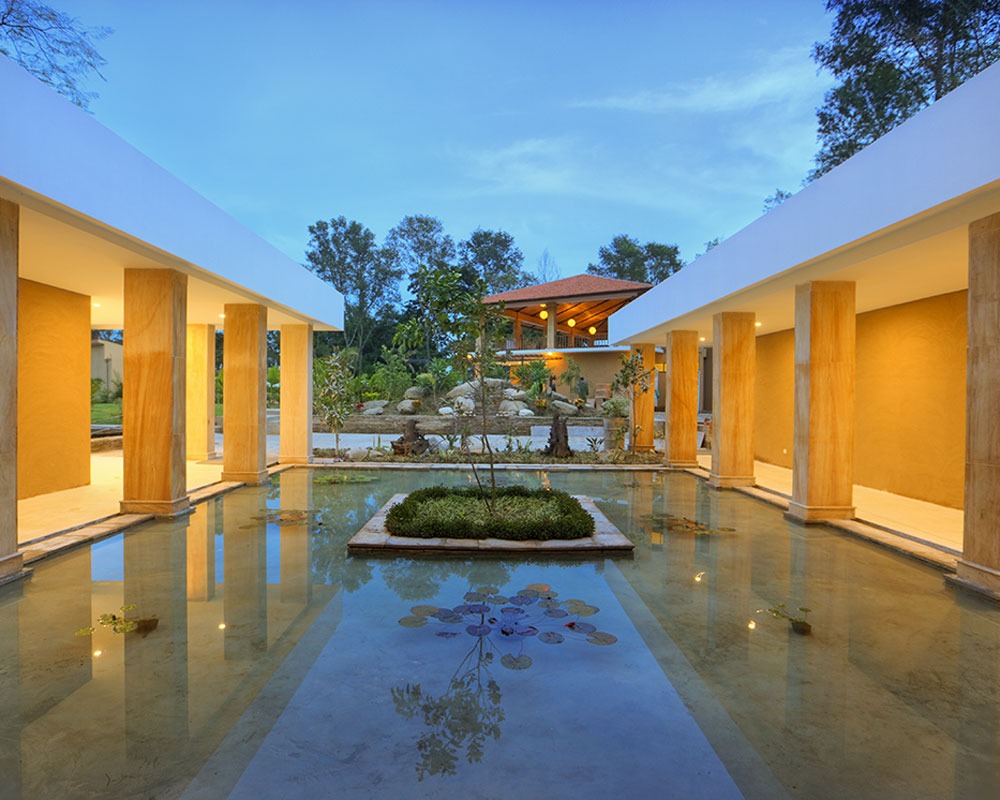
Kasara Resort
Lodge confortable à l'intérieur du parc national de Chitwan, avec guides naturalistes, excursions en pirogue et marches d'observation dans le Teraï népalais.
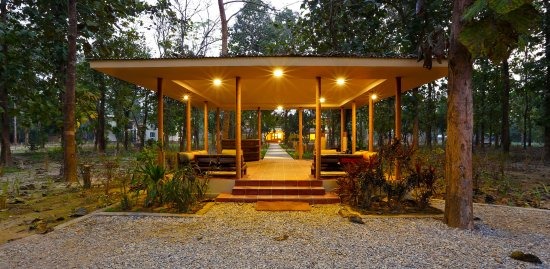
Jagatpur Lodge
Sept tentes safari importées d'Afrique du Sud, vue 180° sur la plaine du Chitwan et activités nature : le Jagatpur Lodge cible un séjour faune au Népal.
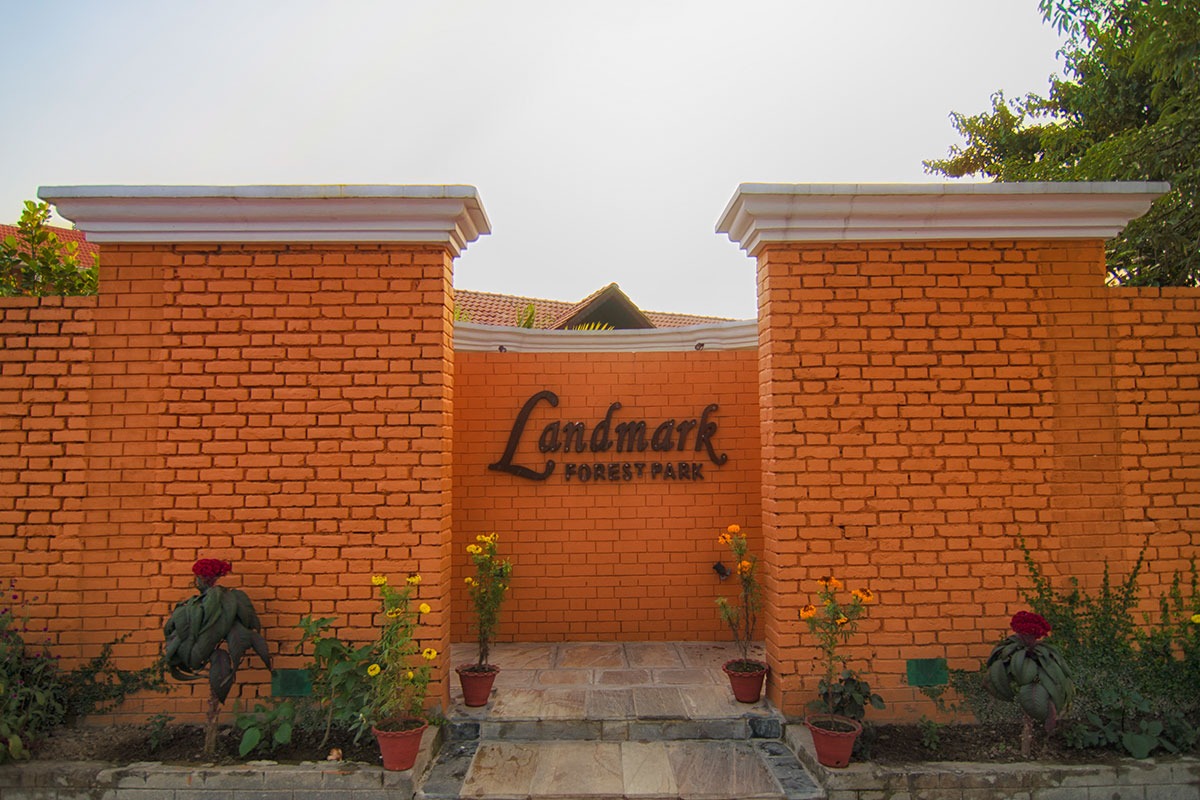
Landmark Forest Resort
Hébergement en bordure du parc national de Chitwan, point de départ pour les safaris et l'observation de la faune dans le Teraï népalais.
Want to discover this destination?
Our local advisors design your tailor-made trip.