Shanti Stupa
Shanti Stupa
Peace pagoda built in 1973 on Ananda Hill in Pokhara, offering panoramic views of the Annapurna range and Phewa Lake.
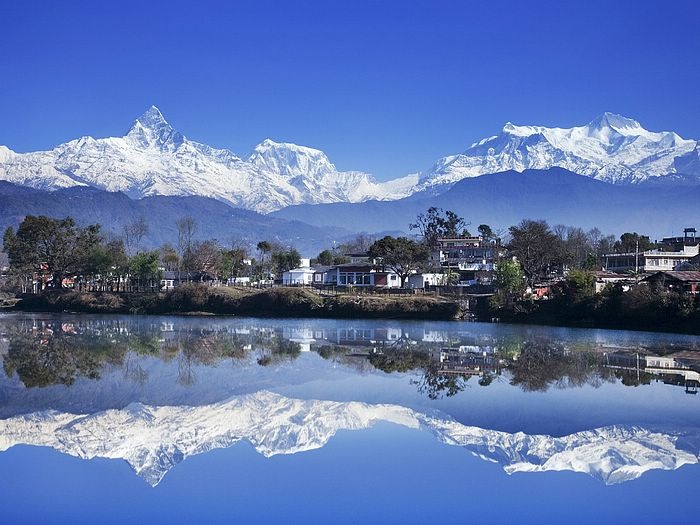
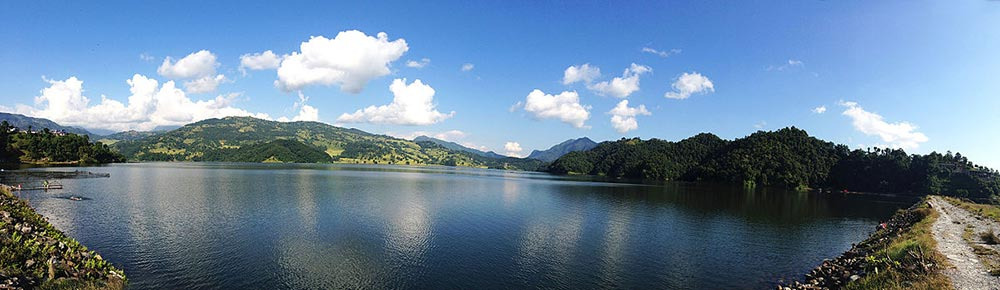
The Shanti Stupa stands on Ananda Hill at an elevation of 1,100 meters, on the western slope of the Pokhara valley, overlooking Phewa Lake. Also known as the pagoda for world peace, this white monument with its gold-trimmed rounded roof ranks among the eighty peace pagodas built around the world by the Nipponzan Myohoji order.
Why visit Shanti Stupa
The site combines three complementary attractions that justify the climb:
- An exceptional viewpoint over the Annapurna range, the city of Pokhara, and Phewa Lake, particularly clear in the morning under fine weather conditions.
- A spiritual dimension: the pagoda is an active meditation site, dedicated to peace and interfaith dialogue.
- A forest hike to reach it, accessible and representative of Nepal's mid-hill landscapes.
Allow a half-day to explore the site comfortably, including travel time.
Monument History
The Shanti Stupa was built by Japanese monk Nichidatsu Fujii, founder of the Nipponzan Myohoji order, with participation from Pokhara residents. The first stone was laid on Ananda Hill in 1973 by Fujii himself.
The project was part of a global program launched after World War II: to erect peace pagodas on five continents to promote non-violence. The Pokhara stupa is part of a network of approximately eighty pagodas, including those in Lumbini, Tokyo, and London.
What to see on site
The central building is a circular two-level structure, painted brilliant white and topped with a dome crowned by golden spires. Four Buddha statues, donated by different Buddhist countries, are arranged around the stupa, each representing a major episode from the Buddha's life: birth, enlightenment, first sermon, and parinirvana.
The plaza offers an unobstructed view:
- to the north, of the Annapurna massif and Machhapuchhre (Fishtail);
- below, of Phewa Lake and the city of Pokhara;
- of the surrounding hills, dotted with traditional Nepali houses.
A small meditation space is open to visitors who respect the site's tranquility.
How to reach Shanti Stupa
Three options allow you to reach the stupa from Pokhara.
By boat and then on foot
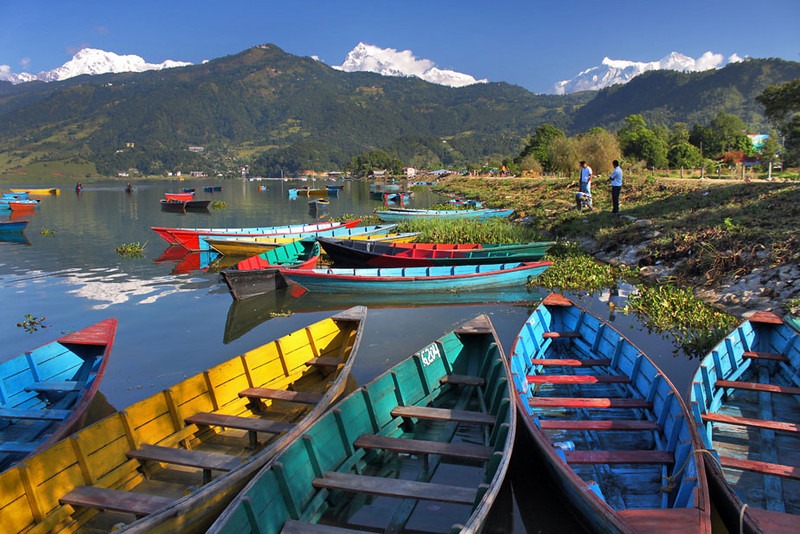
This is the most popular route. You cross Phewa Lake from the Lakeside shore by boat (half-day rental at moderate rates, life jackets usually included or available for a nominal fee). From the landing at the foot of the hill, a steep forest path leads to the stupa in approximately 45 minutes of walking.
On foot from Pokhara
A longer climb (1.5 to 2 hours) also starts from Damside or World Peace Stupa Road. The effort is more sustained but the route remains well-marked.
By car or taxi
A drivable road reaches a parking area just minutes on foot from the stupa. This is the fastest option and most suitable if traveling with children or people with limited mobility.
Practical Information
- Access: open daily during daylight hours. Entry to the site is free.
- Attire: hiking shoes recommended if taking the trail from the lake. Clothing covering shoulders and knees when approaching the stupa.
- Conduct: you are asked to remove your shoes before stepping on the stupa platform and to walk around it clockwise.
- To bring: water, sun protection, windbreaker (the summit is exposed).
- Accommodation: a few guesthouses are located on Ananda Hill for travelers wishing to watch the sunrise.
When to visit
The best time to enjoy the Annapurna view corresponds to the dry seasons:
- October to early December: clear skies, mild temperatures, optimal visibility of peaks.
- March-April: good visibility, rhododendrons blooming on the hills.
- June to September: monsoon season, slippery trails, and peaks often obscured by clouds.
For photography, favor early morning when the Annapurnas glow pink and mist lifts from the lake.
Nearby attractions
The visit can be combined with other Pokhara sites:
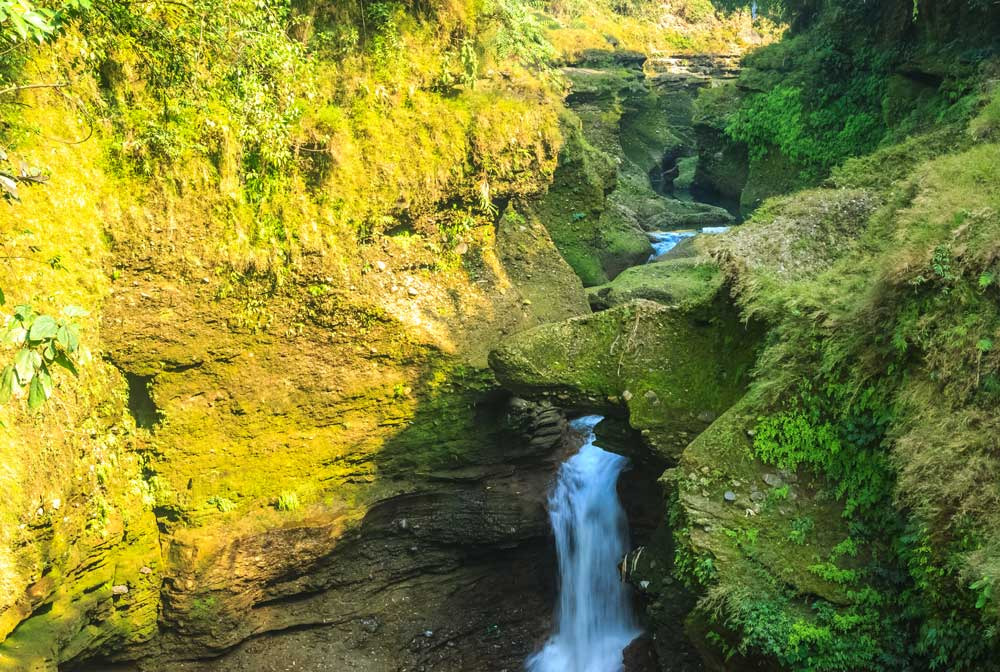
- Devi's Fall, a waterfall that plunges into a rocky crevasse, a few kilometers to the south.
- The Gupteswar Mahadev caves, an underground Hindu sanctuary located in Chhorepatan, just opposite Devi's Fall.
- The Taal Barahi temple, built on an islet in Phewa Lake and accessible by boat from Lakeside.
To extend your experience in the region, the Manaslu and Langtang massifs offer complementary trekking itineraries.
Frequently Asked Questions
Frequently asked questions
Allow approximately half a day including the lake crossing and the 45-minute hike up, the site visit, and the return. By car, the visit alone takes about one hour.
No, entry to the site is free. The only costs to budget are the boat rental to cross Phewa Lake or a taxi if you choose the road route.
The trail is short (about 45 minutes) but steep and can be slippery after rain. Closed shoes are recommended. A car option is available for visitors preferring to avoid the climb.
Yes, in clear weather, the panorama spans the entire Annapurna massif and Machhapuchhre. Visibility is best from October to early December and in March-April, ideally early in the morning.
No, the stupa is open to all. It was designed as a place of gathering between religions. A few rules of respect apply: proper attire, silence near the stupa, and walking around it clockwise.
Include Shanti Stupa in your journey
Shanti Stupa fits naturally into a stay in Pokhara, a central hub in most Nepal itineraries. To build a tailor-made trip combining lakes, treks, and Buddhist sites, explore our Nepal journeys.
Nearby
Interested in this visit?
We can include it in your personalised itinerary.