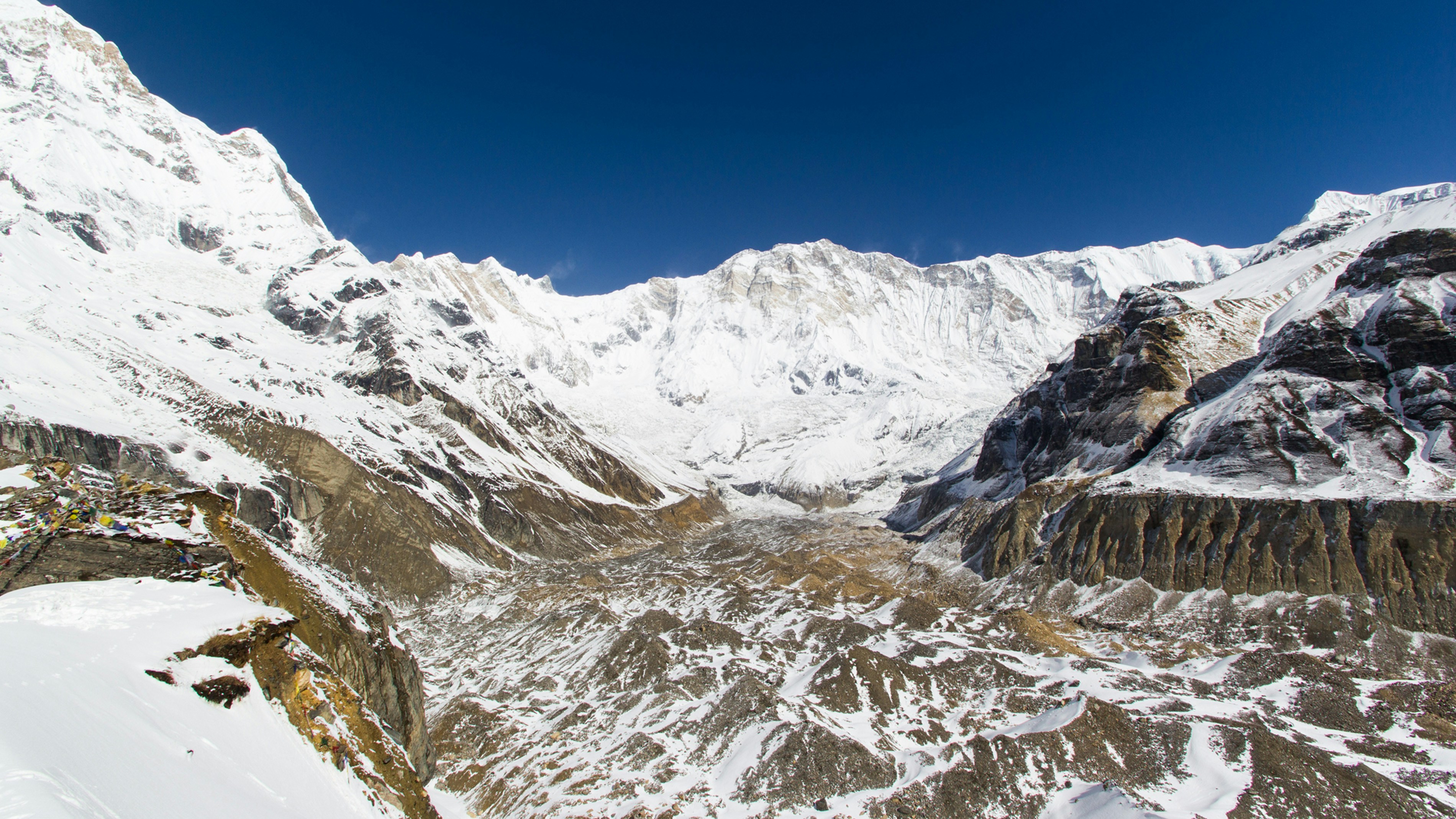
Monjo
Monjo is the trekking village that marks the official entrance to Sagarmatha National Park on the route to Everest Base Camp. Permit checkpoint, teahouses and authentic Sherpa atmosphere.
Monjo is a mountain village located in the Khumbu Valley, Nepal, on the classic trekking route to Everest Base Camp. Perched at approximately 2,835 metres above sea level, it marks the entrance to Sagarmatha National Park, a UNESCO World Heritage site. This is where trekkers pass through the official checkpoint and enter one of the world's most pristine high-altitude ecosystems.
Practical information at a glance
- Altitude: approximately 2,835 m
- Access: on foot from Lukla (via Phakding), classic stage of the EBC trek
- National park entrance: TIMS permit and Sagarmatha permit mandatory, verified at Monjo checkpoint
- Passage duration: trekking village; allow 30 to 45 minutes for formalities at the checkpoint
- Accommodation: several teahouses available for an overnight stop
What to see there
Monjo is an authentic Sherpa village, composed of stone houses, prayer wheels and colourful prayer flags that border the trail. The Sagarmatha National Park checkpoint is located here, with information panels about local fauna and flora. The Dudh Koshi river flows below, nestled in a gorge lined with rhododendrons and pine trees.
History and context
Monjo belongs to the Khumbu region, the historic territory of the Sherpas, a people of Tibetan origin who settled in these valleys several centuries ago. Sagarmatha National Park, established in 1976, placed Monjo at its official gateway. For centuries, the village lived off agriculture and yak herding; the development of trekking from the 1960s onward made it an essential stage on the Everest circuit.
Highlights of the visit
The national park checkpoint
This is where permits are verified. Explanatory panels provide useful information about the park's biodiversity: Himalayan tahr, Danphe pheasant, rhododendron forests. Ensure your documents are in order to avoid any delays.
The Dudh Koshi gorge
Between Monjo and Namche Bazaar, the trail descends towards the river then climbs steeply. The gorge offers stunning views of rocky cliffs and the suspension bridges typical of the Khumbu, including the famous bridge leading to the ascent towards Namche.
The Sherpa atmosphere of the village
Prayer wheels, carved mani stones and small neighbourhood monasteries reflect the Tibetan Buddhist life that structures the daily lives of the inhabitants. In the evening, teahouses gather trekkers and porters in a simple and warm atmosphere.
Photography tips
Morning light is ideal for photographing prayer flags with snow-capped peaks in the background. On the trail towards Namche, the suspension bridges above the Dudh Koshi offer spectacular framing. Always ask the locals' permission before photographing them.
Location and access
Monjo is located between Phakding (downstream) and Namche Bazaar (upstream), on the main Everest Base Camp trekking trail. Access is only on foot from Lukla, the arrival point for flights from Kathmandu. The climb to Namche from Monjo is the most physically demanding section of this day's trek.
Nearby attractions
- Namche Bazaar — capital of the Khumbu, lively marketplace and essential acclimatisation point, a few hours' climb away.
- Phakding — trekking village downstream, often the first night after Lukla.
- Lukla — the starting point of the trek, accessible by plane from Kathmandu.
- Sagarmatha National Park — of which Monjo marks the official entrance, encompassing Everest and its neighbouring peaks.
Frequently asked questions
Yes. Two permits are mandatory: the TIMS (Trekkers' Information Management System) and the Sagarmatha National Park entrance permit. They are verified at Monjo's checkpoint. Obtain these documents in Kathmandu or Lukla before you arrive.
Yes, several teahouses welcome trekkers. Some prefer to stop here rather than in Phakding to shorten the long climb to Namche the next day.
The optimal seasons are autumn (October–November) and spring (March–May), with clear skies and tolerable temperatures. Winter is cold but passable; the monsoon (June–September) makes trails slippery.
The climb generally takes between 2 hours 30 minutes and 3 hours 30 minutes depending on pace and acclimatisation level. The final section is steep and demanding.
Respect Buddhist sites by walking around mani stones and stupas in a clockwise direction. Ask permission before photographing locals. Avoid leaving rubbish on the trail: the national park enforces strict rules.
Want to discover this destination?
Our local advisors design your tailor-made trip.