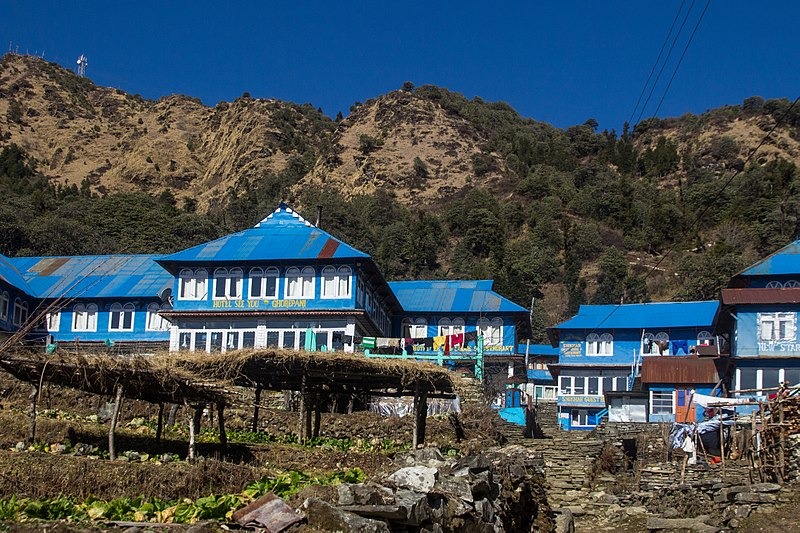
Kopra
Kopra Ridge is an alpine ridge in the Annapurna region, offering direct views of Dhaulagiri and South Annapurna, far from the crowds of Poon Hill. A 4 to 6-day trek from Pokhara, through rhododendron forests and community lodges.
Kopra Ridge is an alpine ridge located in the Annapurna region of Nepal, between the villages of Ghorepani and Tadapani. Less frequented than the famous Poon Hill, it offers direct panoramic views of Dhaulagiri, South Annapurna and Nilgiri. The trek crosses rhododendron forests and alpine meadows, with nights in high-altitude lodges. It's an itinerary for hikers seeking solitude without sacrificing views of the great peaks.
Quick facts
- Permit required: ACAP (Annapurna Conservation Area Permit) and TIMS card mandatory.
- Altitude: approximately 3,660 m at the ridge's highest point.
- Recommended duration: 4 to 6 days from Pokhara for a complete circuit.
- Clothing: high-altitude trekking gear — thermal layers, waterproof jacket, hat.
- Access: usual departure from Nayapul or Kimche, accessible by vehicle from Pokhara.
What you'll see
Kopra Ridge offers a clear view of South Annapurna (7,219 m), Hiunchuli, Nilgiri and Dhaulagiri (8,167 m). The sacred Khayer Lake is nearby at an even higher altitude. The forests crossed on the ascent are dominated by rhododendrons, blooming from March to May. Kopra Danda lodges are the only accommodation on the ridge.
History and context
Kopra Ridge remained little-known for a long time, known mainly to inhabitants of the Kali Gandaki valley. The development of community-run lodges, managed by local cooperatives, gradually opened the route to foreign trekkers from the 2010s onwards. The stated objective is to distribute tourism benefits directly to mountain villages.
Highlights of the trek
The panorama from the ridge
At sunrise, the low light illuminates Dhaulagiri then South Annapurna in succession. The ridge is clear enough to see both massifs without obstruction. The absence of crowds — unlike Poon Hill — makes the moment particularly serene.
Khayer Lake
This sacred glacial lake, situated above Kopra Danda, is a pilgrimage site for local Hindus and Buddhists. The ascent from the ridge takes a few extra hours and requires good acclimatization.
Rhododendron forests
Between Ghorepani and Kopra, the trail crosses dense forests. During flowering season (March-April), red and pink rhododendrons cover the hillsides. It's one of the most beautiful botanical sections in the Annapurna region.
Photography tips
Sunrise from the ridge is the most photographed moment: arrive at the viewpoint 30 minutes before dawn. Evening light on Dhaulagiri is also remarkable. During flowering season, rhododendrons in the foreground with snow-capped peaks in the background create the classic composition for this trek. Photography restrictions don't apply on the ridge, but be respectful around Khayer Lake, a sacred site.
Location and access
Kopra Ridge is located in the Annapurna Conservation Area (ACAP), west of Ghorepani. The usual starting point is Nayapul, accessible from Pokhara by road. The classic itinerary passes through Tikhedhunga, Ghorepani and Dobato before reaching Kopra Danda. It's possible to complete the circuit by descending toward Tadapani and Ghandruk. No road serves the ridge: access is on foot only.
Nearby attractions
- Poon Hill — The most popular viewpoint in the Annapurna region, a day's walk from Ghorepani.
- Ghorepani — Essential stopping village on the route to Kopra, with lodges and mountain views.
- Ghandruk — Traditional Gurung village, alternative starting or ending point for the circuit.
- Pokhara — Main logistics base for organizing the trek, with agencies, equipment and permits.
Frequently asked questions
The best windows are autumn (October-November) for clear air, and spring (March-May) for blooming rhododendrons. Winter is possible but cold and snowy at altitude. The monsoon (June-September) makes trails slippery and views often obscured.
The trail is marked and lodges dot the route. An experienced trekker can do it without a guide. For those less accustomed to altitude or mountain navigation, a local guide is still recommended, especially for the ascent to Khayer Lake.
Two documents are needed: the ACAP (Annapurna Conservation Area Permit) and TIMS card (Trekkers' Information Management System). They can be obtained in Pokhara or Kathmandu before departure.
The altitude (over 3,600 m) and trek duration make it best suited to hikers in good physical condition. Prior experience on multi-day hikes is recommended. Gradual acclimatization along the route minimizes altitude-related risks.
Yes. The classic itinerary passes through Ghorepani, allowing you to include Poon Hill at sunrise before continuing to Kopra. The two sites combine naturally over a 5 to 7-day circuit.
Want to discover this destination?
Our local advisors design your tailor-made trip.