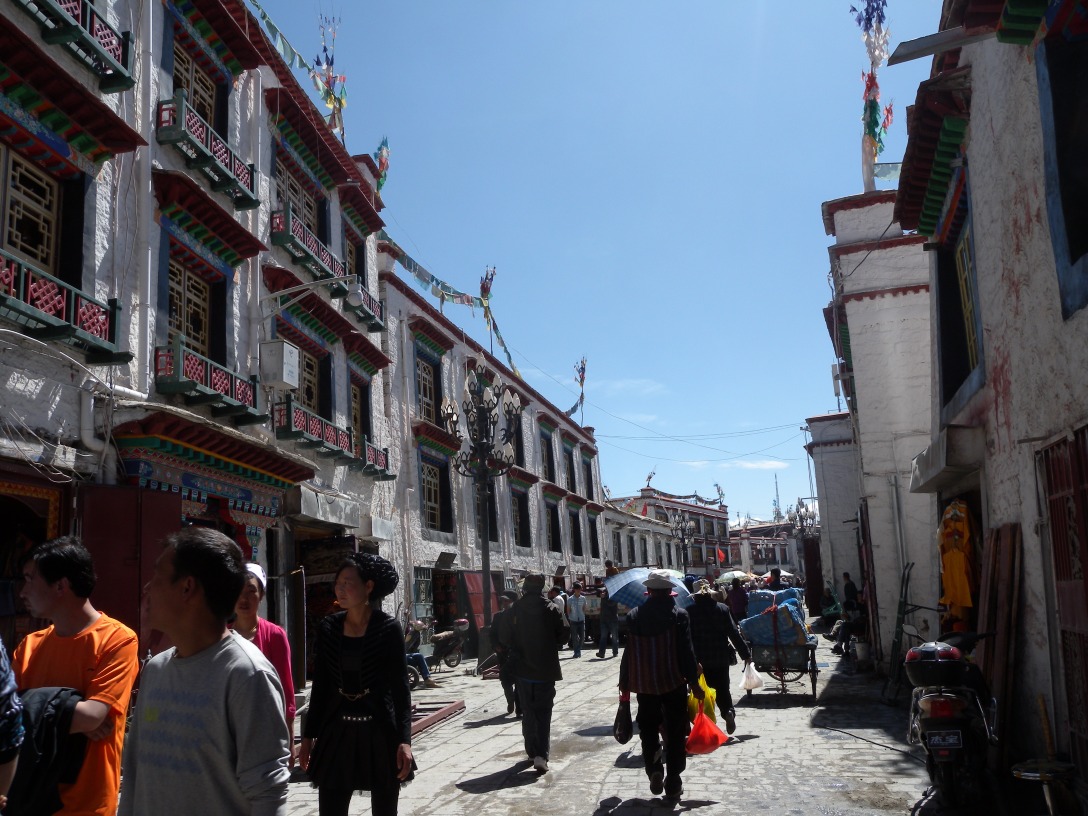
Chhokangparo
A quiet village in Paro Valley, Chhokangparo offers traditional farmhouses, paths through rice terraces and immediate proximity to Taktsang, Rinpung Dzong and ancient temples of western Bhutan.
Chhokangparo is a traditional village in Paro Valley, western Bhutan. Nestled between terraced rice fields and pine forests, it offers an authentic glimpse of rural Bhutanese architecture, far from the bustle of town centers. Its proximity to several religious and natural sites makes it a discreet base for travellers seeking to venture off the beaten path.
What to see
The village preserves traditional stone and timber farmhouses, with façades painted with symbolic motifs. Rice and buckwheat fields structure the landscape according to seasons. Chortens (stupas) and prayer mills dot the paths between hamlets, bearing witness to daily Buddhist life.
History and context
Paro Valley is one of Bhutan's oldest inhabited areas. The villages that make up the valley, including Chhokangparo, have long lived from agriculture and caravan trade with Tibet. Vernacular architecture — thick walls, painted window frames, wooden roofs — responds as much to climate as to building traditions passed down through centuries.
Highlights of a visit
Walks between hamlets
Trails connect Chhokangparo to neighbouring villages through fields and forests. Morning walks, when mist lifts from the valley, reveal a calm and little-visited landscape. No special equipment is required for these gentle hikes.
Rural Bhutanese architecture
Local farmhouses exemplify the dzong-kha style: multi-storey structures, ground floor reserved for livestock, habitable upper floors, grain storage. Some owners offer homestay experiences, allowing close observation of domestic life.
Gateway to Paro Valley sites
The village serves as a convenient starting point to reach the Taktsang monastery (Tiger's Nest), Rinpung Dzong or the National Museum of Bhutan.
Photography tips
Golden morning light illuminates painted façades and rice fields. In autumn (October-November), harvested fields and golden foliage offer striking contrasts. Always ask residents' permission before photographing them.
Location and access
Chhokangparo lies in Paro Valley, a few kilometres from Paro town centre. Paro International Airport — Bhutan's only international airport — is the natural point of entry. A vehicle with driver, provided by your local agency, is the usual means of transport to reach the village. Roads are paved up to Paro; paths within the village are dirt tracks.
Nearby
- Taktsang monastery — Bhutan's most iconic site, clinging to a cliff at over 3,000 m altitude.
- Rinpung Dzong — 15th-century fortress-monastery overlooking the Paro Chhu river.
- National Museum of Bhutan — collections of religious art, textiles and traditional weapons housed in a restored watchtower.
- Kyichu Lhakhang — one of Bhutan's oldest temples, founded in the 7th century.
Frequently asked questions
All foreign visitors to Bhutan must hold a visa and travel through a licensed agency. No additional permits are required to move around Paro Valley, of which Chhokangparo is part.
Spring (March-May) and autumn (September-November) offer clear skies and pleasant temperatures. Winter is cold but sees fewer visitors; the monsoon (June-August) brings frequent rainfall.
Some families in Paro Valley welcome travellers in homestays. Your local agency can arrange this type of stay, which must be booked in advance.
The hike to Taktsang starts from a car park in Paro Valley. It's easy to plan the monastery climb in the morning and an afternoon walk through Chhokangparo's hamlets.
At temples and places of worship in the valley, clothing covering shoulders and knees is expected. Within the village itself, neat and respectful attire is appropriate.
Want to discover this destination?
Our local advisors design your tailor-made trip.