Swayambhunath
Swayambhunath
Perched on a hillside west of Kathmandu, Swayambhunath brings together an ancient stūpa, Hindu shrines and sweeping valley views. Complete guide to planning your visit.
Swayambhunath, also called the monkey temple, is a Buddhist sanctuary revered by both Buddhists and Hindus. Located on a hilltop west of Kathmandu overlooking the city, it forms with the stūpa of Boudhanath to the east one of the two major Buddhist centers of the valley. Inscribed on the UNESCO World Heritage list since 1979 as part of the Kathmandu Valley ensemble, the sanctuary is recognized by its great white stūpa crowned with a golden spire bearing the painted eyes of the Buddha.
Why visit Swayambhunath
Swayambhunath brings together several dimensions of Nepali culture in one place: an ancient stūpa, Hindu shrines, Tibetan temples and a panoramic view over Kathmandu Valley. Here are a few reasons to include the site in your itinerary:
- An iconic stūpa whose four pairs of Buddha's eyes rank among the most recognizable images in Nepal.
- Rare religious syncretism, where Buddhist and Hindu offerings coexist on the same hilltop.
- Complete panorama over Kathmandu and, on clear days, over the Himalayan foothills.
- A vibrant atmosphere animated by pilgrims, prayer wheels and the monkeys that gave the place its nickname.
History of the sanctuary
The name Swayambhu means "self-created" or "self-existing." According to tradition, the hilltop rose from a lotus that emerged from the primordial lake that once occupied the Kathmandu Valley before being drained by the bodhisattva Manjushri. The earliest epigraphic references to the site date back to the Licchavi period, around the 5th century, making it one of the oldest Buddhist sites in the valley. Over the centuries, several Hindu rulers of the valley contributed to its upkeep and expansion, testifying to the permeability between the two traditions.
The stūpa has been restored several times, notably in the 17th century under the Malla dynasty, and again in the 20th century. The April 2015 earthquake damaged several secondary structures on the hill, but the main stūpa held firm. Restoration work, carried out with international support, has gradually allowed the entire site to reopen.
What to see
The main stūpa
The white stūpa, crowned with a golden spire of thirteen rings symbolizing the stages toward enlightenment, is the heart of the sanctuary. On each of the four faces of the spire, the eyes of the Buddha gaze toward the cardinal directions; between the eyes is a sign resembling a question mark, which is actually the Nepali numeral 1, a symbol of unity. Around the dome, hundreds of prayer wheels spin clockwise, as ritual circumambulation demands.
Secondary shrines
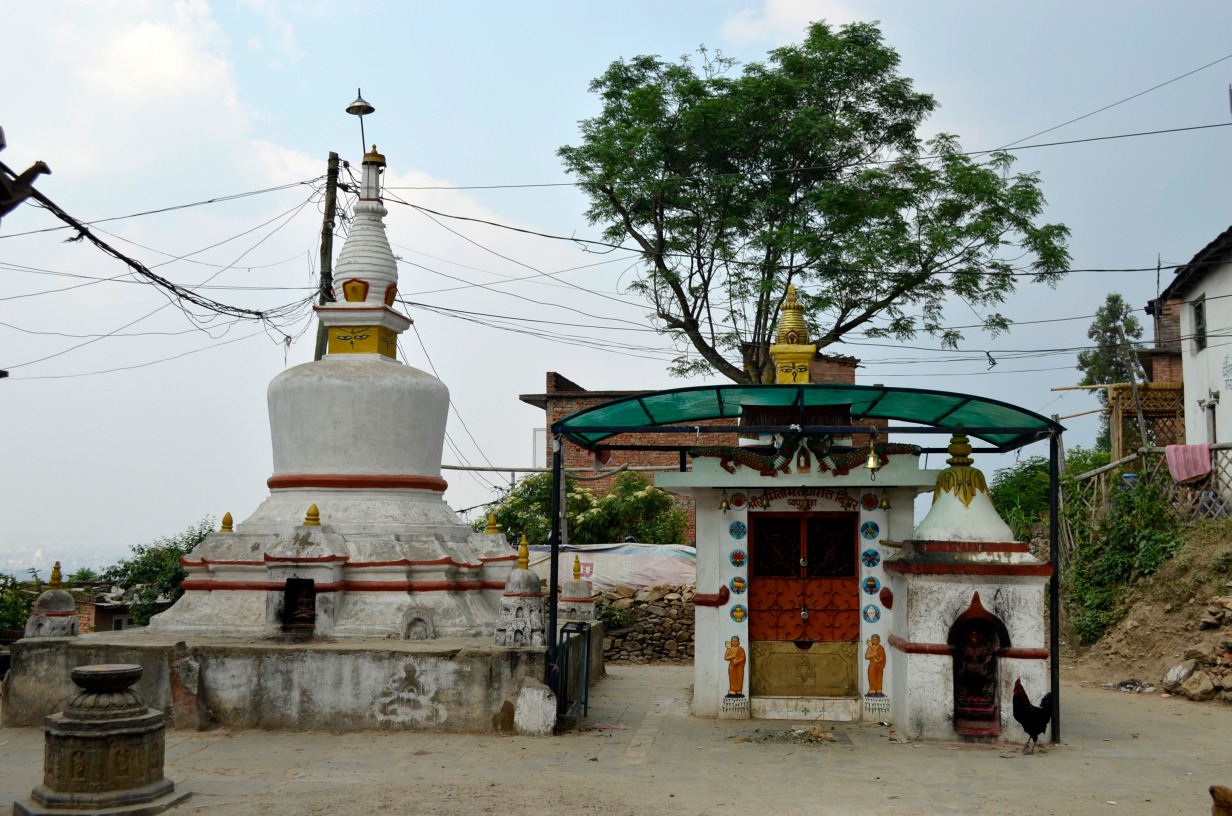
All around the main stūpa are small chapels dedicated to the Tara, Vajrayogini or Hariti, the Hindu goddess of fertility. The temple of Hariti, nestled against the stūpa, illustrates well the cohabitation of the two traditions. You will also encounter active Tibetan monasteries, where it is sometimes possible to attend ceremonies.
The staircase and the monkeys
The main entrance is via a long staircase of over 300 steps lined with statues. Rhesus monkeys, settled here for generations, give the place its nickname of "monkey temple." Keep a careful eye on your belongings: they are curious and accustomed to visitors.
The panorama
From the summit platform, the view sweeps across the entire Kathmandu Valley. On clear days, especially in autumn and winter, you can see the peaks of Ganesh Himal and Langtang.
Practical information
- Duration of visit: allow 1.5 to 2.5 hours to tour the site without rush.
- Admission: a modest entrance fee is charged to foreign visitors; rates may change.
- Hours: the site is accessible from sunrise to sunset. Early morning hours offer the most ritual atmosphere.
- Dress code: respectful attire recommended, shoulders and knees covered to enter the chapels.
- To avoid: feeding the monkeys and leaving bags open or snacks visible.
Best time to visit
October through April generally offer clear skies and moderate temperatures in the valley. Monsoon season, June through September, makes visiting more humid, but pilgrimages remain active.
How to get there
Swayambhunath is located approximately 3 km west of Kathmandu's historic center. Several options allow you to reach it:
- By taxi: journey of about 15 to 25 minutes from Thamel depending on traffic.
- On foot: possible from Thamel in 45 minutes to 1 hour, crossing the Chhetrapati neighborhood.
- By bike or scooter: popular option for combining the visit with other valley sites.
Two entrances are available: the monumental staircase to the east, more demanding but more ritual, and the side road that reaches the summit from the west, more accessible.
What to combine in the valley
Swayambhunath is part of the network of seven ensembles in the valley listed by UNESCO. A few complementary sites:
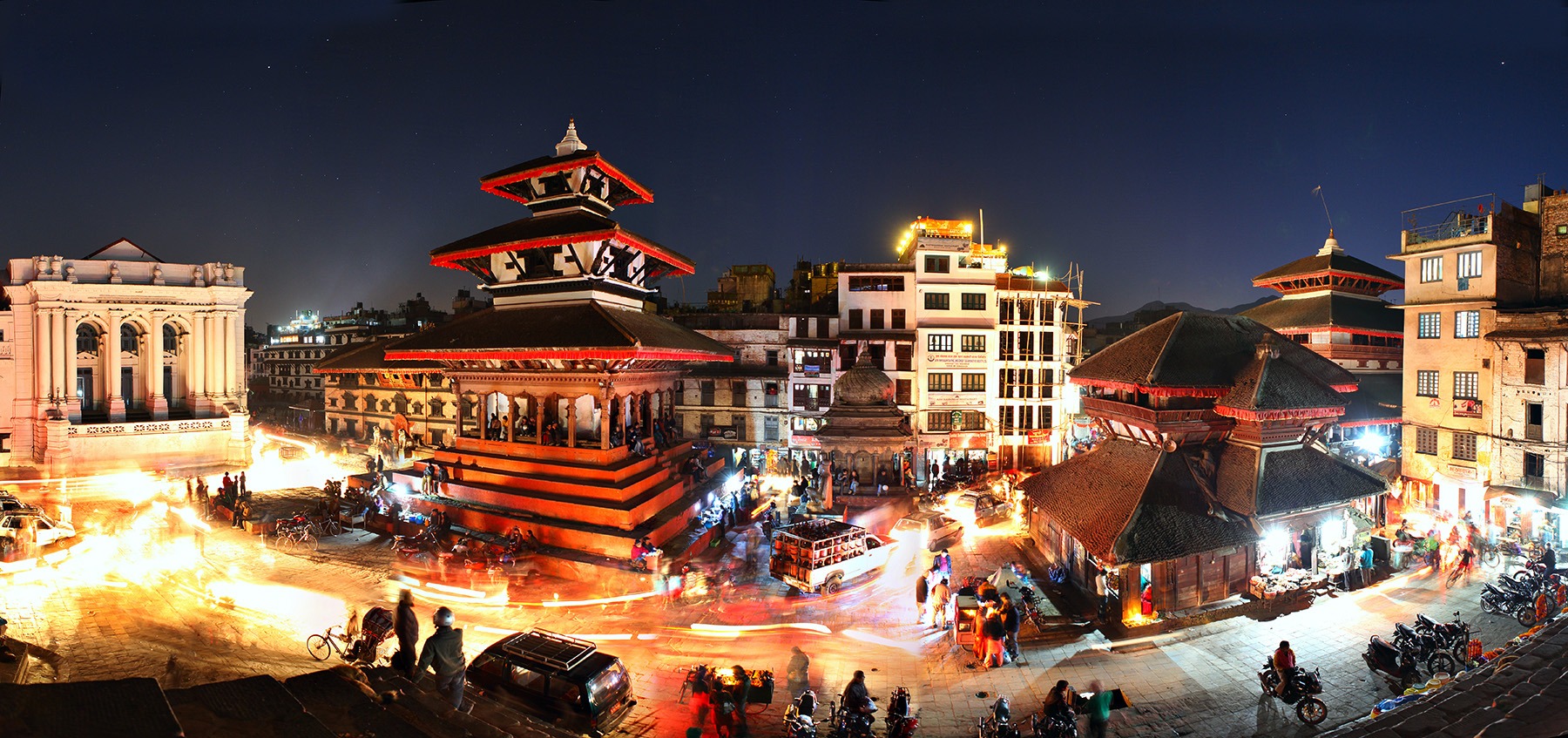
- Kathmandu Durbar Square: the former royal plaza, about twenty minutes by taxi.
- Pashupatinath: the great Shaivite sanctuary on the banks of the Bagmati, east of the city.
- Patan Durbar Square: the neighboring city, famous for its Newar architecture.
- Kirtipur: an ancient hilltop settlement, more off the beaten path, in the southwest of the valley.
Frequently asked questions
Frequently asked questions
A large population of rhesus monkeys lives freely on the hilltop from long ago. Tradition considers them sacred, linked to the founding narrative of the site, and their permanent presence has given rise to the nickname used by visitors.
A leisurely visit of the stūpa, secondary chapels and panorama takes between 1.5 and 2.5 hours. Combined with a break at a nearby café, plan for a half-day.
The main stūpa held, but several secondary buildings were damaged. Most restoration work has been completed and the entire site is now accessible.
No. The sanctuary is revered by Buddhists and Hindus alike, and visitors of all backgrounds are welcome. Respectful dress and clockwise circumambulation are expected.
These are the eyes of the Buddha, facing the four cardinal directions to signify omniscience. The central motif, which resembles a question mark, corresponds to the numeral 1 in Nepali script and symbolizes unity.
Include Swayambhunath in your journey
Swayambhunath can be visited in a few hours but is best appreciated as part of a broader itinerary in the Kathmandu Valley and beyond. To plan a coherent trip combining heritage, trekking and cultural encounters, explore our Nepal travel ideas.
Nearby
Interested in this visit?
We can include it in your personalised itinerary.