Changu Narayan
Changu Narayan
Perched on a hilltop north of Bhaktapur, Changu Narayan houses Vishnuite sculptures from the 5th to 9th centuries and ranks among Nepal's oldest Hindu temples.
Changu Narayan, the oldest Hindu temple in the Kathmandu Valley
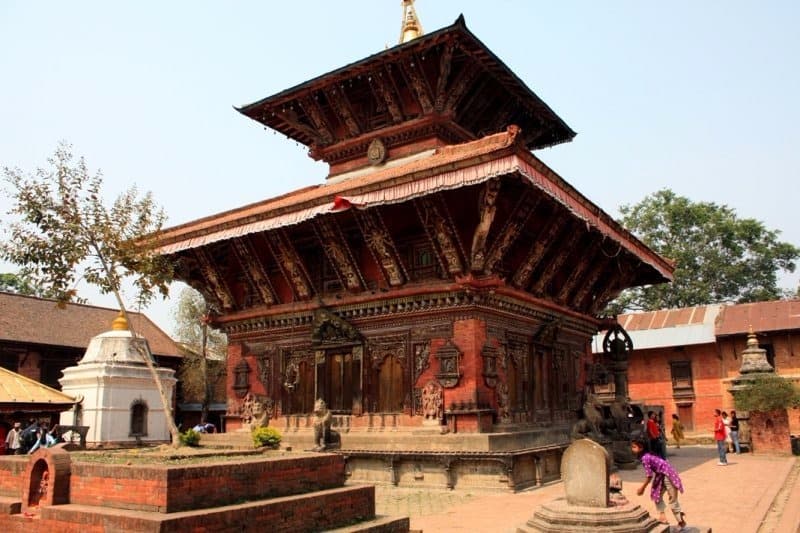
Perched atop a wooded hilltop at the eastern edge of the Kathmandu Valley, some 4 km north of Bhaktapur, Changu Narayan temple stands among Nepal's most ancient religious sites. Inscribed as a UNESCO World Heritage site as part of the Kathmandu Valley ensemble, it is dedicated to the Hindu god Vishnu in his incarnation as Narayan, the cosmic preserver. The present structure, rebuilt after a fire, dates to 1702, yet the temple's origins trace back to the 4th century, making it a rare witness to Newar art history and Vishnuite devotion in the Himalayas.
Why visit Changu Narayan
Several features distinguish this temple from other sanctuaries in the valley:
- Its antiquity: its foundations date to the Licchavi dynasty (4th century), a pivotal period in Nepali history.
- Iconographic richness: the courtyard contains an exceptional concentration of stone sculptures dated from the 5th to 9th centuries, considered masterpieces of ancient Hindu statuary.
- Authentic setting: less frequented than Pashupatinath or Boudhanath, the site retains a contemplative atmosphere, still connected to the life of the neighboring Newar village.
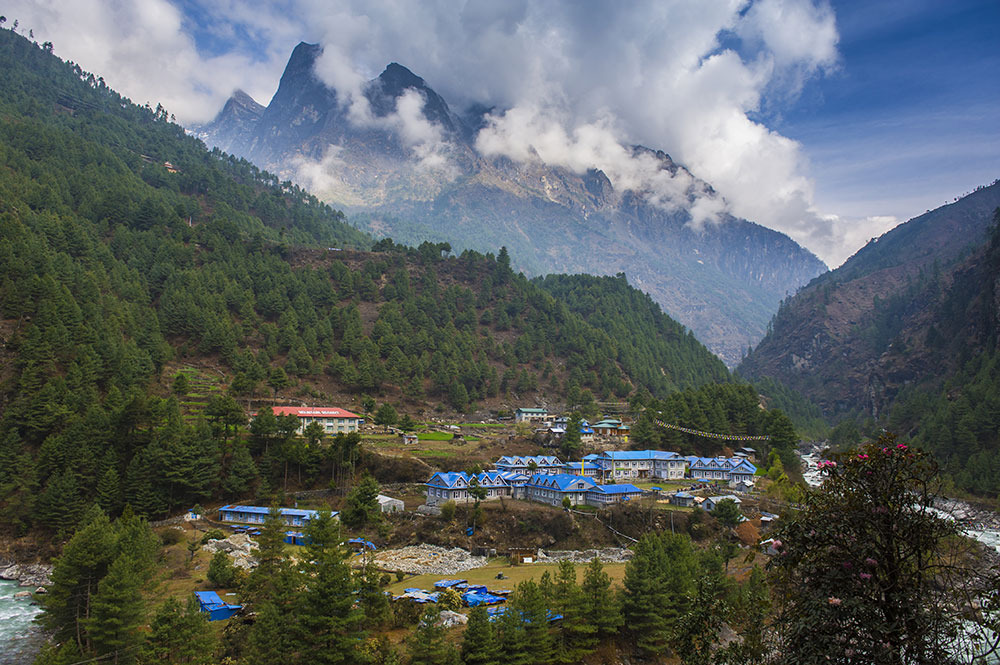
- The panorama: from the hilltop, views embrace the valley and, on clear days, the snow-capped Himalayan peaks.
A history spanning sixteen centuries
Licchavi origins
The sanctuary is traditionally attributed to King Hari Datta Varma, around 325 CE. An engraved stele discovered on the site, dated to 464, is considered Nepal's oldest known inscription. It commemorates the exploits of King Mandeva and constitutes a major documentary source for historians of the Licchavi period.
Reconstructions and continuity
The temple underwent several reconstructions over the centuries, the most significant following a fire at the turn of the 18th century. The present structure with its double pagoda roof dates to 1702. Despite these modifications, many original sculptures have been preserved and reintegrated into the enclosure, creating a veritable open-air museum.
The 2015 earthquake
The earthquake of April 25, 2015 damaged certain secondary structures within the complex. Extensive restoration work, supported by international organizations, stabilized the site, which remains open to visitors.
What to see on site
The main temple
Square in plan, the double-roofed structure features an ornate facade with four doors adorned with gilt copper plaques. Wooden pillars, decorated torans (lintels), and carved windows illustrate the craftsmanship of Newar artisans. Only Hindus may enter the sanctuary, but the exterior may be freely observed.
Sculptures in the courtyard
The paved courtyard concentrates the site's principal artistic interest. Among the major pieces:
- Vishvarupa: a cosmic representation of Vishnu with multiple arms, dated to the 6th century, illustrating the universal vision described in the Bhagavad-Gita.
- Vishnu Vikrantha: a statue depicting the god as a dwarf striding across the universe in three steps, among the oldest Vishnuite reliefs of the subcontinent.
- Narasimha: Vishnu in his form as a man-lion vanquishing the demon Hiranyakashipu.
- Vishnu on Garuda: a sculpture representing the god's mythical mount, kneeling before the temple.
- A stone pillar of King Mandeva bearing the 464 inscription.
The village of Changu
Around the temple extends a small Newar village that has remained apart from mass tourism. You'll encounter artisans, a local museum dedicated to folk art, and Thangka painting workshops (ritual paintings).
Practical information
- Duration of visit: allow 1 to 2 hours to tour the site and observe the sculptures attentively.
- Hours: the temple is generally accessible from sunrise to sunset.
- Admission: a modest entry fee is requested from foreign visitors, contributing to site maintenance.
- Dress code: proper attire recommended; remove shoes before approaching the main sanctuary.
- Best time: early morning for light on the sculptures, or late afternoon for valley views.
How to reach Changu Narayan
The temple is located approximately 4 km north of Bhaktapur and 22 km east of Kathmandu.
- From Bhaktapur: taxi (short journey) or local minibus from Kamal Binayak station. A walk of approximately 1.5 hours through rice fields and Newar villages also connects the two sites, much appreciated by hikers.
- From Kathmandu or Thamel: private taxi (45 minutes to 1 hour depending on traffic) or bus to Bhaktapur then connection onward.
- By bicycle or on foot: the Changu Narayan hilltop lends itself to a day excursion, often combined with Nagarkot for a higher-altitude stop.
What to see nearby
- Bhaktapur: a Newar museum-city a few kilometers away, whose old town warrants a minimum half-day exploration.
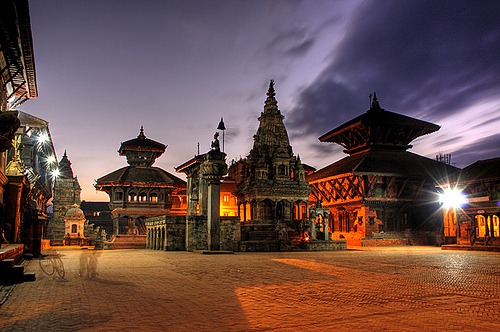
- Bhaktapur Durbar Square: a UNESCO-listed palatial complex, a natural complement to a Changu Narayan visit.
- Kirtipur: another perched Newar city, to the west of the valley, to extend your exploration of traditional architecture.
- Nagarkot: a highland station renowned for its Himalayan panoramas, accessible as an extension of your visit.
Preparing your trip to Nepal
Changu Narayan naturally integrates into an itinerary through the Kathmandu Valley, between Newar heritage, Hindu sanctuaries, and high-altitude trekking. To craft a customized itinerary including Bhaktapur, Patan, and the country's oldest sites, consult our Nepal journeys designed with English-speaking specialists.
Nearby
Interested in this visit?
We can include it in your personalised itinerary.