Boudhanath
Boudhanath
Nepal's largest stupa and the heart of exiled Tibetan Buddhism, Boudhanath is visited 6 km from Kathmandu, surrounded by around fifty monasteries.
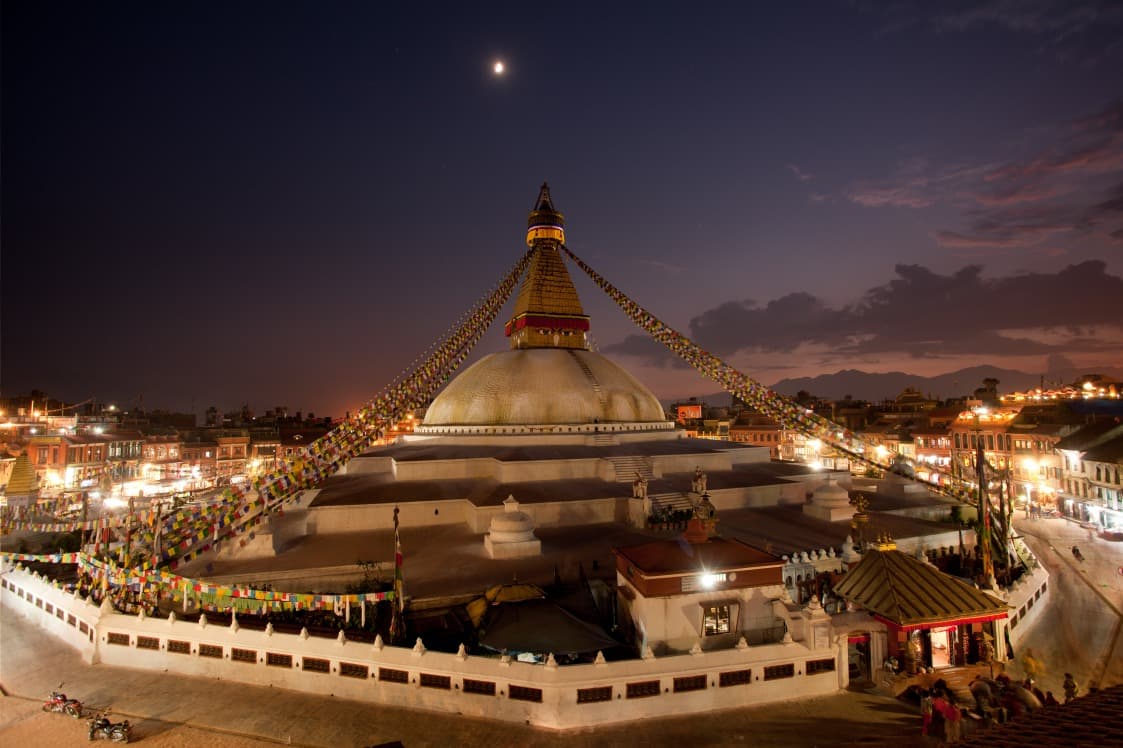
Boudhanath, sometimes spelled Bodnath, is Nepal's largest stupa and one of the most sacred Tibetan Buddhist centres outside Tibet. Located approximately 6 kilometres east of Kathmandu, this UNESCO World Heritage sanctuary concentrates the essence of Tibetan religious life in the valley, around fifty gompas (monasteries) and a vibrant neighbourhood populated by pilgrims, monks and merchants.
Why visit Boudhanath
Boudhanath stands out in several respects:
- Nepal's largest stupa, standing 40 metres high, structured like a giant mandala.
- A major UNESCO site in the Kathmandu Valley.
- The principal centre of exiled Tibetan Buddhism since the arrival of refugees in 1959.
- A living cultural experience: circumambulations, prayers, markets, thangka workshops.
Unlike fixed temples, Boudhanath functions daily as an active place of worship, making the visit particularly immersive without being staged.
History
The stupa's origins are the subject of several traditions. The oldest legend attributes its construction to the 5th century, while historical sources generally place its founding between the 5th and 14th centuries, attributed to Licchavi descendants. Tibetan tradition also mentions the participation of Emperor Trisong Detsan.
Excavations conducted in the late 15th or early 16th century unearthed the remains believed to be those of King Amshuvarma. The stupa also contains relics linked to Siddhartha Gautama, the founder of Buddhism — a belief that makes it a major pilgrimage site.
Following the Dalai Lama's escape in 1959, the massive arrival of Tibetan refugees profoundly transformed the neighbourhood: around fifty gompas were built around the stupa, making Boudhanath a genuine exiled Tibetan heart.
The March 2015 earthquake severely damaged the stupa's upper structure, with its spire collapsing. Restoration work, launched in November 2015, allowed the monument to be quickly restored thanks to mobilisation of the international Buddhist community.
What to see on site
The stupa and its symbolism
The building stands 40 metres tall and reflects Buddhist cosmology in its architecture. The square base comprises three superimposed terraces forming a mandala that the faithful traverse during prayer sessions. The structure also includes 108 niches, each containing a Buddha statue.
Each element corresponds to one of the five elements:
- Square base: earth.
- Dome: water.
- Tower above the dome: fire.
- Crown and pinnacle: ether.
At the top of the dome, the painted harmika represents the eyes of Buddha, facing the four cardinal directions. The elongated pyramid above it symbolises the path to enlightenment. All around the base, prayer wheels are turned by pilgrims during circumambulation, always in a clockwise direction.
The gompas
The monasteries surrounding the stupa are places of prayer, meditation and Buddhist teaching. Most are concentrated to the north and east of the site. Among the best known:
- The Kagyupa gompa.
- The Chinya-Lama gompa, one of the oldest.
- The Nyingmapa gompa.
- The Gelugpa gompa, school of the Dalai Lama.
- The Sakyapa gompa, located at the western entrance to the stupa.
Recognisable by the wheel of dharma on their pediments, several are accessible to visitors who respect silence and dress codes.
Practical information
The site is open all day, but access to the stupa's terraces and monasteries follows more restricted hours, usually from morning until late afternoon. A modest entrance fee is charged to foreign visitors; the rate changes regularly, so it's best to check on arrival.
A few recommendations:
- Walk around the stupa in a clockwise direction, as pilgrims do.
- Modest dress recommended for entering monasteries.
- Photography tolerated outside; ask permission inside gompas.
- Allow 1.5 to 3 hours for a complete visit including several monasteries.
When to visit
Boudhanath can be visited year-round. The best periods correspond to the dry seasons from October to November and March to April, when the sky is clear and the Kathmandu Valley is pleasant.
To experience the religious intensity of the place, consider visiting during a Buddhist festival:
- Losar (Tibetan New Year, February or March): processions, masked dances, new prayer flags.
- Buddha Jayanti (May): celebration of Buddha's birth, enlightenment and parinirvana.
In terms of timing, late afternoon remains the most photogenic moment, when pilgrims gather for evening circumambulation and the lighting of butter lamps.
How to get there
Boudhanath is located approximately 6 km east of Kathmandu city centre.
- By taxi: from the airport or Thamel, allow 20 to 30 minutes depending on traffic. Negotiate the fare in advance or ask for the meter.
- By local bus: minibuses connect the Kathmandu Valley and stop near Chabahil crossroads, a short walk from the stupa. Economical but often crowded.
- On foot from Chabahil or Pashupatinath: the site can easily be combined with a visit to the neighbouring Hindu temple.
Nearby attractions
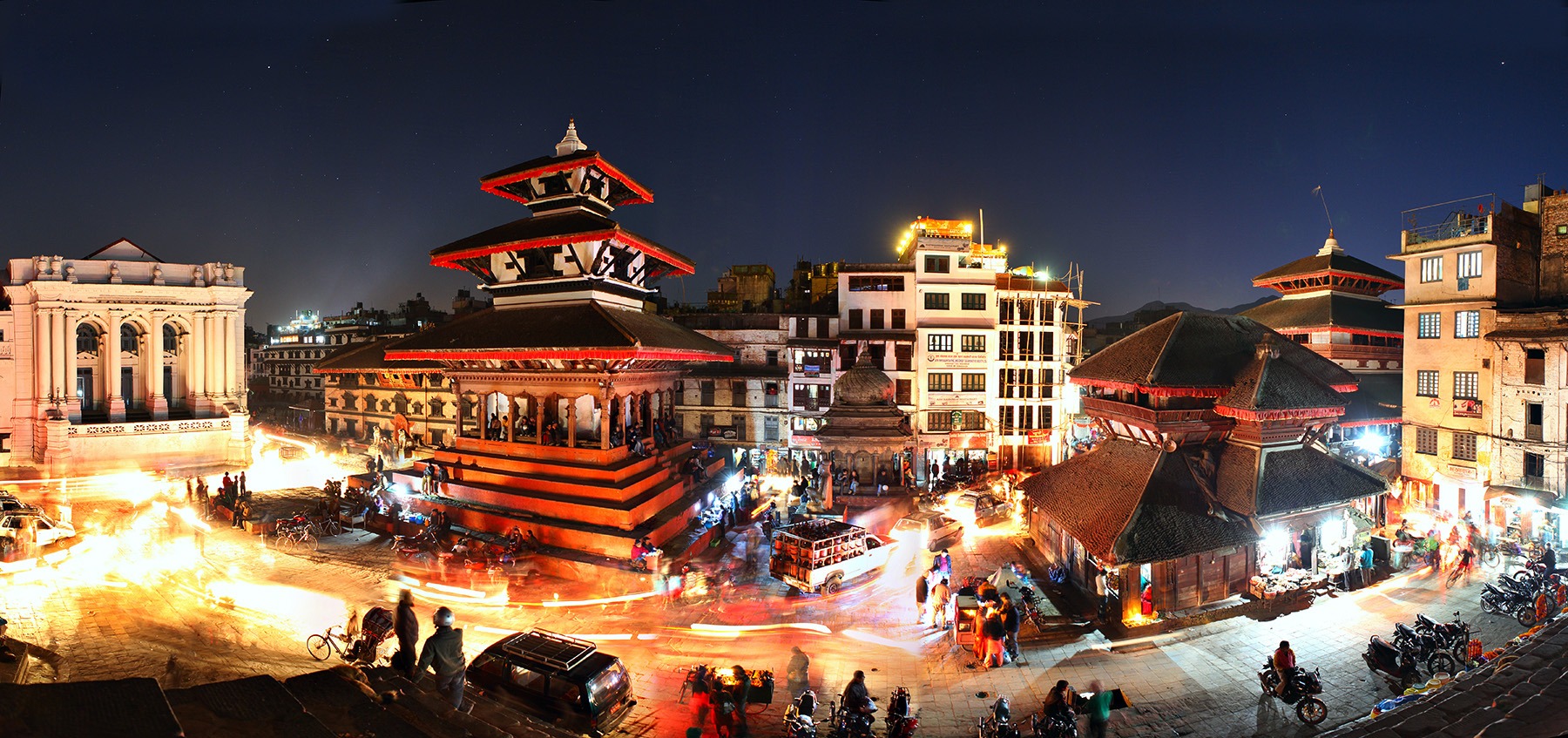
- Kathmandu and its historic centre (Durbar Square, Thamel).
- The temple of Pashupatinath, 2 km away, another UNESCO site in the valley.
- The Ganden monastery, to extend your immersion in Tibetan Buddhism.
- The Kalinchowk temple, for an altitude excursion from the valley.
- The Annapurna Protected Area, the next classic leg of a Nepalese itinerary.
Frequently asked questions
Yes, a modest entrance fee is charged to foreign visitors at the stupa perimeter entrance. Rates are regularly reviewed, so it's advisable to check on site.
Allow 1.5 to 3 hours to walk around the stupa, climb the terraces and visit a few monasteries. A half-day allows you to fully appreciate the atmosphere, especially in late afternoon.
Modest dress (shoulders and knees covered) is recommended, particularly for entering monasteries. Remove your shoes at temple entrances.
Yes. The upper structure, severely damaged, was restored from November 2015 onwards thanks to a massive effort by the Buddhist community. The stupa is now fully accessible again.
Swayambhunath, older, overlooks the city on a hill and blends Hindu and Buddhist traditions. Boudhanath, larger, is primarily Tibetan and spreads across a vast flat area surrounded by monasteries.
Include Boudhanath in your trip
The stupa integrates naturally into an itinerary in the Kathmandu Valley, often as a complement to Pashupatinath and Swayambhunath. To plan a tailor-made stay and combine cultural sites, monasteries and trekking, consult our Nepal trip suggestions.
Nearby
Interested in this visit?
We can include it in your personalised itinerary.