Mountaineering: Here are the 5 Nepalese peaks over 8,000 meters altitude!
Nepalese mountains are home to the famous Everest. But the Roof of the World is not the only peak to exceed 8,000 meters in altitude!
Nepalese mountains are home to the famous Everest. But the Roof of the World is not the only peak to exceed 8,000 meters in altitude! Follow along as we introduce you to the 5 highest peaks in Nepal…
Everest: 8,848 m (or Nepal's highest peak in the world)
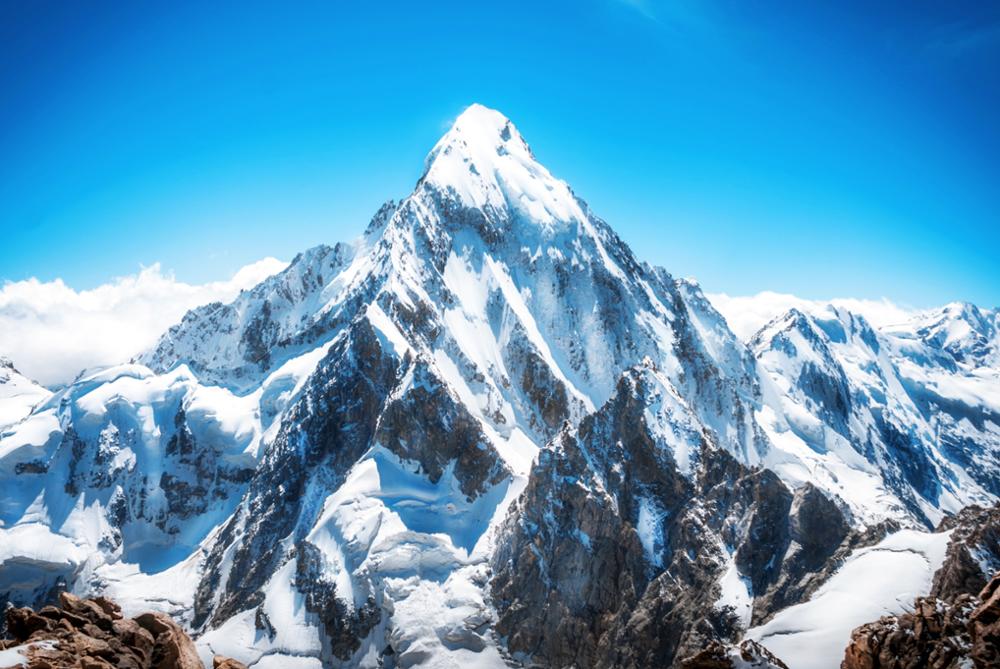
Standing at 8,848 meters high, Everest dominates the mountains of the Himalaya. First summited in 1953, it has continued to attract mountaineers from around the world ever since. Once called Peak XV, it was renamed in 1865 in honor of geographer George Everest.
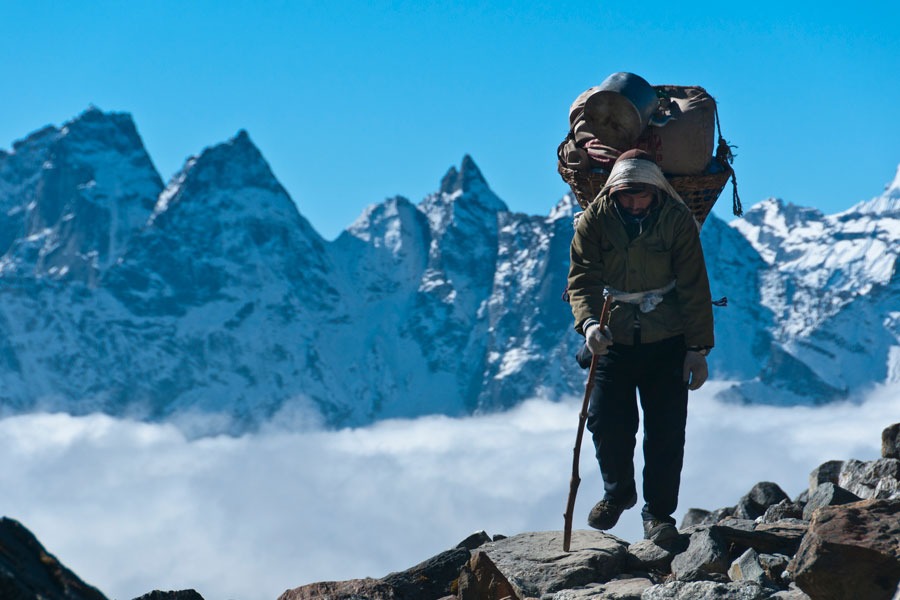
The Roof of the World straddles several borders. To climb the Nepalese face, you must traverse the south side. Extremely challenging, the ascent requires excellent preparation. During the climb, trekkers are accompanied by sherpas—native climbers accustomed to steep slopes and the difficulties of high-altitude mountaineering. More than simple assistants, these are true companions on the journey, essential for a successful summit bid!
Practical information Mountain range: Himalaya Province: Koshi Mountaineering level: experienced To know: excellent physical fitness is recommended for an Everest ascent. During your preparation, factor in walking time (approximately 6-7 hours per day) and backpack weight (approximately 10 kilos). Don't neglect the challenges posed by high altitude either (altitude sickness/mountain sickness). |
Kangchenjunga: 8,586 m (the second highest mountain in the Himalaya)
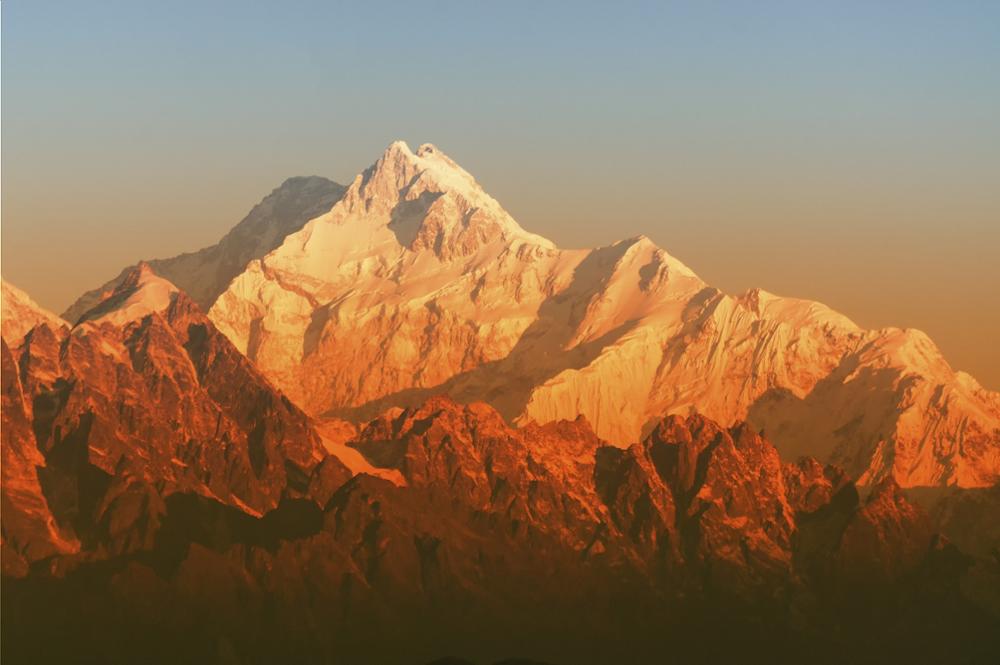
Rising to 8,586 meters, Kangchenjunga sits on the border between Nepal and India. Its first successful ascent by a British expedition dates back to 1955. Since then, numerous expeditions have been undertaken, but few have reached the summit. And for good reason—the route is demanding…
Violent winds, rocky passages, falling ice, and high avalanche risk: attempting to conquer "Kanch'" is a true challenge, requiring very high technical skill. For example, certain sections of the route involve rock climbing.
Kangchenjunga is also considered a sacred mountain by local people. During the expedition, climbers are expected to respect local customs.
Practical information Mountain range: Himalaya Province: Koshi Mountaineering level: experienced To know: this ascent requires solid knowledge of high-altitude climbing and absolute mastery of rock climbing. |
Lhotse: 8,516 m
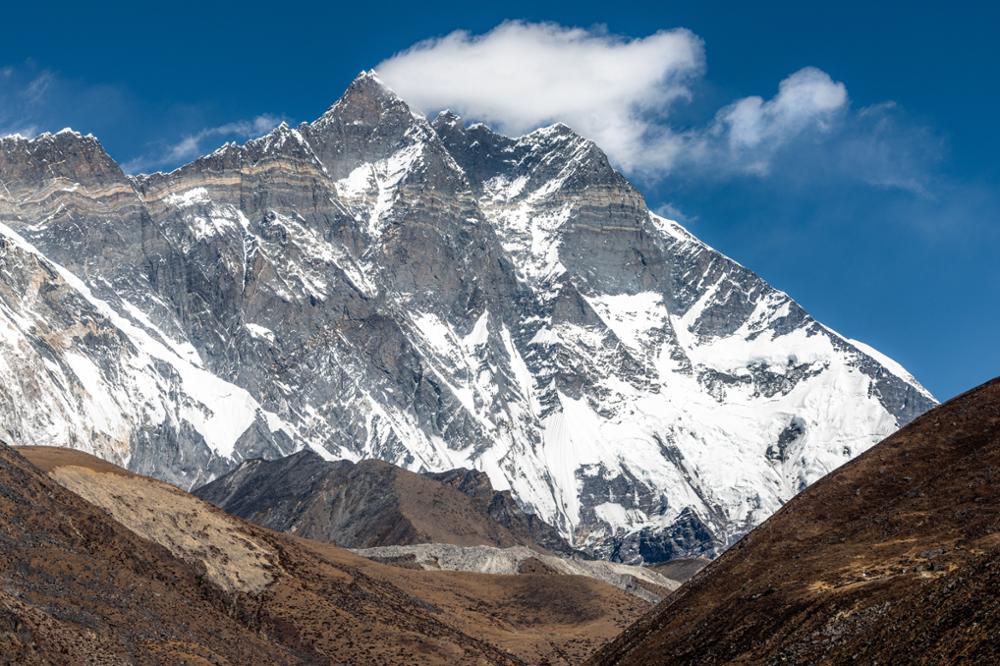
The fourth highest mountain in the world, Lhotse stands on the border between Nepal and Tibet. Because of its proximity to Everest, it's often considered its little brother. Lhotse has three subsidiary summits: Lhotse Central I, Lhotse Central II, and Lhotse Shar—the latter is particularly dangerous, with rocky, steep zones prone to avalanches.
Frequently attempted, Lhotse Shar has the highest mortality rate of all high Nepalese peaks. It's better to focus on the classic route (south face), which offers several itineraries, each with different technical difficulty and challenges.
Practical information Mountain range: Himalaya Province: Koshi Mountaineering level: experienced To know: climbing Lhotse requires very advanced technique and mountaineering experience, as well as exceptional physical fitness. |
Makalu: 8,485 m
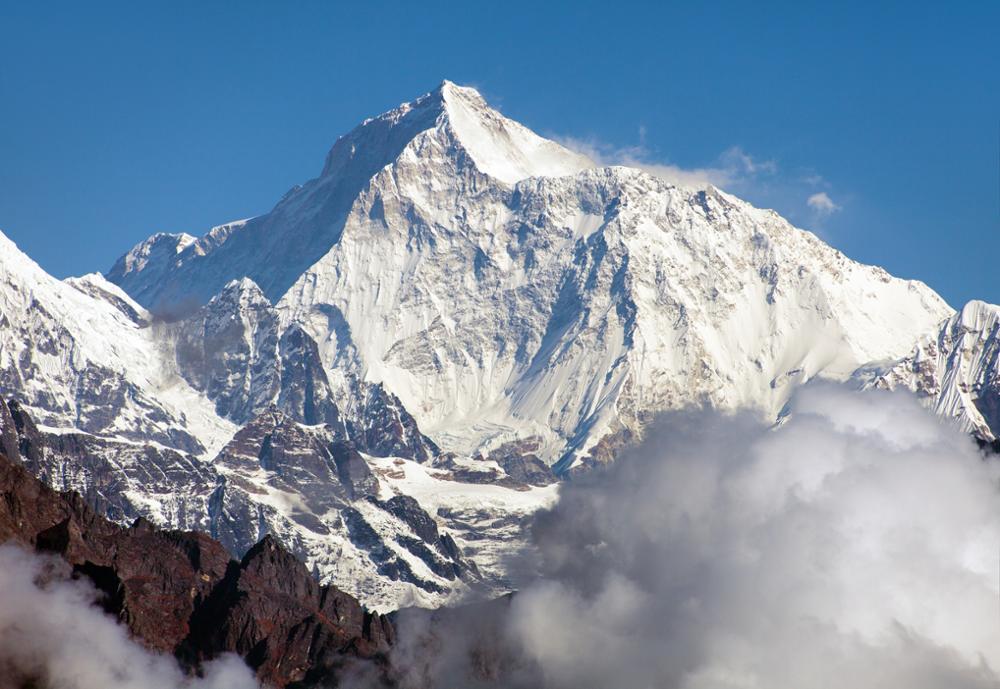
Considered one of the most technical peaks, Makalu is also recognized as one of the most beautiful. It can be climbed via several routes, including: the northwest ridge, the southeast ridge, and the west face (the most difficult).
Located between Nepal and Tibet, in the Khumbu valley, this peak has been protected since 1992 as it lies within Makalu Barun National Park (an extension of Sagarmatha National Park).
Practical information Mountain range: Himalaya Province: Koshi Mountaineering level: good level To know: less difficult than the 3 previous peaks, Makalu nonetheless requires solid preparation before the ascent. |
Cho Oyu: 8,201 m
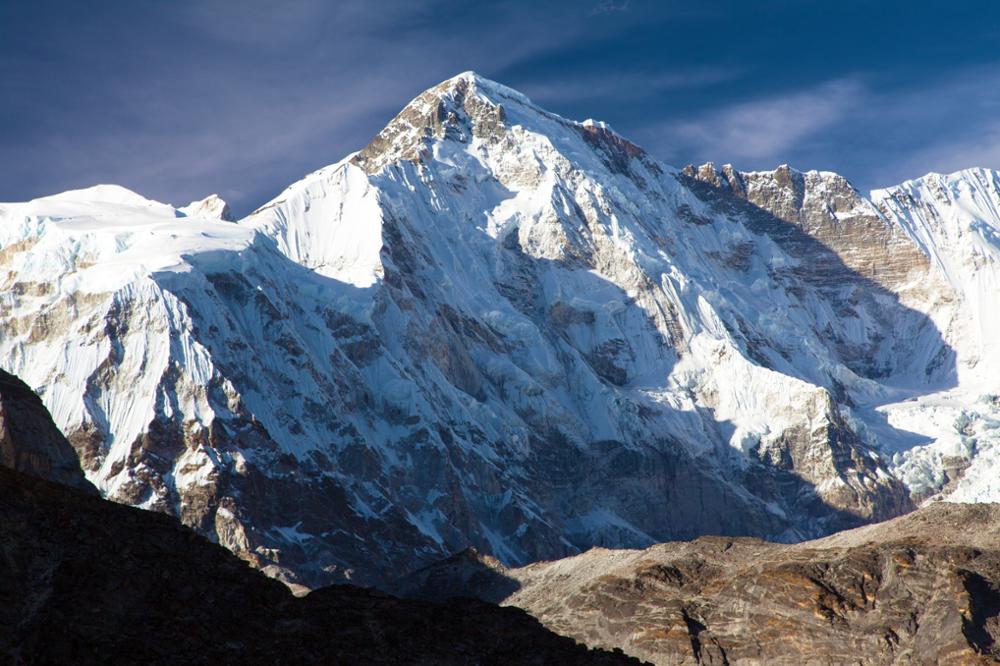
Climbing Cho Oyu is also an extreme activity in Nepal, but (somewhat) easier… Why? The sixth highest mountain in the world (whose name means "Turquoise Goddess") requires less technical skill…
Nevertheless, its high altitude demands great experience to better manage altitude sickness risk. There are several routes to reach the summit. The most renowned is the northwest face. Cho Oyu lies within Sagarmatha National Park, a UNESCO World Heritage site.
Practical information Mountain range: Himalaya Province: Koshi Mountaineering level: good level To know: climbing Cho Oyu is the least difficult of the 5 ascents presented here (all things considered). Indeed, while it requires somewhat less technical skill, it nonetheless demands excellent physical fitness! |
What is the highest peak in Nepal?
Standing at 8,848 meters, Everest is the highest peak in Nepal, and also the highest in the world. Recognized as such in 1856, Everest attracts thousands of visitors each year, but its ascent is reserved for experienced mountaineers.
Nepal's highest peaks at a glance ● Edmund Hillary and Tenzing Norgay were the first two mountaineers to summit Everest in 1953 (between 600 and 700 trekkers attempt the ascent each year). ● The first successful ascents of Kangchenjunga and Makalu took place in 1955. ● Lhotse was first summited in 1956 by Fritz Luchsinger and Ernst Reiss. ● Junko Tabei was the first woman to reach the summit of Everest in 1975. ● The Cho Oyu park has been part of the UNESCO World Heritage since 1979. |
Who has climbed all 14 eight-thousand meter peaks?
Nepali-British mountaineer Nirmal Purja summited all 14 peaks of 8,000 meters altitude (in six months and six days). The documentary 14 Peaks: Nothing Is Impossible chronicles these spectacular ascents.
What are the 7 summits?
The 7 summits (seven summits) refer to the seven highest mountains on each continent: Everest (Asia), Aconcagua (South America), Kilimanjaro (Africa), McKinley (North America), Vinson (Antarctica), Elbrus (Europe), Carstensz Pyramid (Oceania).
Audrey Denjean
Audrey DENJEAN
SEO web writer, Audrey Denjean puts her writing at the service of English-speaking travelers. Through her blog articles, she explores what makes the soul of a country—its emblematic sites, its cuisine, its traditions, its history... Her goal? To convey far more than tourist information, but to describe an atmosphere, to share anecdotes that make each country different and create a desire, after each reading, to explore the world.
Frequently asked questions
The best time to attempt climbing Nepal's major peaks is spring (April-May) or autumn (September-October). These weather windows offer the most stable conditions, avoiding the monsoon (June-August) and violent winter winds.
Yes, any ascent of a Nepalese peak requires an official permit issued by the Nepalese government's Department of Tourism. The cost varies by peak: for example, the permit for Everest is one of the most expensive, while the Cho Oyu permit is more affordable.
Expedition duration varies by peak. For Everest, plan on 6 to 8 weeks including acclimatization phases. Expeditions to Cho Oyu are generally shorter (4 to 6 weeks), as the climb is technically less demanding.
Among the 5 Nepalese peaks exceeding 8,000 meters, Cho Oyu (8,201 m) is considered the most accessible. It requires less technical skill than Everest or Kangchenjunga, but still demands excellent physical fitness and good altitude management.
Altitude sickness, or soroche, is a syndrome caused by oxygen deprivation at high altitudes. It manifests as headaches, nausea, and fatigue. To prevent it, it's essential to ascend gradually, stay well hydrated, avoid alcohol, and plan acclimatization days before undertaking the final push to the summit.