The Meaning Behind Nepal's Unique Flag
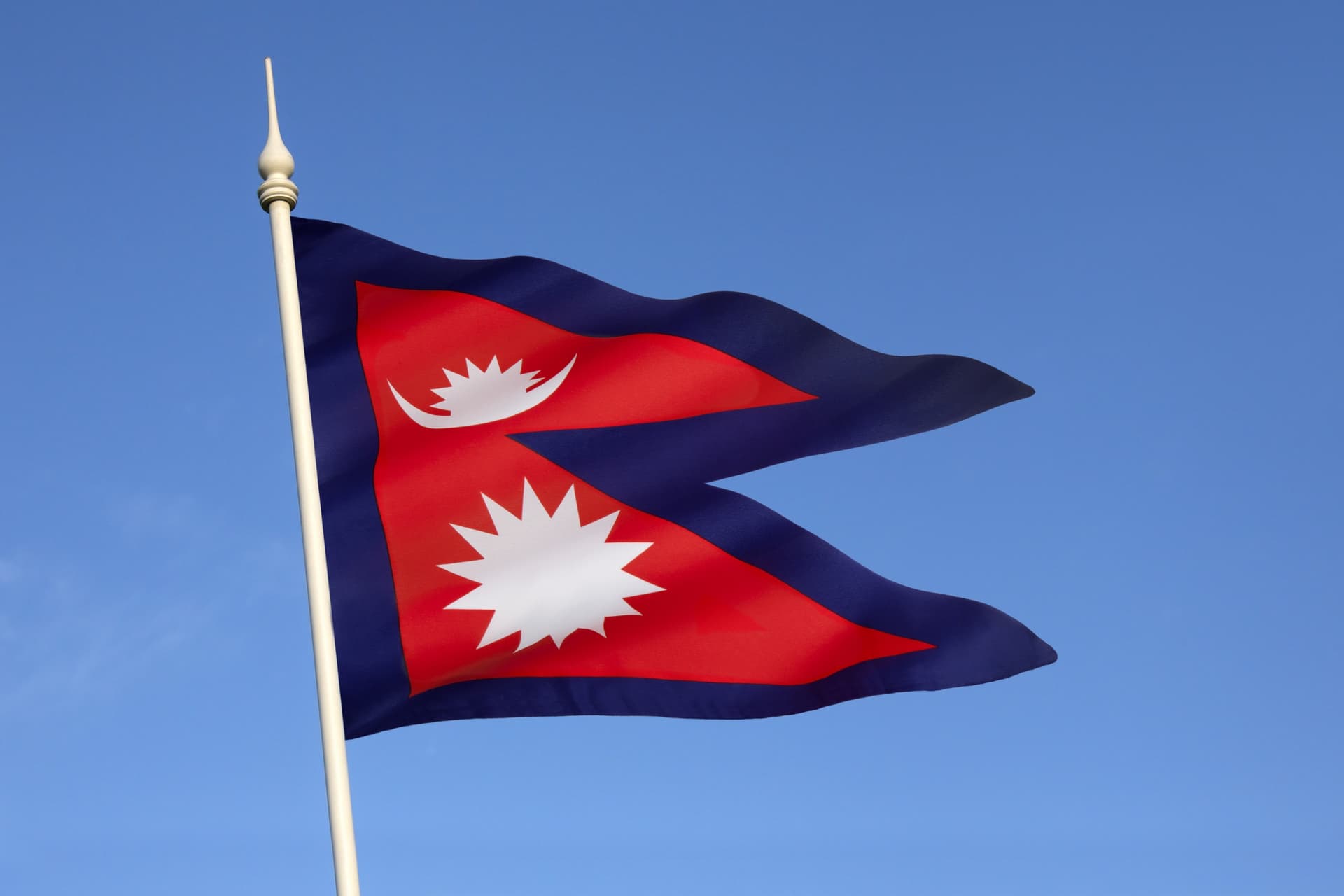
Nepal's flag is truly one of a kind. It is the sole national standard in the world that is neither rectangular nor square. It features two overlapping right triangles.
Nepal's flag is genuinely unique. It is the sole national standard in the world that is neither rectangular nor square. It features two overlapping right triangles, with the upper one obscuring the top corner of the lower one. The lower triangle is also larger than the one above it. It displays a white sun, while the upper triangle bears a white moon.
The moon represents the cool, Himalayan serenity and the tranquility of the Nepali people. The sun is there to evoke the warm, arid temperatures of Nepal's valleys. These two celestial bodies together are meant to symbolize the hope of an eternal nation, one that will endure as long as these heavenly bodies traverse the sky, sometimes dark, sometimes illuminated. The red color, present across much of the flag, echoes the rhododendron, Nepal's national flower. It is a sign of victory and courage, while the blue borders symbolize peace and harmony among the Nepali people. The two superimposed triangular pennants are meant to represent the Himalaya or Hinduism and Buddhism, the two dominant religions in Nepal.
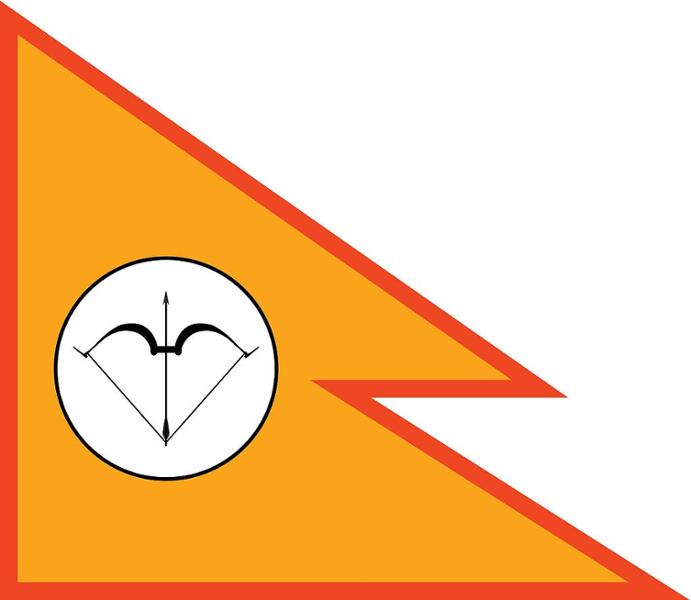
It is worth noting that in the country, the Kirantis, a confederation of Rai, Limbu, and Sunuwar peoples, possess a yellow flag of the same shape, superimposing two triangular pennants, one larger than the other. These peoples are, however, neither Buddhist nor Hindu but believe in their own gods.
An Unprecedented Shape
Historians propose various theories to explain why Nepal's flag does not follow the standard rectangular format but instead features two superimposed triangles.
This standard rectangular form first appeared in Europe and the Mediterranean on naval flags. It was simply more practical. European terrestrial standards subsequently adopted the same format, with symbolic bands of color added. The practice spread and became standardized worldwide. Nepal's flag breaks this convention, as do several flags of Indian regions and states that maintain this triangular shape. Nepal, a landlocked country nestled within the world's greatest mountain range, preserves its original flag like a fossil kept in protected, secluded places.
Frequently asked questions
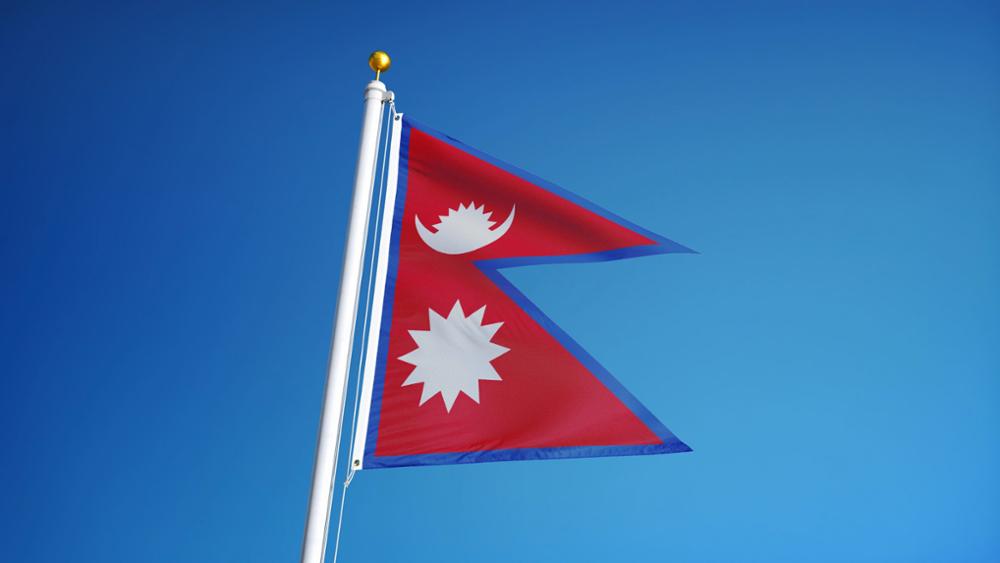
Nepal's flag is composed of two superimposed triangular pennants, a shape inherited from traditional Nepali royal standards. Unlike rectangular flags whose standardized form originated from European naval ensigns, Nepal preserved this original shape, making it the only non-rectangular national flag in the world.
The white moon symbolizes the cool Himalayan environment and the serenity of the Nepali people. The white sun, meanwhile, represents the warmth of the country's valleys. Together, these two celestial bodies express the hope of an eternal nation, destined to endure as long as the sun and moon traverse the sky.
The red color, dominant on Nepal's flag, pays homage to the rhododendron, Nepal's national flower. It also symbolizes victory and bravery. The blue borders framing the flag, in turn, represent peace and harmony within the Nepali people.
The two superimposed triangular pennants of Nepal's flag represent either the peaks of the Himalaya or the two dominant religions of the country: Hinduism and Buddhism. Both interpretations coexist and reflect the cultural and geographical richness of Nepal.
The Kirantis, a confederation of peoples including the Rai, Limbu, and Sunuwar, possess a yellow flag of identical shape to the national flag, featuring two superimposed triangular pennants. These peoples follow their own religious beliefs, distinct from Buddhism and Hinduism.