Nepalese Dishes You Must Try!
Traveling means discovering a new culture, wonderful places, and changing the way you see things for a while...
Traveling means discovering a new culture, wonderful places, and changing the way you see things for a while... But it's also about trying new things, starting with the food! And it just so happens that in Nepal, the food is excellent, and different from our Western dishes in many ways.
Nepalese cuisine is divided into several types: first, there are national dishes. These are generally heavily influenced by India or China, which surround the country, but they are also the most widespread and easily accessible. Next, you'll find foreign cuisine: from Japan to Italy, you'll find something for every taste, often remixed with a Nepalese twist! And finally, there is regional cuisine, most often belonging to a specific culture, the most famous being Newari culture, offering more than 200 different dishes. This cuisine is less easily accessible, often quite spicy, and served in very local establishments, but it absolutely should not be missed, given its varied flavors and distinctly Nepalese character. At Bluesheep, we also love local food, and we've put together a list of specialties you must not miss during your stay in Nepal!
The Must-Try: Momos
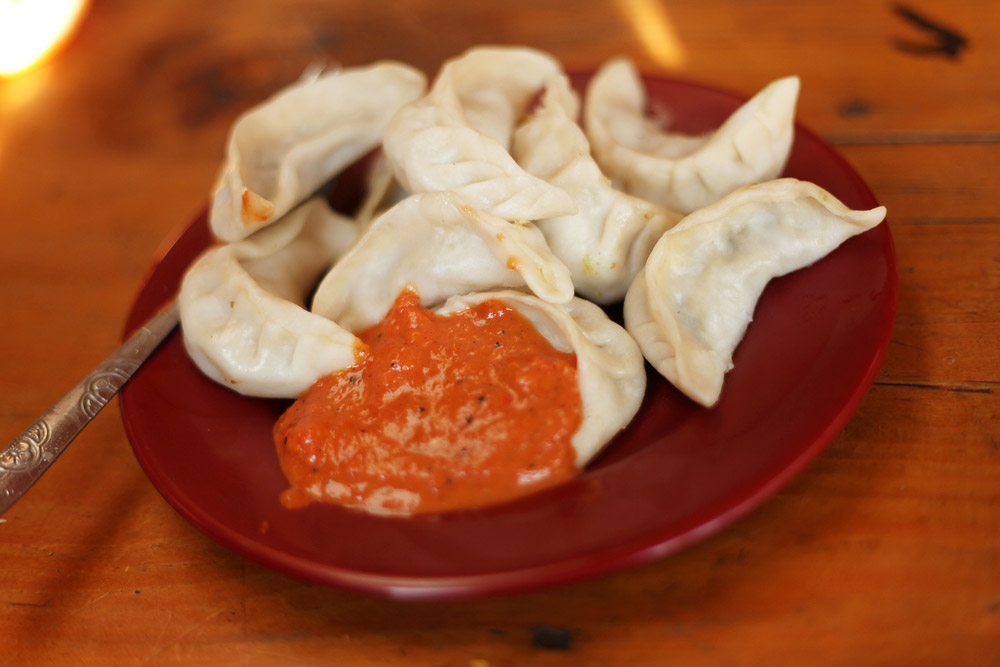 Behind this rather amusing name lies a highly beloved dish, originating from Tibet. Resembling ravioli in the shape of small crescents or pouches, they are filled with various vegetables or meats and served in different sauces made with tomato, peanuts, or pickled vegetables, ranging from mild to quite spicy. They are always steamed as the base preparation, but can be pan-fried afterwards, which gives three types of cooking: steamed, pan-fried on one side (Khotey), or fully fried. All three offer distinctly different flavors. Momos are a very popular dish in Nepal, and you'll find them everywhere at very affordable prices, typically between 80 and 150 NPR for a plate containing about a dozen.
The Staple: Dal Bhat
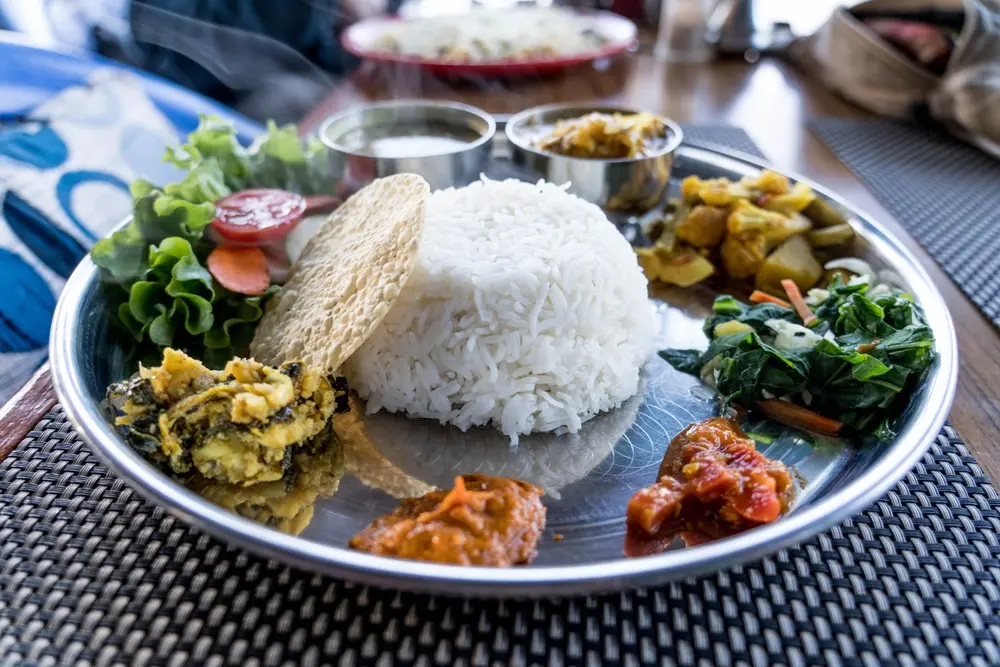
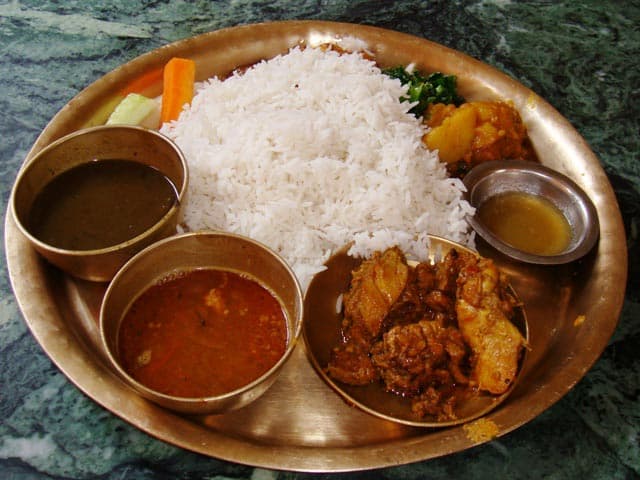
Dal Bhat literally means "rice with lentils". Setting aside the name that leaves little room for imagination, Dal Bhat is THE dish of Nepal. Often eaten twice a day by Nepali people, it's a dish consisting of a rice base accompanied by a lentil broth. To this are added numerous variations of vegetable curries, pickles, meats, or chutneys, making it one of the most versatile dishes in the country. Curries are made with masalas created by cooks. These are blends of spices measured according to taste and can therefore be more or less spicy. Similarly, chili is a fairly common ingredient in the pickles accompanying Dal Bhat, so be careful if you're not used to it! This dish is traditionally eaten with your hands, but be careful to use only your right hand to touch food, as the left hand is dedicated to less... hygienic tasks.
The Alternative: Khaja Set
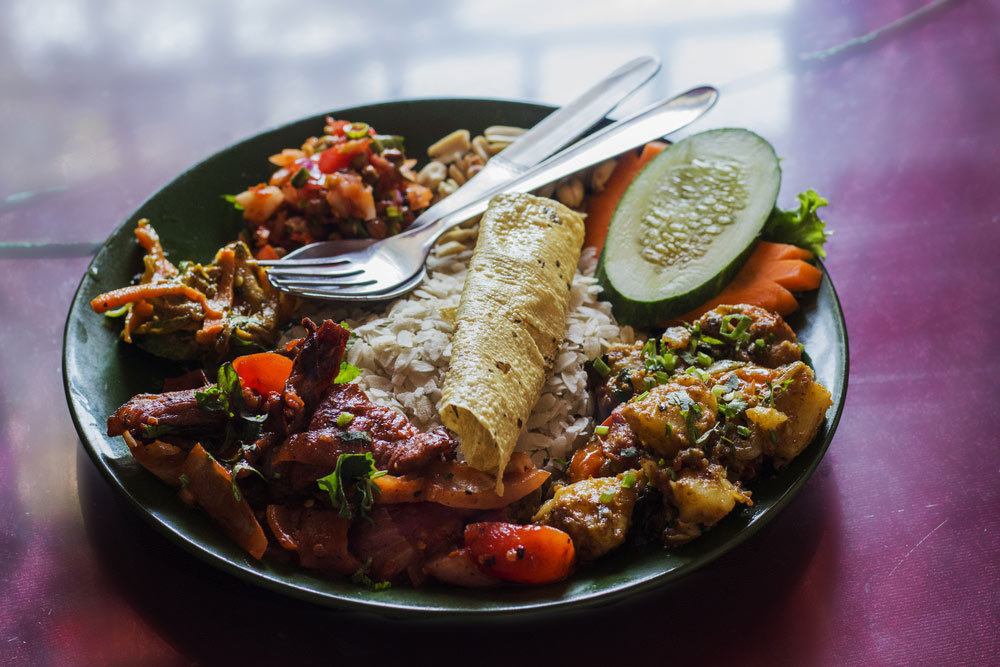 The Khaja Set is the Newari alternative to Dal Bhat, from which the lentil broth has been removed and the cooked rice replaced with dry beaten rice, Chiuura. Its accompaniments are generally more regional and spicier. You'll find vegetable and pea curries, minced or whole meat, or even samosas or Sel Roti. To experience a true Khaja Set, you should visit a purely Newari restaurant, though you can appreciate the crispness of Chiuura in most places where Dal Bhat is also served.
The Snack: Sel Roti
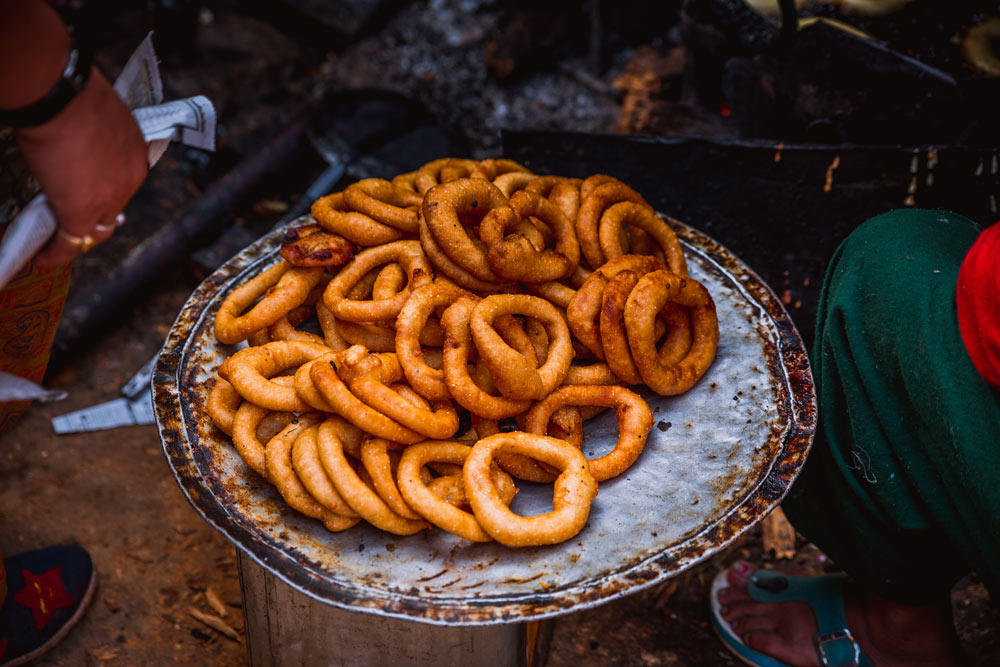 Once again, the name is rather peculiar. No, it's not a large piece of salted meat, but a bread typical of Nepal. Roti is the Indian name for unleavened bread. Sel Roti is a cross between a donut and a bagel, made from rice flour. The comparison is mainly in shape, as the texture in the mouth is quite different. Beneath a crispy crust, you'll find a very soft interior, with a texture close to brioche. This delicacy is served with certain dishes, but you can also find it on the streets from small vendors. You can eat them fresh on their own, or enjoy them by dipping them in yogurt or as an accompaniment to vegetables.
The Original: Chatamari
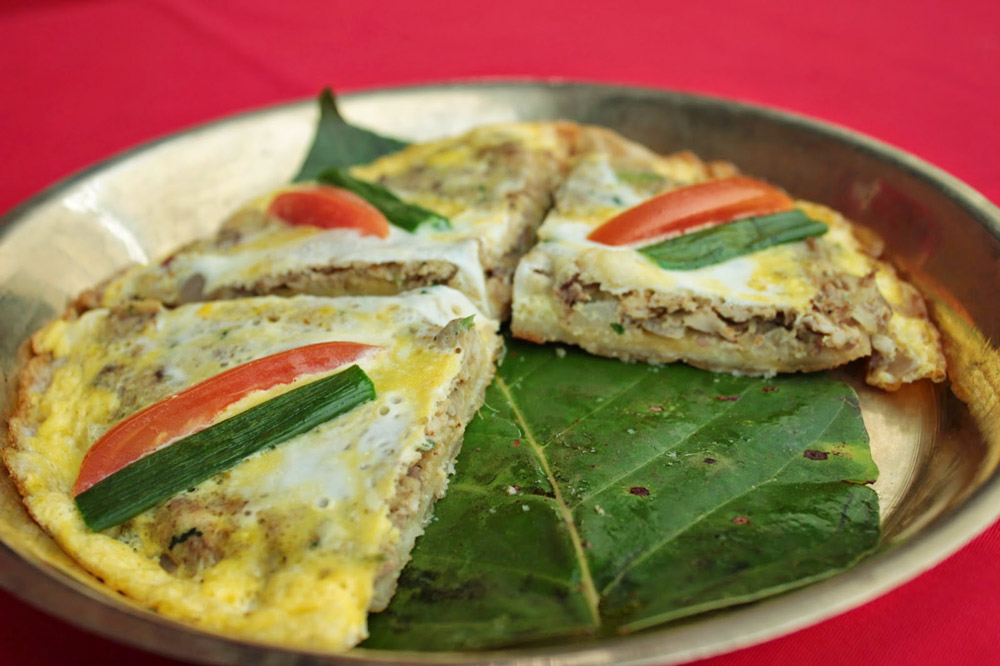 Another very Newari dish, Chatamari is nicknamed the Nepalese pizza. And for good reason: on a kind of crepe made from rice flour and hardened on a griddle, you add meat, eggs, and vegetables. This creates a kind of smaller pizza, very crispy and with very rich flavors. Chatamari is often served with a very spicy sauce, so be very careful if you're not used to it!
The Festive: Yomari
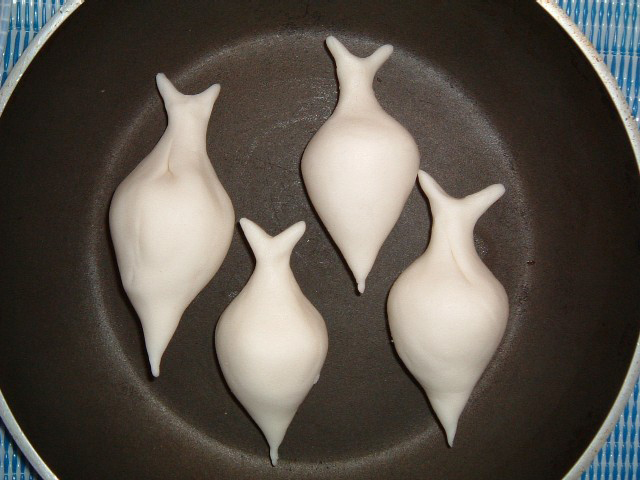 Still among Newari dishes, Yomari is a winter delicacy highly prized in Kathmandu. This treat is made from a dough of rice flour kneaded with hot water. After shaping it like a fig, it's filled with Chaku, a mixture of cane sugar, clarified butter, and dried fruits, or Khoa, milk thickened by evaporation. The dough is then closed by making a kind of knot at its end. In November or December, during the Nepalese month of Thinla, the Yomari Punhi festival marks the end of the rice harvest, during which Nepalese people thank Annapurna, the goddess of grains. Children go from house to house, asking for Yomari.
The Comforting: Thukpa
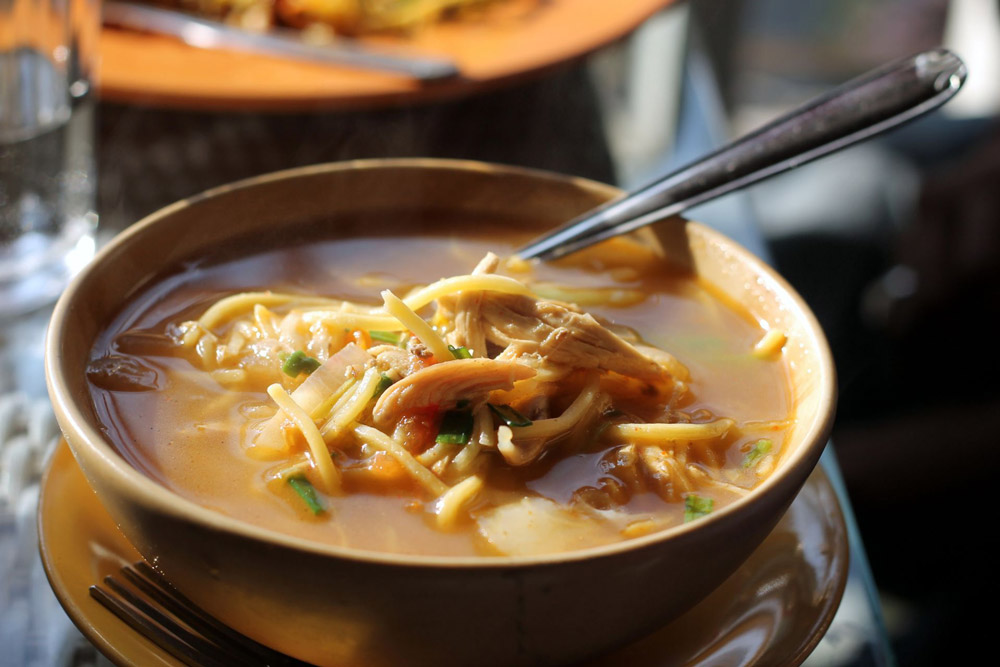 Originating from Tibet, Thukpa is a hot noodle dish, served in broth and accompanied by pieces of meat and various vegetables. It is highly appreciated in the Himalayan mountains, where cold prevails most of the year. The broth warms workers and hikers during the great cold. But there's no need to get lost in the mountains to enjoy it! You'll find many restaurants in Kathmandu or Pokhara offering Thukpa on their menus with buffalo, pork, or chicken as toppings. If you venture into the Himalayas, you can taste more local meats, for example, yak meat, lamb, or goat.
The Authentic: Sekuwa
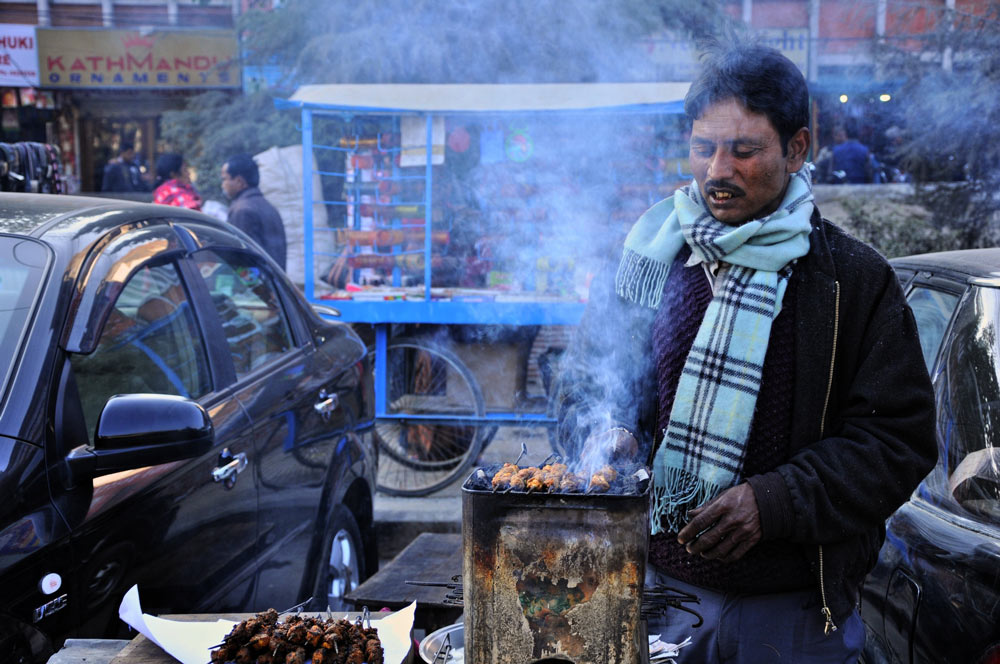 Sekuwa are very popular skewers in Nepal, particularly in Kathmandu and the eastern part of the country. Wherever you get them, they're always cooked the traditional way: over a wood fire, and spices and fresh herbs are added at the start of cooking. A kind of barbecue with a Nepalese twist! Sekuwas are often served with puffed rice and a spicy sauce. You'll find them with different meats, the most popular being buffalo, pork, lamb, and chicken.
The Sweet: Juju Dhau
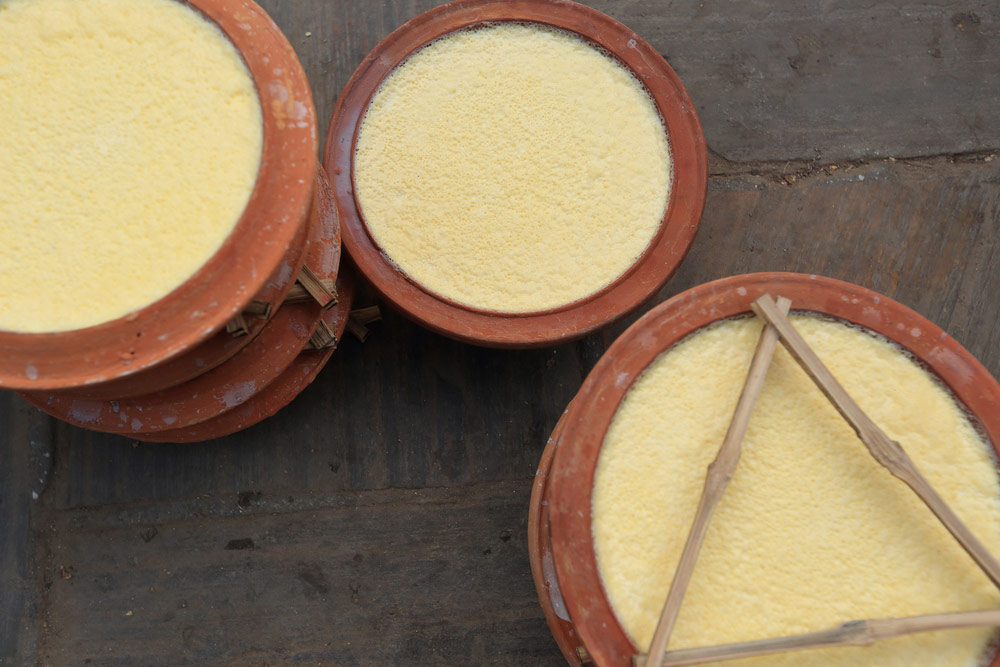 A specialty of Bhaktapur, Juju Dhau (literally King of Yogurts!) is a yogurt prepared by fermentation of milk, and served most often in a clay pot. Although there are different types of yogurts in Nepal, Juju Dhau truly deserves its royal title. It has an extremely rich flavor and is very creamy. Slightly sweet, but not too much, with a very strong taste, this treat is perfect for refreshing yourself while exploring Bhaktapur's Durbar Square!
The Social: Himalayan Tea and Coffee
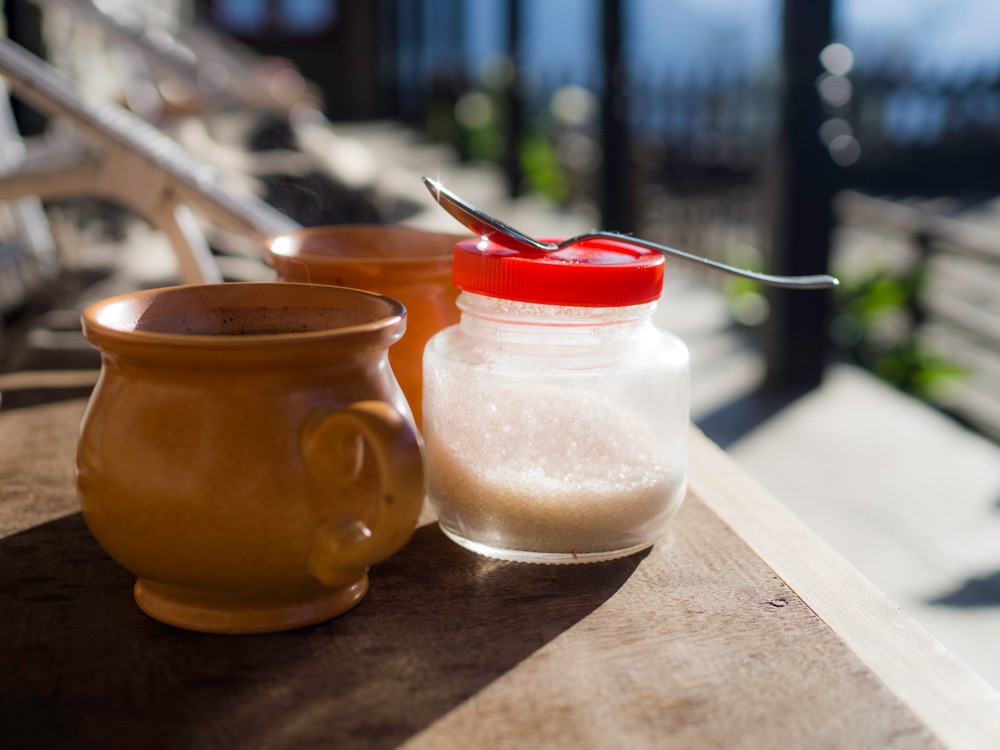 And we finish with what replaces cigarettes in many places in Nepal: tea and coffee! They are consumed daily in large quantities, and it's common to see Nepali people going out in the evening to sip a tea or coffee with friends. These are very social beverages. But more than that, black tea and Himalayan coffee are also extremely good. Indeed, the slow growth of plants on the slopes of the Himalayas gives them time to intensify their aromas, giving very strong flavors to coffee beans and tea leaves harvested in these regions. Nescafé seems quite bland in comparison! And you, which specialty are you most eager to try when coming to Nepal? Tell us everything!
Frequently asked questions
Nepalese cuisine offers many must-try specialties: Momos (Tibetan dumplings), Dal Bhat (rice with lentils consumed daily), Thukpa (hot noodle soup), Sekuwa (wood-fired skewers), or Chatamari, nicknamed the Nepalese pizza. Newari cuisine also offers very authentic dishes such as Khaja Set or Yomari.
Yes, Dal Bhat is naturally suitable for vegetarians. In its basic form, it consists of rice and a lentil broth, to which vegetable curries and chutneys are added. It's one of the most accessible dishes for vegetarian travelers in Nepal.
Momos are a very affordable dish in Nepal. A plate of about a dozen Momos typically costs between 80 and 150 Nepalese Rupees (NPR), or less than 2 euros. You'll find them in almost every restaurant and from many street vendors.
Nepalese cuisine can be spicy, particularly dishes from the Newari tradition and certain curries. However, the level of spice varies depending on the dish and the cook. Masalas (spice blends) are often measured according to taste. If you're sensitive to spice, it's advisable to mention this when ordering.
Newari cuisine is the traditional gastronomy of the Newari people, originating from the Kathmandu Valley. It comprises more than 200 different dishes and is distinguished by its rich and spicy flavors. Its specialties include Khaja Set, Chatamari, Sel Roti, and Yomari. It is often served in very local restaurants and deserves to be discovered during your trip to Nepal.
Juju Dhau, nicknamed the 'King of Yogurts', is a specialty of the city of Bhaktapur. It's prepared by fermentation of milk and served in clay pots. To taste it in the best conditions, visit Bhaktapur, particularly when exploring Durbar Square, where many vendors offer this creamy and slightly sweet yogurt.