Kumari, the Living Goddess
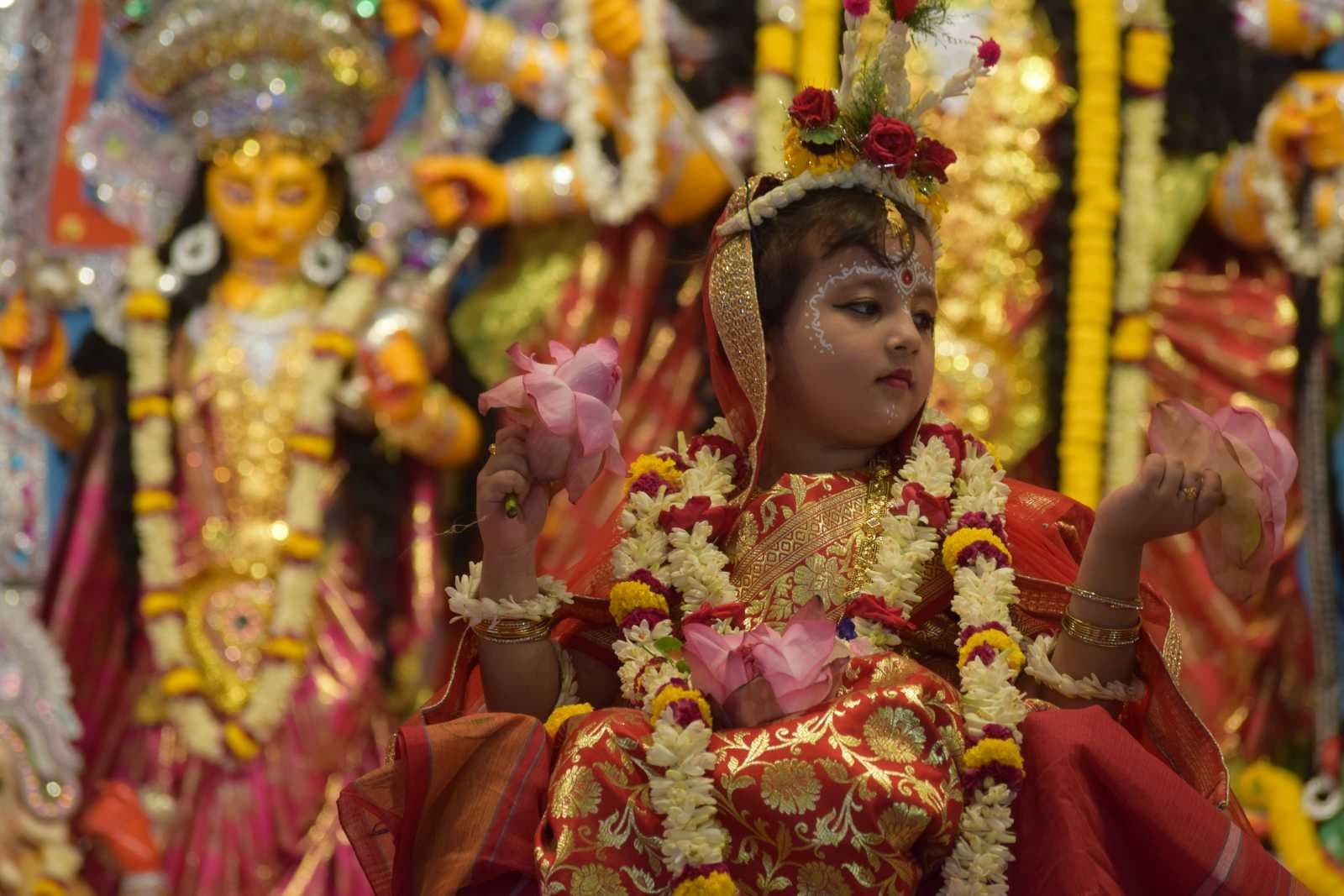
In Nepal lives the world's only living goddess. The Hindu deity Taleju Bhavani incarnates herself in a young girl.
In Nepal lives the world's only living goddess. The Hindu deity Taleju Bhavani incarnates herself in a young girl.
Legend
There are many legends surrounding Kumari, most of which mention an encounter between a king and the goddess. Here is one of them:
The story begins in the 18th century under the reign of the last king of Kathmandu. Each evening he meets a young girl who claims to be inhabited by a goddess, and together they play dice. Yet the queen doubts her husband's sincerity and follows him one night. The goddess, wounded by this betrayal, departs and never returns. The king spends his life searching for her, and to this end establishes a list of 32 criteria. A young girl who meets these criteria is considered a reincarnation of the goddess.
Selection
A group of Hindu monks studies all eligible girls around 4 years old and determines who can represent the goddess. The 32 criteria are as varied as webbed feet and hands, black eyes, a pure body, a beautiful golden shadow, or the voice of a sparrow. Subsequently, the children must pass a series of tests, such as remaining calm in a dark room surrounded by buffalo heads. She remains goddess until a drop of blood escapes from her body through a scar or through her first menstruation.
The Life of a Kumari
After moving into her residence, Kumari may leave only on rare occasions: for official ceremonies. She is constantly carried, as she is forbidden to set foot on the ground. Today a Kumari can walk within her home but only when she is alone. Previously it was forbidden for the young girl to see her family again, but due to social changes, they now move to live with her. Her friends are chosen from those of her caste. For a long time she received no education, but following numerous complaints, teachers now come to teach her as they would at school.
Anyone can visit Kumari in exchange for an offering (a few euros or food), but they may never speak to her. The young girl must remain expressionless, or this most often signifies misfortune for the person facing her. Her tears symbolize death, and a tremor an imminent imprisonment.
Life After Kumari
The young girl becomes a normal child at the first drop of blood. For the first time she must leave her home and face the outside world. She has difficulty moving because her legs have barely been used. Previously she could neither read, write, nor count and was years behind her classmates. Returning to perfectly normal life is difficult for a child whom everyone treated as a goddess; the change is abrupt and without support. A meager pension of 1 euro per month is granted to them. Finally, an old but persistent legend complicates the adult lives of Kumaris: whoever marries a Kumari is destined to die young.
Frequently asked questions
The principal Kumari resides in Kumari Ghar, a palace located on Durbar Square in Kathmandu. Visitors can go there and glimpse the living goddess at her window in exchange for an offering. She appears only briefly and cannot be photographed.
A Kumari must meet 32 physical and behavioral criteria: webbed feet and hands, black eyes, a pure body, a beautiful golden shadow, the voice of a sparrow, among others. She must also pass trials of composure, such as remaining calm in a dark room surrounded by buffalo heads.
As soon as a drop of blood escapes from her body (an injury or her first menstruation), the Kumari loses her divine status and must return to a normal life. This transition is difficult: her legs have been little used, she is years behind academically, and a meager pension of approximately 1 euro per month is allocated to her.
Theoretically yes, but a persistent legend complicates her romantic life: it is said that whoever marries a former Kumari is destined to die young. This belief makes married life difficult for former living goddesses.
Yes, although the Kumari of Kathmandu is the most famous, there are also Kumaris in Patan and Bhaktapur. Each city in the Kathmandu Valley has its own tradition related to this living goddess.