The village of Tengboche
The village of Tengboche
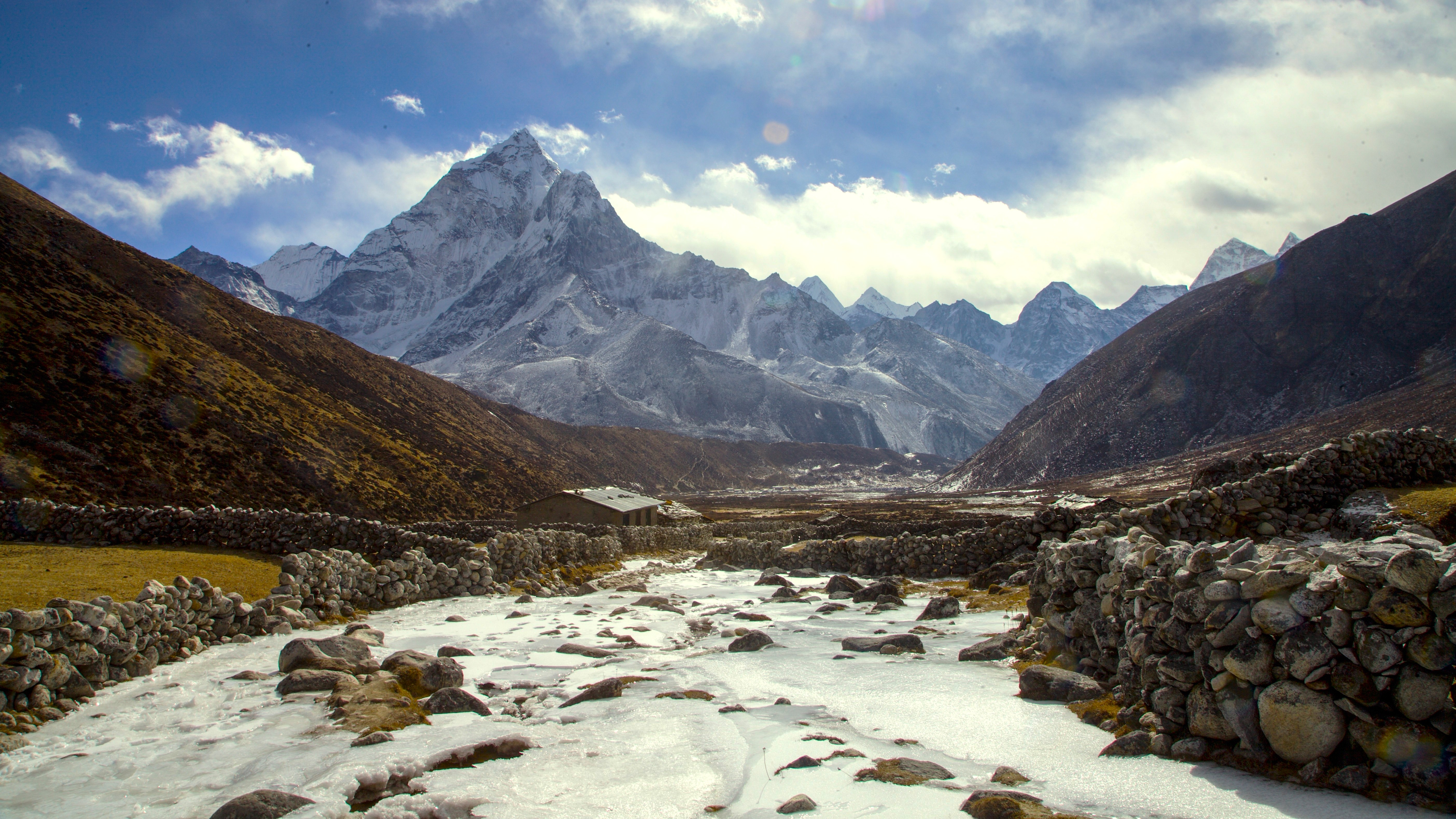
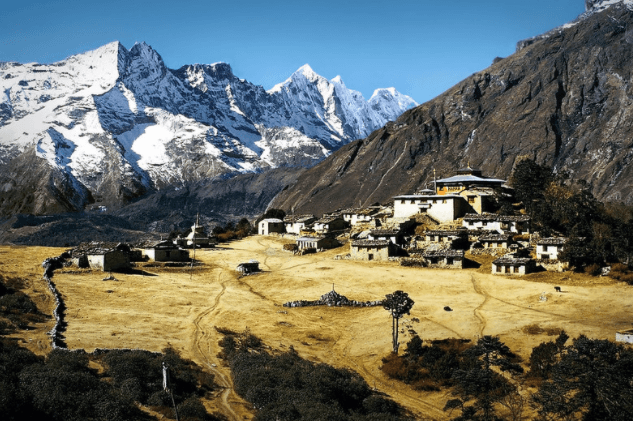
Perched at 3867 m on the route to Everest Base Camp, Tengboche is home to the largest gompa in Khumbu and offers a mythical view of Ama Dablam.
Tengboche in Népal is a highly emblematic place located in the mountainous reaches of the Himalayan range. It sits in the eastern part of the country, within the Sagarmatha National Park, just a few kilometres northeast of the village of Namche Bazaar. Tengboche is even more remote and isolated from the rest of the country. Only 50 monks and 5 families live permanently in the village, subsisting mainly on tourism. Perched at 3867 m altitude, the village offers a unique and spectacular panoramic view of numerous Himalayan peaks such as Everest, Thamserku, and Ama Dablam. Another remarkable fact about this high-altitude village: the Nepalese mountaineer Tenzing Norgay was born here. He was the first person in history, alongside New Zealander Edmund Hillary, to successfully climb Mount Everest in 1953.
A history tied to its monastery
The Khumbu Valley, where the traditional village of Tengboche stands alongside others, is one of the central regions of Buddhism in this part of the world. And it has been for 350 years. Tibet designates the valley as a sacred place.
The religious teacher of Buddhism is called a Lama and holds a very important and respected rank, almost that of a guru. The Lama Sangwa Dorje is considered the founder, 350 years ago, of the region's first monastery in the village of Pangboche, not far from here. He predicted at the time, according to one of his footprints imprinted during meditation on a monumental rock, that Tengboche would soon welcome a monastery of exceptional grandeur.
It was not until 1923—two and a half centuries later—that Lama Gulu, blessed by Ngawang Tenzin Norbu, a distant descendant of Sangwa Dorje, built the Tengboche Monastery. It remains today the largest gompa in the Khumbu region. This Buddhist edifice incorporates both a vihara, the dwelling place of Buddhist monks, and a university dedicated to the teaching of sadhana, or the practice of Tibetan Buddhism.
The monastery, despite its geographical isolation, has suffered two devastations since its construction. An earthquake destroyed it in 1934 before being painstakingly rebuilt over many years by local carpenters and painters. This destination, beloved by tourists from the mid-20th century onward—the first enthusiasts of mountain trekking—greatly contributed to the worldwide recognition of this majestic building. This monastery lies moreover on the route to Base Camp for mountaineers who come to conquer Everest. Devout expeditions, and sometimes even those less so, stop here and light candles to receive the blessing of the monks before their extreme ascent.
The monastery would unfortunately suffer another catastrophe on January 19, 1989. A fire caused by an electrical short circuit devastated precious ancient scriptures, statues, murals, and wooden sculptures. The monumental stone bearing the imprint of Lama Sangwa Dorje's footprint was fractured in the fire. The monastery was again entirely rebuilt, this time with the enormous support of donations from around the world. It is said that Tenzing Norgay loved to retreat to this monastery before his death in 1986. Edmund Hillary was indeed among the many international supporters who came forward after the 1989 fire. The reputation of the place undoubtedly saved it from oblivion.
Climate
The village of Tengboche is situated in the mountains in the eastern part of the country and is inhabited by the Sherpa people, a name that literally means east in Nepali. The very high altitude of the village (3867 m) induces strong temperature variations between day and night. Summer is cool and humid, with precipitation more significant than usual, and winter is cold and dry. The highest temperatures reach, on average during the day, around 14°C from May to September. With only 40 mm of precipitation, May proves to be the most pleasant month in the region. Conversely, up to 225 mm of precipitation per month can fall between June and September. Finally, it rains very little in winter, and temperatures average around 4 to 6 degrees between December and February.
Trekking is the only way to reach the village of Tengboche, which is obviously not connected by paved roads. The hike can last from 2 to 4 days and typically departs from the town of Lukla further south, which has an airport. The 4-day trek is generally preferable as it is easier. Above all, it allows you to acclimatize better to this mountainous region. From Lukla, you will head north and cross the Dudh Kosi river. Your guide will, of course, accompany you on this magnificent adventure.
Want to discover this destination?
Our local advisors design your tailor-made trip.