Tengboche Monastery
Tengboche Monastery
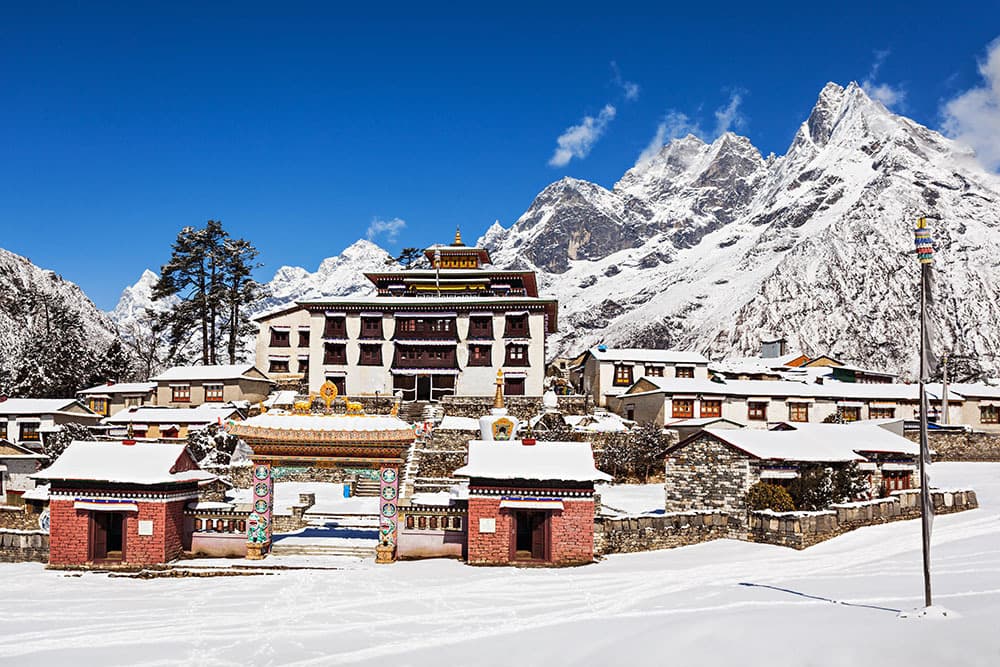
At 3,867 m on the EBC trail, Tengboche Monastery is the main Buddhist center of the Khumbu region, facing Ama Dablam and Everest.
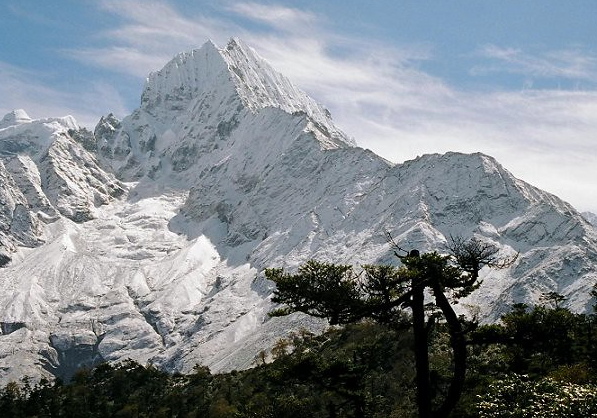
Perched at 3,867 meters altitude on the trail leading to Everest Base Camp, Tengboche Monastery is the main Buddhist spiritual center in the Khumbu region. Also known as Dawa Choling Gompa, it stands above the village of Khumjung, facing an exceptional panorama of Ama Dablam, Lhotse, and Everest. A major cultural stop on the trek to EBC, it welcomes trekkers, pilgrims, and monks daily.
Why Visit Tengboche Monastery
- A living spiritual site: it is the most important Buddhist monastery in the Everest region, historically linked to Rongbuk Monastery in Tibet.
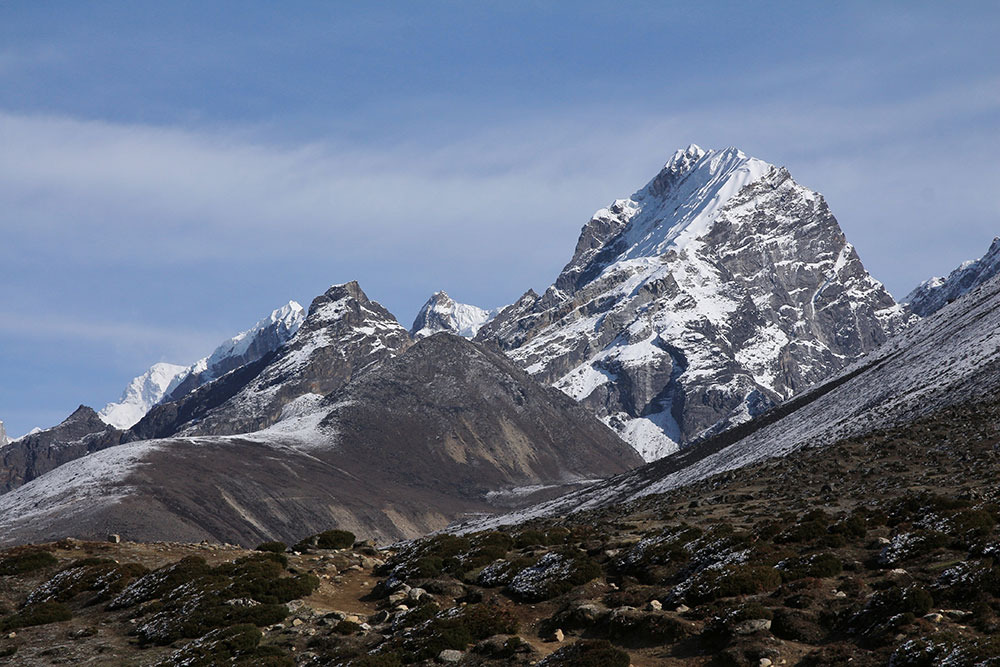
- A Himalayan panorama: from the esplanade, the view encompasses the peaks of Tawache, Everest, Nuptse, Lhotse, Ama Dablam, and Thamserku.
- A key stop on the EBC trek: most trekkers spend a night here to acclimatize to the altitude.
- The Mani Rimdu festival: if you are here in autumn, you witness one of the most distinctive Buddhist rituals of the Nepalese Himalayas.
History of the Monastery
The monastery was founded in 1919 by Lama Gulu, a major spiritual figure among the Sherpas of the Khumbu. Its history is marked by two successive destructions: an earthquake devastated it in 1934, then a fire destroyed the main building in 1989. Each time, the Sherpa community and volunteers, supported by an international fund after the fire, rebuilt it. The current two-story temple was inaugurated in 1993.
Today, the attached monastery school is led by Ngawang Tenzin Zangbu, a direct disciple of Lama Gulu, who trains young monks and lamas of the region.
What You'll See On Site
The Prayer Hall
At the center of the temple stands a statue of Buddha approximately 4 meters tall. It is framed by representations of Avalokitesvara (the bodhisattva of compassion) and Padmasambhava (Guru Rinpoche), the founding figure of Tibetan Buddhism. The interior is painted with frescoes in contrasting colors illustrating the pillars of Buddhism and religious scenes.
At the foot of the statue, an altar gathers liturgical texts, ritual objects, and butter lamps. Wooden benches covered with cushions, arranged in the center of the hall, are occupied by monks during daily ceremonies.
The Mani Rimdu Festival
Celebrated each year in late October or November, Mani Rimdu takes place over 19 days. The ritual opens with the construction of a colored sand mandala, elaborated over several days by the monks. The great public celebration then brings together Sherpas of the Khumbu around prayers, horns, drums, and gongs.
The Rinpoche gives his blessing to the inhabitants, then young monks perform the mask dance, which symbolically dispels negative forces. The festival concludes with a fire ritual. For many trekkers, this is the cultural highlight of a stay in the Everest region.
When to Go
The best times to reach Tengboche are autumn (October–November) and spring (March–May). In autumn, the sky is generally clear, temperatures remain manageable during the day, and it is the time of Mani Rimdu. In spring, rhododendrons in bloom color the slopes of the Khumbu.
Winter (December–February) remains possible but cold, with risk of snow on the trail. The monsoon (June–September) is best avoided: rain, fog, and flights to Lukla often canceled.
How to Get There
Tengboche is reached exclusively on foot, as part of a multi-day trek:
- Flight from Kathmandu to Lukla (approximately 35 minutes).
- Walking along the Dudh Koshi River to Phakding, then climbing toward Namche Bazaar, where a day of acclimatization is recommended.
- Stage via Khumjung or directly via Sanasa, descent to the river, then steep climb to the Tengboche plateau.
Generally allow 3 to 4 days of walking from Lukla to reach the monastery, respecting acclimatization stops.
Practical Information
- Altitude: 3,867 m — prior acclimatization at Namche Bazaar is essential.
- Temple access: open to visitors during ceremony hours; donation appreciated.
- Dress code: shoulders and legs covered, hat removed at the entrance.
- Photography: forbidden inside the temple except with explicit permission.
- Accommodation: several lodges around the monastery; camping possible.
- Permits: Sagarmatha National Park entry and TIMS required.
To See in the Area
- Khumjung: traditional Sherpa village, monastery housing a supposed yeti scalp.
- Namche Bazaar: capital of the Khumbu, Saturday market, acclimatization stop.
- Pangboche: monastery older than Tengboche, on the route to base camp.
- Boudhanath: in Kathmandu, to see before or after the trek to extend the Buddhist immersion.
- Swayambhunath: another major site of Tibetan Buddhism in the Kathmandu Valley.
Frequently Asked Questions
Frequently asked questions
Prepare Your Trip
Tengboche Monastery naturally fits into a trek in the Everest region. To organize your complete itinerary, from permits to acclimatization stages, consult our voyages au Népal designed with our local partners.
Interested in this visit?
We can include it in your personalised itinerary.