Poon Hill
Poon Hill
Panoramic hill at 3,210 m north of Pokhara, Poon Hill is reached in 4 to 5 days of easy trekking through Gurung villages and rhododendron forests.
Poon Hill is a hill reaching 3,210 meters in altitude, situated near the village of Ghorepani, north of Pokhara, in the Annapurna region. Its summit offers one of the most comprehensive panoramas of the central Himalayas, accessible after a short 4 to 5-day trek classified as easy. This combination makes it a privileged gateway for those wishing to experience Nepalese high mountains without committing to longer expeditions such as the Annapurna Circuit.
Why trek to Poon Hill
The Poon Hill trek stands out for its particularly favorable effort-to-panorama ratio. Over a few days of walking, the itinerary crosses several vegetation zones, from subtropical forests to rhododendron forests and terraced fields characteristic of Nepal's mid-mountain regions.
The route passes through villages inhabited by the Gurung and Magar ethnicities, two communities historically present at the foothills of the Annapurnas. Accommodation in family lodges allows direct contact with these populations.
The maximum altitude (3,210 m) remains moderate, which significantly reduces the risk of acute mountain sickness compared to treks like the Annapurna Base Camp or the Manaslu Circuit. The trek suits hikers in good physical condition, including families with children or trained seniors, provided you accept some demanding climbs.
What to see from the summit
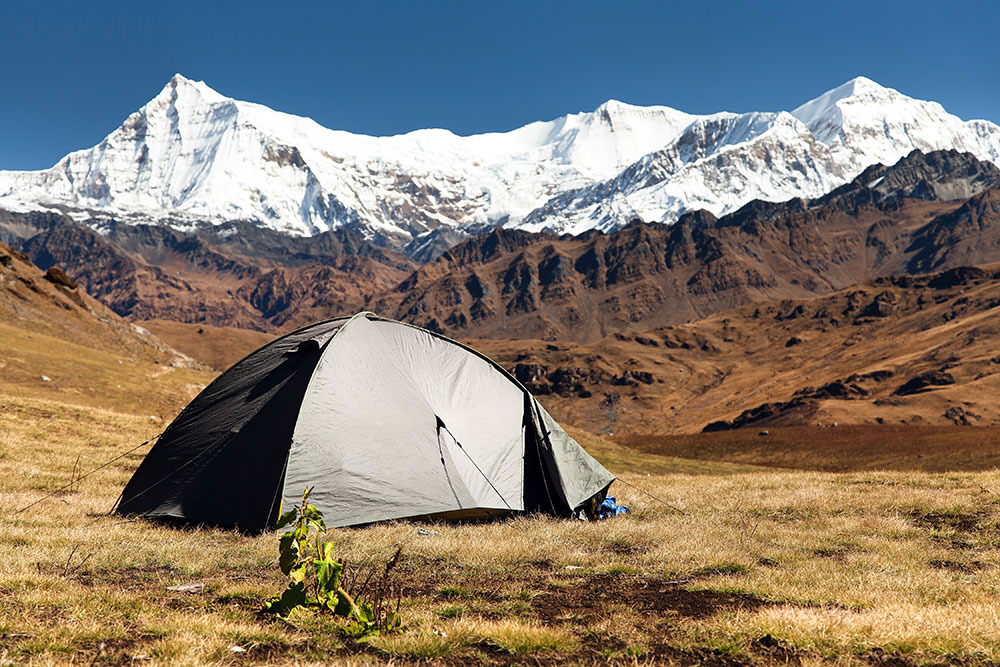
The final ascent to Poon Hill is usually done at night, to reach the viewpoint before the sunrise illuminating the Annapurna massif. On clear days, the panorama encompasses:
- Annapurna South (7,219 m), which dominates the view due north;
- Annapurna I (8,091 m), the first 8,000-meter peak ever climbed;
- Dhaulagiri (8,167 m) to the west;
- Nilgiri, Hiunchuli and Machapuchare ("Fish Tail"), recognizable by its double peak.
The summit platform is equipped with an observation tower. Once the sun rises, the peaks gradually turn pink then gold, before clouds often rise from the valleys mid-morning.
Practical information
The Poon Hill trek takes place within the Annapurna protected area. Two permits are mandatory and checked at several checkpoints:
- the ACAP permit (Annapurna Conservation Area Permit);
- the TIMS card (Trekkers' Information Management System).
Both documents are obtained in Kathmandu or Pokhara, upon presentation of your passport and identity photos. The trek can be done independently or with a guide; since 2023, Nepalese regulations tend to require an authorized guide for foreign trekkers, a point to verify before departure.
Level and terrain: the difficulty lies mainly in elevation gains. The Ulleri ascent, in particular, features approximately 3,300 stone steps and is the most demanding section of the itinerary. Plan for 5 to 7 hours of walking per day depending on the stages.
Equipment: ankle-supporting trekking shoes, layered clothing, lightweight down jacket, headlamp (essential for the night ascent to the summit), water bottle and purification tablets. Temperatures can drop below zero at the summit, even outside winter.
Accommodation: lodges ("tea houses") line all stages. Comfort remains rustic: twin rooms, common areas heated by stove, local meals (dal bhat) and basic Western options. Hot showers and battery charging are often available, but frequently charged as extras.
When to go
The best times to reach Poon Hill are October and April, which combine dry weather and clear views of the summits. Spring (April-May) has the added advantage of rhododendron blooms, coloring the forests you traverse in reds and pinks.
Winter (December-February) remains dry but often hazy during the day, with possible snow falls that can slow progress above Ghorepani. Summer corresponds to the monsoon: frequent rains, slippery terrain, leeches in forests and low clouds that often obscure the summits.
How to get there
The logistical starting point is Pokhara, connected to Kathmandu by bus (6 to 8 hours) or by domestic flight (about 25 minutes). From Pokhara, the trek begins at Nayapul, accessible by:
- private taxi or car with driver (1.5 to 2 hours, the most flexible option);
- local bus from Baglung station (more economical, regular morning departures).
The classic itinerary then follows: Nayapul → Birethanti → Tikhedhunga → Ulleri → Ghorepani → Poon Hill, with return via Ghandruk or the same route.
What to combine in the region
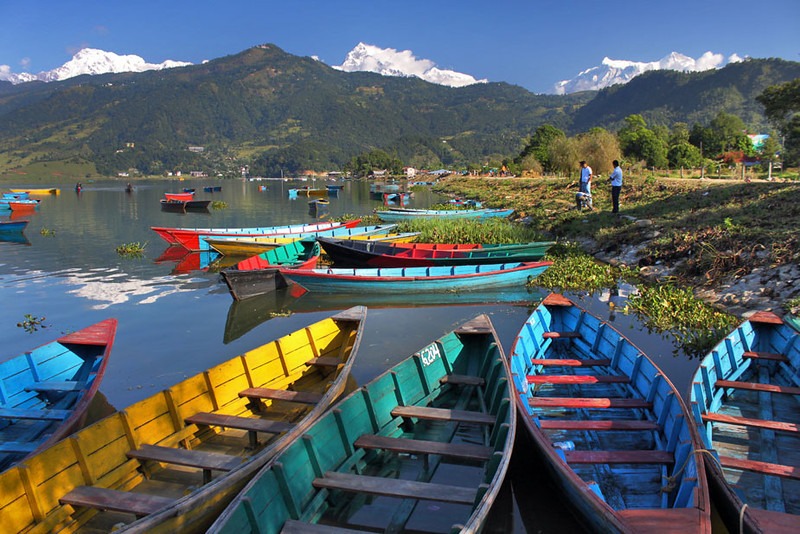
- Pokhara and its Phewa Lake, an ideal base for a day or two of recovery before or after the trek;
- the Annapurna sanctuary and its base camp, to extend the high mountain experience;
- the village of Ghandruk, accessible as a return variant, known for its traditional Gurung architecture;
- Buddhist sites in the Kathmandu Valley such as Swayambhunath or Boudhanath, to include at the start or end of your trip.
Frequently asked questions
Frequently asked questions
Prepare your trip
Poon Hill naturally fits into an itinerary combining trekking in the Annapurnas, the Kathmandu Valley and Buddhist heritage. To build a custom itinerary, consult our Nepal trips.
Interested in this visit?
We can include it in your personalised itinerary.