Patan Durbar Square
Patan Durbar Square
Newar royal square in Patan, UNESCO World Heritage site: former Malla palace, inner courtyards, museum and temples within a few hundred metres.
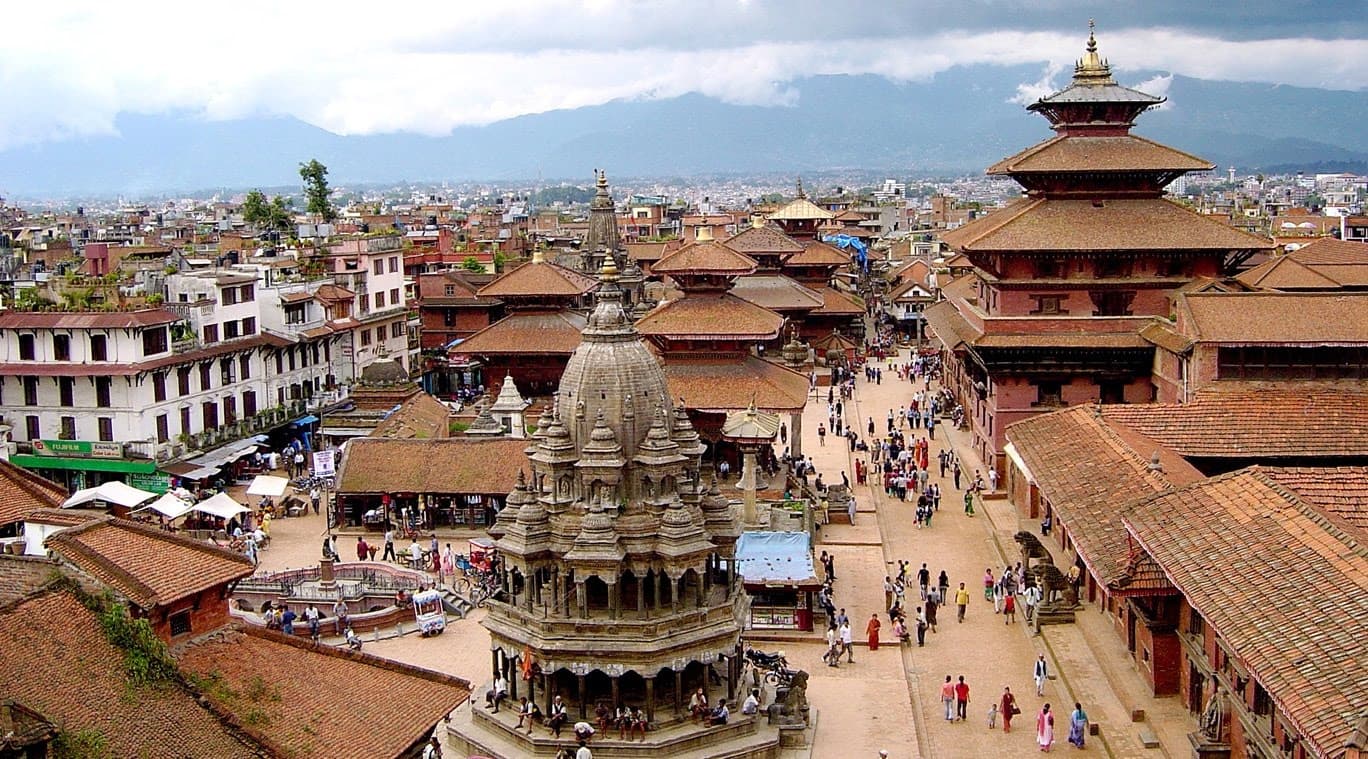
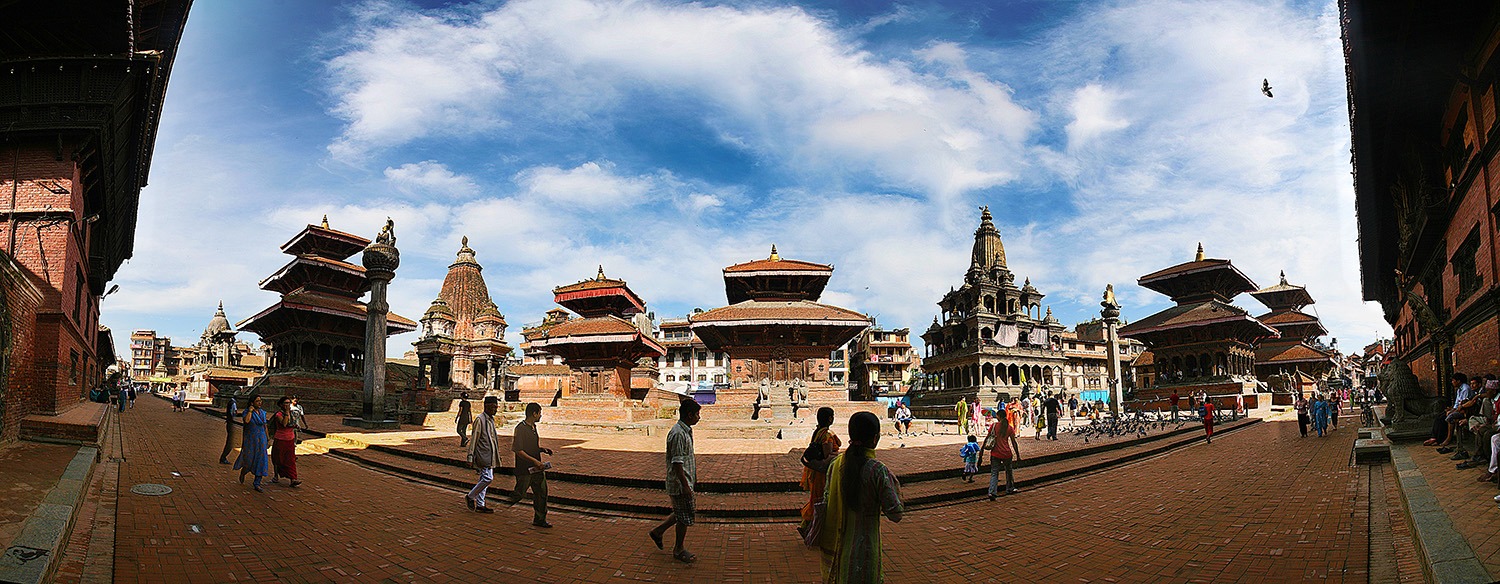
Patan Durbar Square forms the monumental heart of Patan (Lalitpur), the second historic city in the Kathmandu Valley. More compact than its capital neighbour, this royal square concentrates the former palace of the Malla kings, several inner courtyards and around a dozen temples with tiered roofs characteristic of Newar architecture. The entire ensemble is listed as a UNESCO World Heritage Site within the "Kathmandu Valley" designation.
Why visit Patan Durbar Square
- An exceptionally dense Newar palatial complex, clustered on a pedestrian square covering just a few hundred metres.
- Three inner courtyards (chowks) open to visitors, including the Tusha Hiti, considered a masterpiece of stone architecture.
- Patan Museum, one of the country's finest repositories of Buddhist and Hindu Himalayan art.
- A concentration of active temples: the square remains a living place of worship, far more than merely a tourist site.
- A preserved historic quarter ideal for exploring on foot, surrounded by artisan workshops (bronze casting, repoussé work, thangka painting).
A brief history
Patan, also known as Lalitpur ("the city of beauty"), was one of three ancient royal capitals in the Kathmandu Valley, alongside Kathmandu and Bhaktapur. The square took its present form under the Malla dynasty between the 16th and 18th centuries, when competing rulers vied with one another in architectural patronage. King Siddhi Narsingh Malla, in the early 17th century, commissioned several of the square's iconic temples, including the Krishna Temple in stone.
The unification of Nepal by the Shah dynasty in the late 18th century ended Malla rule, but the square retained its religious significance. The earthquake of 25 April 2015 caused severe damage to several structures, including the complete collapse of the Char Narayan Temple. Restoration work, carried out by Newar artisans using traditional techniques, has been undertaken since then and continues in phases.
What to see on the square
The royal palace and its inner courtyards
The former palace is organised around three inner courtyards:
- Sundari Chowk: the most intimate, it houses the Tusha Hiti, a sunken basin used for ritual bathing by the royal family. Its walls are carved with deities and are considered a masterpiece of Nepalese stone architecture.
- Mul Chowk: the ceremonial courtyard, dedicated to the goddess Taleju, the tutelary deity of the Malla kings.
- Keshab Narayan Chowk: now home to the Patan Museum, whose exhibits present Buddhist and Hindu sculpture from the valley.
The temples of the square
Several sanctuaries line the square facing the palace:
- The Krishna Temple, carved from grey stone, featuring architecture inspired by the shikhara style of northern India.
- The Hari Shanker Temple, with three tiers, dedicated to a combined form of Vishnu and Shiva.
- The Char Narayan Temple, one of the square's oldest sanctuaries, currently undergoing reconstruction since 2015.
- The Bhimsen Temple, at the northern end, devoted to the protector of merchants.
Around the square
- Kwa Bahal (Golden Temple), to the north: a heavily frequented Buddhist monastery in the city, distinguished by its gilded copper façade, traditionally said to have been founded in the 12th century.
- Kumbeshwar Temple, further north: a temple with five superimposed tiers, a rare configuration in the valley.
- Machhindranath Temple, to the south: dedicated to Rato Machhindranath, the god of rain and abundance, particularly revered in Patan.
Jawalakhel
Southwest of Patan, the district of Jawalakhel hosts the valley's largest Tibetan refugee community and is recognised as a centre for Tibetan craftsmanship, particularly carpet weaving.
When to visit
High season in Nepal runs from October to November (clear skies following the monsoon) and then from March to April. Patan can be visited year-round, though the monsoon season (June to September) makes travel less pleasant and some restoration work slows.
The highlight of the year is the Rato Machhindranath Festival, held just before the monsoon (typically April–May according to the Nepali lunar calendar). The effigy of the god is paraded over several days on a wooden chariot through Patan's streets in a procession that can last a month until the final Bhoto Jatra ritual. It offers a chance to witness the city's ritual life at its most vibrant.
For the best light on the red bricks and roofs, visit late in the afternoon.
Practical information
- Entry fee: foreign visitors are asked to pay an entry fee to access the protected Durbar Square zone and Patan Museum. The rate is moderate and valid for a day; free extension of validity is available on request at the visitor office for longer stays.
- Duration of visit: allow 2 to 3 hours for the square and museum, half a day if you extend your visit to Kwa Bahal and Kumbeshwar.
- Dress code: active temples require modest clothing (shoulders and knees covered). Some sanctuaries are restricted to Hindus.
- Photography: permitted on the square and in courtyards, restricted inside certain temples and the museum.
How to get there
Patan is located approximately 5 km south of Thamel, Kathmandu's tourist quarter, on the far side of the Bagmati River. Several options are available:
- Taxi: journey of 20 to 40 minutes depending on traffic, which can be very heavy at peak hours.
- Local buses and minibuses: from Ratna Park or Lagankhel, economical but crowded.
- On foot: possible for hikers, about 1 hour from central Kathmandu.
Once there, the historic centre is explored entirely on foot.
Combine with
- Patan, of which Durbar Square is just one point of interest: artisan lanes, bahals (monastic courtyards) and Ashoka stupas on the periphery.
- Kathmandu Durbar Square, the other great royal square in the valley, offering a different atmosphere.
- Bhaktapur Durbar Square, the best preserved of the three ancient royal cities.
- Bungamati, a Newar village to the south, linked to the worship of Rato Machhindranath.
- Kirtipur, an ancient fortified town perched to the west of the valley.
Frequently asked questions
Frequently asked questions
Yes, foreign visitors are required to pay an entry fee to access the designated zone. This includes admission to Patan Museum located in Keshab Narayan Chowk. Keep your ticket during your visit: it is checked at various entrances.
Allow 2 to 3 hours for the square and museum. If you also visit Kwa Bahal, Kumbeshwar Temple and explore the artisan lanes, plan a full half day.
No. Most buildings have been restored or reconstructed by Newar artisans using traditional techniques. Some projects, such as the Char Narayan Temple, were still underway in recent years.
Patan Durbar Square is more compact, more pedestrian-friendly and less commercialised than Kathmandu's. It offers a higher density of stone temples and is considered better preserved in terms of atmosphere. The two are complementary.
It is held just before the monsoon, typically in April–May, according to the Nepali lunar calendar. The chariot procession can last several weeks through the city.
Include Patan in your trip
Patan is easily visited alongside Kathmandu and Bhaktapur as part of a Kathmandu Valley stay or at the beginning or end of a trek. To plan a bespoke itinerary incorporating Patan Durbar Square and other valley sites, explore our Nepal travel ideas.
Nearby
Interested in this visit?
We can include it in your personalised itinerary.