Reting Monastery
Reting Monastery
Founded in 1056 by Dromtönpa northeast of Lhasa, Reting Monastery preserves a rich history spanning the lineage of Atisha, the Gelugpa school, and the turbulent events of the 20th century.
Reting Monastery stands northeast of Lhasa, in the Réting Tsampo valley, at the heart of a juniper forest in Lhünzhub County. Founded in the 11th century, this Gelugpa site carries a dense history marked by the lineage of Atisha and the political upheavals of 20th-century Tibet.
Why visit Reting Monastery
- One of central Tibet's oldest monasteries, founded between 1056 and 1057 by Dromtönpa, a principal disciple of Atisha.
- The historical birthplace of the Kadampa school, later becoming a major Gelugpa center and the residence of the Reting Rinpoché.
- A singular natural setting: juniper forest, views over the Kyichu valley, and yak herds encountered along the access trail.
- A less visited site than Ganden or Sera, offering a peaceful experience in rural Tibet.
History of the monastery
Dromtönpa founded the monastery between 1056 and 1057 in the Réting Tsampo valley. He placed there a portion of the remains of the meditation master Atisha, of whom he was the principal disciple, and developed the practice of Kadampa Buddhism. Reting thus became one of the founding centers of this school, before its gradual integration into the Gelugpa movement, which made it the residence of the Reting Rinpoché.
The site's modern history is marked by a dramatic episode. In 1947, monks from the monastery assassinated sixteen soldiers of the Tibetan army sent to arrest the 5th Reting Rinpoché. The latter was accused of attempting to arrange the assassination of Taktra Rinpoché, the former regent. Following this affair, the monastery was plundered and devastated by order of the Tibetan government in Lhasa, and many treasures disappeared.
Reting suffered a second wave of destruction during the Cultural Revolution, before undergoing partial restoration from the 1980s onward. The Shide monastery, which was linked to it in Lhasa, did not share the same fate: burned and pillaged during the Chinese Revolution of 1911, it was never rebuilt.
What to see on the site
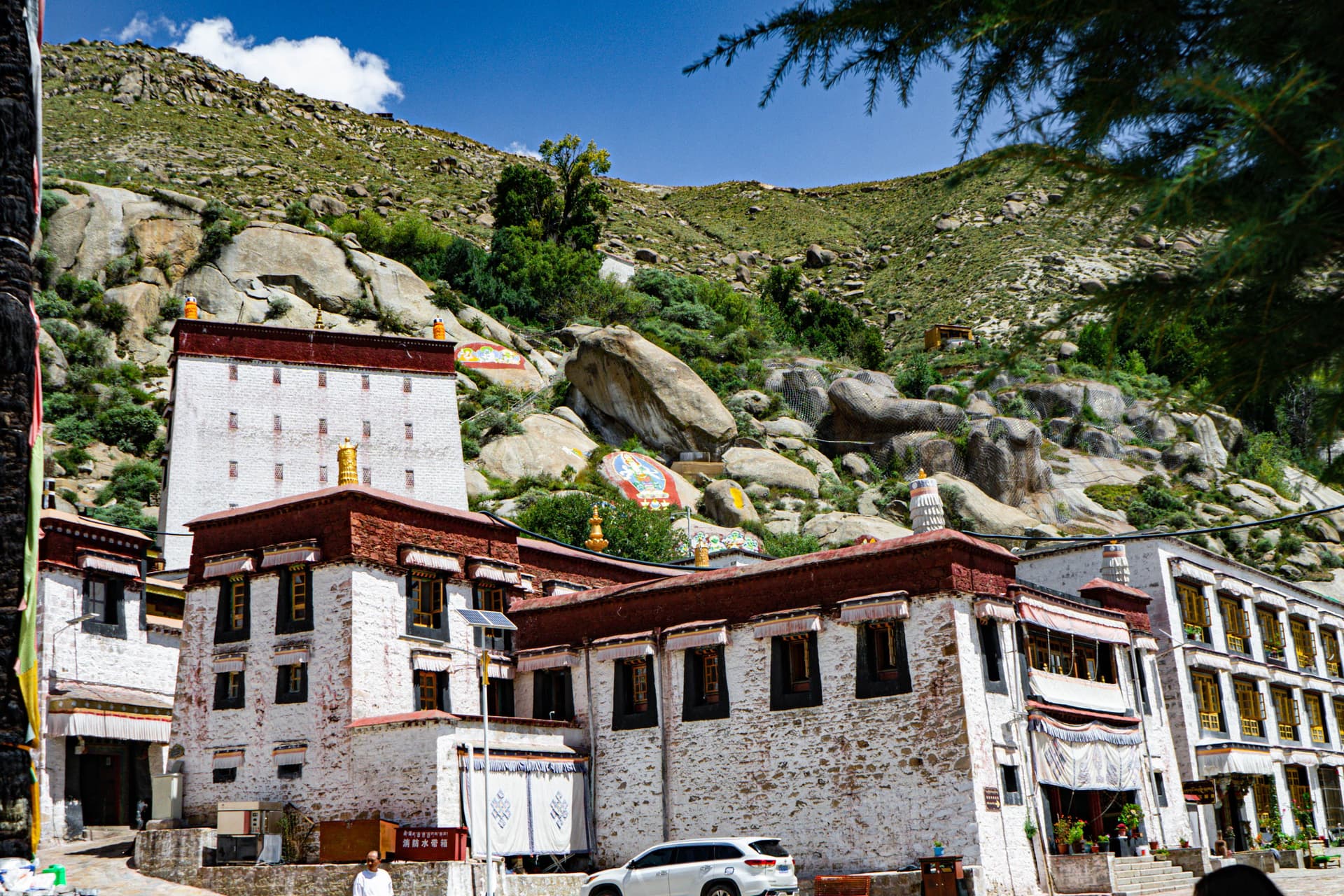
The site presents itself today as a partially reconstituted ensemble, where ruins, collapsed walls, and piles of stone still testify to past destruction. A few chapels have been rebuilt, but a significant portion of the complex remains as a construction site or ruins.
The assembly hall and Sutra chambers
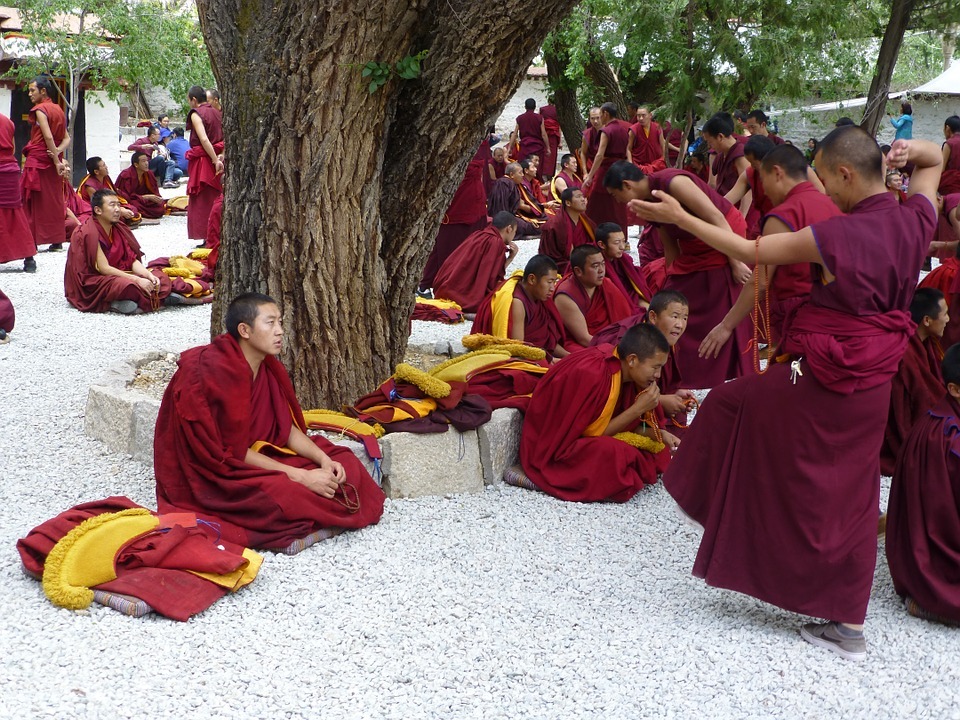
Only the assembly hall and Sutra chambers are open to visitors. Here you will observe Buddha statues, murals, and the atmosphere of a still-active place of worship: several hundred monks still reside here and continue daily monastic life.
The natural setting
The monastery is set within a juniper forest, a rare species at this altitude, overlooking an open landscape across the Kyichu valley. On the trail leading to the site, it is not uncommon to encounter yak herds and nomadic shepherds, extending the experience beyond the religious complex alone.
Practical information
- Location: Lhünzhub County, Chengguan district, northeast of Lhasa.
- Duration of visit: allow 1 to 2 hours on site, not including travel time.
- Entrance fee: moderate entry fee, payable in yuan on site.
- Hours: open during the day, generally in the morning and early afternoon; it's best to arrive early to enjoy the light and monastic services.
- Permit: like all Tibet sites, access requires a Tibet Travel Permit obtained through an approved agency.
- Dress code: shoulders and legs covered, photography sometimes forbidden inside temples.
When to visit
The region is comfortably visited from May to October, with milder temperatures and passable trails. July and August correspond to monsoon season: rain showers can complicate vehicle access, but vegetation is at its greenest. In winter, nights are very cold at this altitude and some road sections may be snow-covered.
Reting sits above 4,000 meters: plan several days of acclimatization in Lhasa before ascending, and adjust your visit pace to your altitude tolerance.
How to get there
The monastery is located approximately 240 km northeast of Lhasa, meaning half a day of travel depending on trail conditions. The most common solution is to arrange transport through a local agency organizing a 4x4 transfer with driver, often combined with a visit to Drigung Til or Ganden. Long-distance taxis from Lhasa remain possible but require prior fare negotiation and waiting on site.
Nearby sites to combine
- Ganden Monastery: another major Gelugpa center, founded by Tsongkhapa, perched on the slopes of Mount Wangbur east of Lhasa.
- Drigung Til Monastery: located in the same area, famous for its sky burial site and its Kagyupa school.
- Sera Monastery: in Lhasa itself, known for its daily philosophical debates among monks.
Frequently asked questions
Frequently asked questions
Like all Tibetan sites, access requires a Tibet Travel Permit issued through an approved agency. Individual visits without a guide therefore remain impossible for foreign travelers.
One to two hours are sufficient to explore the assembly hall, Sutra chambers, and wander among the ruins. However, given the long journey from Lhasa, the excursion occupies a full day.
The site was partially destroyed during the Cultural Revolution, after having been destroyed in 1947. What survives today are the assembly hall, Sutra chambers with their statues, some rebuilt chapels, and numerous ruins.
Offerings are very limited: a few rustic guesthouses in neighboring villages. Most travelers return to Lhasa for the night or continue toward Drigung Til.
Including Reting in a Tibet journey
Reting Monastery naturally fits into an itinerary combining Lhasa, Ganden, and Drigung Til for an in-depth exploration of Tibetan Buddhism. To prepare your stay, consult our journeys in the Himalayan region and our suggestions around the major monasteries, including the Sera Monastery in Lhasa.
Interested in this visit?
We can include it in your personalised itinerary.