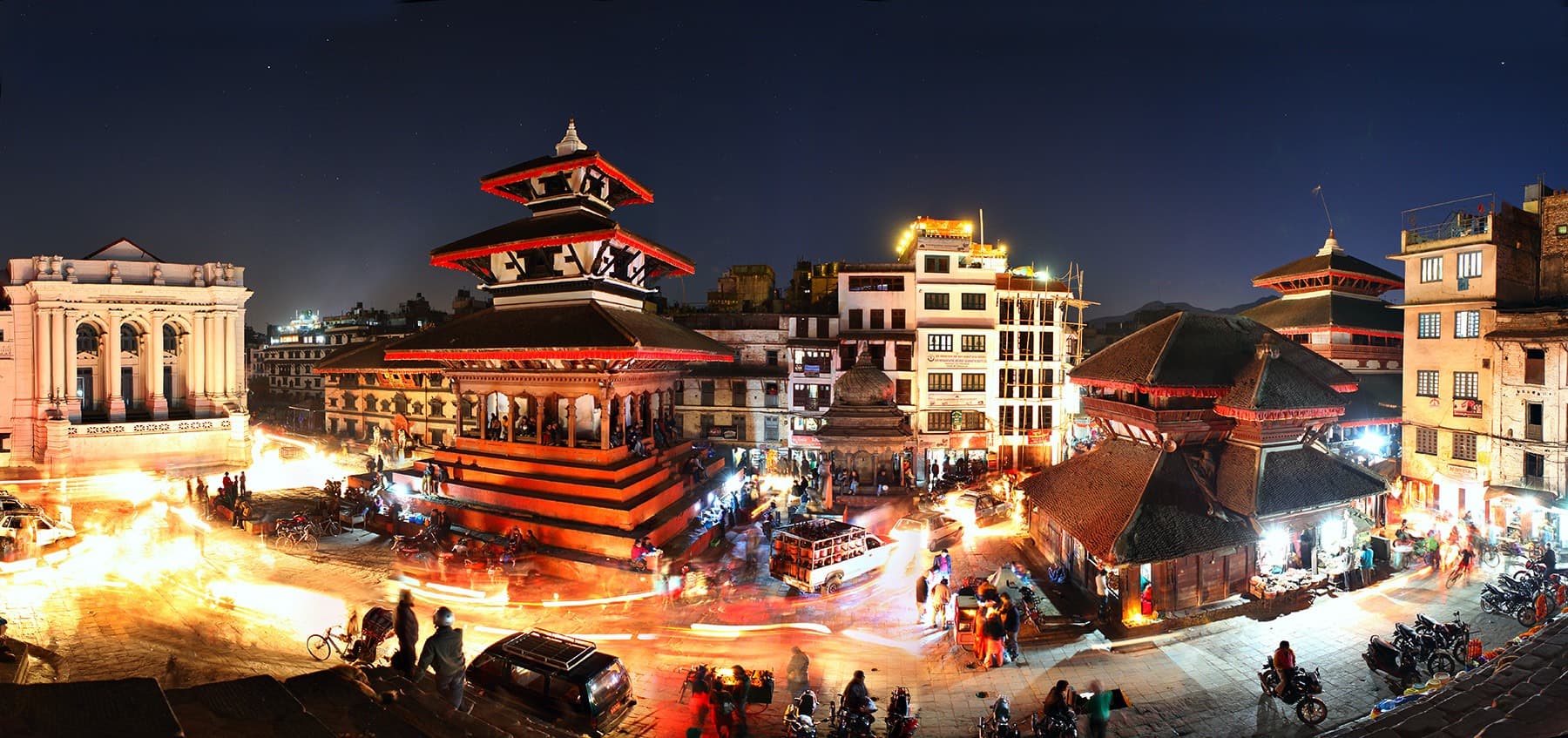
Kathmandu Durbar Square
Kathmandu Durbar Square
The former royal heart of Kathmandu, Durbar Square brings together Malla palaces, Newar temples and the residence of the Kumari, UNESCO-listed since 1979.
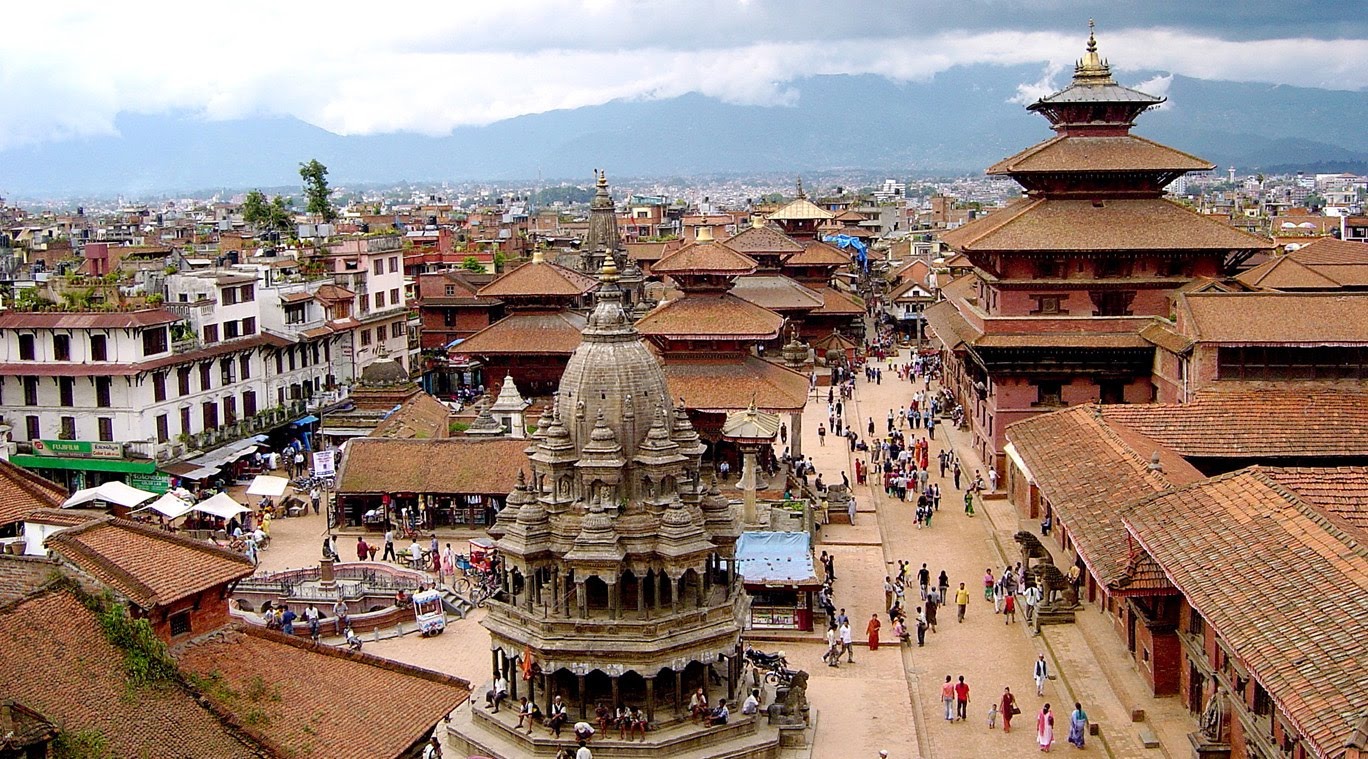
In the heart of old Kathmandu, Durbar Square forms a monumental ensemble of palaces and Newar temples, recognized as a UNESCO World Heritage Site since 1979. Once the center of royal power until the early 2000s, it brings together three adjoining squares: Basantapur Square to the south, Durbar Square to the west, and its extension toward Makhan Tole to the northeast.
Why Visit Kathmandu Durbar Square
The site condenses several centuries of Nepali history within a confined area: Malla and Shah palaces, Hindu sanctuaries, the residence of the Kumari (living goddess), and the Kasthamandap, considered the oldest building in the Kathmandu Valley. It offers a direct reading of Newar architecture—red brick, carved wood, layered roofs—and serves as a logical entry point for understanding the rest of the valley, before visiting Bhaktapur Durbar Square or Changu Narayan.
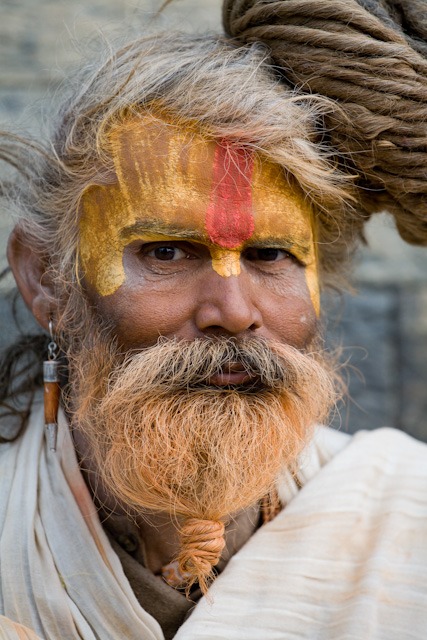
The square pulses with the rhythm of devotees, merchants, and ceremonies. You'll encounter sadhus, flower sellers, religious processions, and genuine spiritual fervor despite tourist activity.
History of the Site
Most of the buildings visible today were constructed in the 17th and 18th centuries, on a site occupied much earlier. Under the reign of Ratna Malla, founder of the Malla dynasty of Kathmandu in the late 15th century, the ensemble becomes the royal palace of the Malla sovereigns. Before the unification of Nepal in the 18th century by the Shah, the country comprised small kingdoms whose Durbar Squares were the major political remains.
The 1934 earthquake severely damaged the site, which underwent major renovations. Its inscription as a UNESCO World Heritage Site in 1979 solidified its status. Until 2001, Durbar Square remained the center of imperial ceremonies, notably coronations. The April 2015 earthquake again heavily affected the buildings; reconstruction work has continued since, with some temples rebuilt identically through traditional techniques.
What to See
The Three Squares
- Basantapur Square, to the south, once housed the royal elephants. Today it is lined with souvenir and craft stalls.
- Durbar Square, to the west, concentrates the former royal palace Hanuman Dhoka and the majority of the major temples.
- Makhan Tole, to the northeast, marks the monumental entrance to Hanuman Dhoka and aligns several more modest sanctuaries.
Must-See Structures
- Hanuman Dhoka: former royal palace, whose enclosure houses several interior courtyards and a museum dedicated to the Malla and Shah dynasties.
- Taleju Temple: dedicated to the tutelary goddess of the Malla kings, it is one of the highest on the site. Access is reserved for Hindus and limited to rare days of the year.
- Kasthamandap: wooden pavilion rebuilt after 2015, considered the oldest building in the valley and the origin of Kathmandu's name itself.
- Kumari Bahal: residence of the Kumari, a young girl revered as a living goddess. With some patience, you may glimpse her at a carved window overlooking the interior courtyard.
- Bhimsen Mandir: located to the north, guarded by two lions with golden decorations.
- Karnarayana: nicknamed the "Kama Sutra temple" by Newars due to its erotic sculptures on roof supports.
- Maju Deval: stepped temple whose upper platform offers an overview of the square.
The sanctuaries are dedicated to Shiva, Vishnu, Ganesh, Bhairab, and the goddesses Taleju and Parvati. The architecture is uniform: brick or stone walls, layered Newar roofs, finely carved wooden frameworks.
Practical Information
- Entrance Fee: entry is paid for foreign visitors (moderate rate, payable at the counter). Keep your ticket: a pass valid for your stay can generally be obtained upon presentation of your passport.
- Visit Duration: allow 1.5 to 3 hours to tour the three squares and enter the palace museum.
- Dress Code: shoulders and legs covered to enter religious enclosures.
- Guides: English-speaking and other language guides offer their services at the entrance; a guide helps decipher Hindu and Buddhist iconography.
When to Visit
The square is open year-round. The dry season, from October to April, offers the best lighting conditions, with clear mornings ideal for photography. The monsoon (June to September) makes travel more challenging but buildings stand out against a dramatic sky.
For a lively visit, time your trip to coincide with major festivals: Indra Jatra (August-September), during which the Kumari processes on a chariot pulled through the old city, or Dashain (September-October) and Tihar (October-November), when the square is adorned with offerings and lights.
The earliest hours of the morning (before 9am) and late afternoon are the quietest; mid-day can bring crowds and heat.
How to Get There
Durbar Square is located approximately 10 minutes' walk south of the Thamel district, through the commercial alleys of the old city. Walking remains the simplest option, with the route punctuated by small temples and courtyards worth exploring.
From Tribhuvan International Airport, allow 30 to 45 minutes by taxi depending on traffic. Cycle rickshaws can drop you at the edge of the site, as vehicle access is restricted in the immediate vicinity of the temples.
Nearby
A visit to Kathmandu Durbar Square fits into a broader journey through the valley:
- Bhaktapur Durbar Square, approximately 13 km to the east, considered the best-preserved of the three royal ensembles.
- Changu Narayan, the oldest active Hindu temple in the valley, perched on a hilltop.
- Kirtipur, an ancient Newar city clinging to a ridge, little visited by tourists.
- Bungamati, a village of woodcraft artisans and birthplace of the god Rato Machhindranath.
Frequently Asked Questions
Frequently asked questions
Include Durbar Square in Your Journey
Kathmandu Durbar Square naturally integrates into a circuit through the Kathmandu Valley or as an opening to Himalayan trekking. To build a customized itinerary blending Newar heritage, hiking, and traditional villages, explore our Nepal journeys.
Nearby
Interested in this visit?
We can include it in your personalised itinerary.
