Khumbu Valley
Khumbu Valley
At the foot of Everest, Khumbu Valley brings together Sherpa villages, Buddhist monasteries and four peaks over 8,000 m, accessible only on foot.
Khumbu Valley occupies the far northeastern corner of Nepal, in the Solukhumbu district, approximately 150 km from Kathmandu. Inscribed within Sagarmatha National Park between Lukla and Monju, it extends across nearly 1,300 km² at an average altitude of 3,300 meters, facing Everest. This high-altitude region, populated predominantly by Sherpas, provides the main access to four of the eight Nepalese peaks exceeding 8,000 meters.
Why visit Khumbu Valley
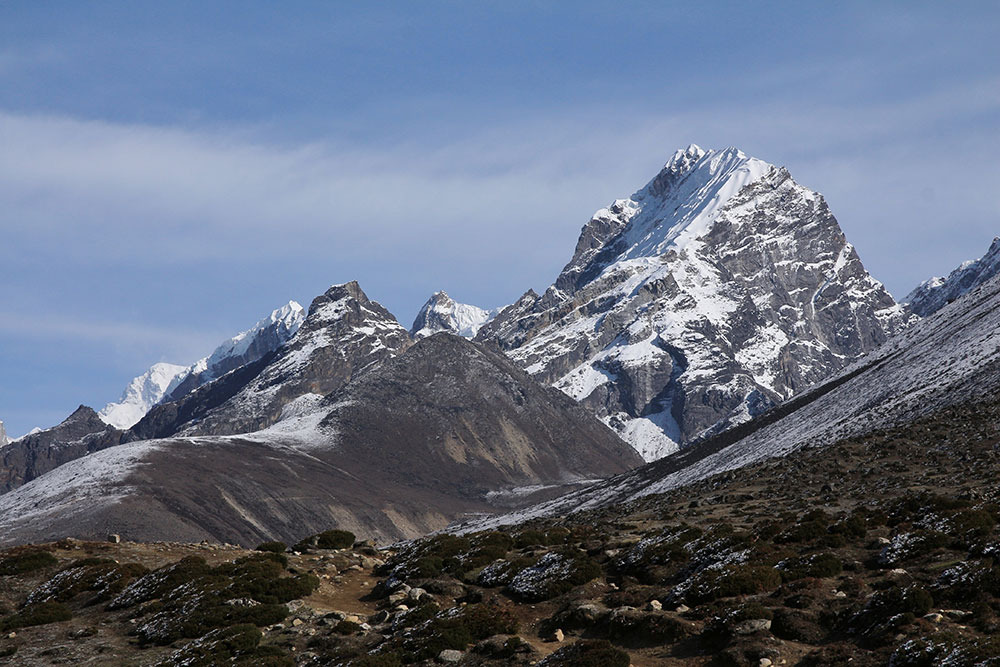
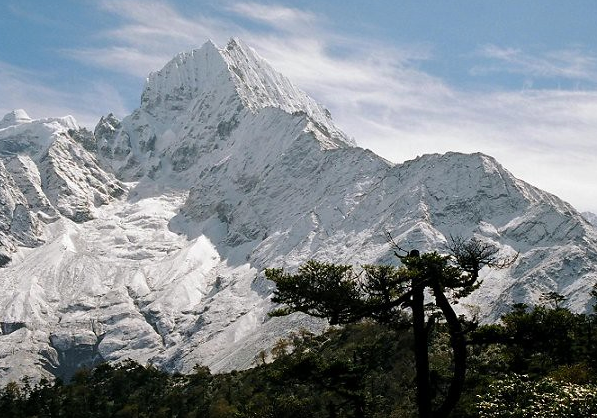
The valley concentrates rare Himalayan landscape and living Sherpa culture. The Khumbu Himal massif brings together Lhotse (8,516 m), Makalu (8,463 m), Cho Oyu (8,201 m) and Everest (8,849 m). On the trails, you traverse high-altitude villages, still-active Buddhist monasteries and rhododendron forests. The region is explored exclusively on foot: no roads serve Khumbu, which preserves its isolation and character.
Contact with the Sherpa population, their family lodges and their distinctive cuisine form an integral part of the experience, as much as the panoramas over the peaks.
History and formation of the region
Khumbu owes its current relief to glacial erosion that shaped the U-shaped valleys and deposited the moraines visible today on the slopes. The Nangpa La pass (5,716 m), at the Tibetan border, was for centuries the principal caravan route between Tibet and Nepal: Tibetan salt was exchanged for Nepalese grain, and Sherpas derived part of their income from this trade.
Khumbu's opening to trekking dates from the 1950s, after the first ascent of Everest in 1953 by Edmund Hillary and Tenzing Norgay. The creation of Sagarmatha National Park in 1976, followed by its UNESCO designation, structured visitor flow while guiding ecosystem preservation.
What to see in Khumbu Valley
Sherpa villages
The valley is organized around a dozen villages linked by trails. Namche Bazaar, considered the Sherpa capital, groups together lodges, a weekly market and services. Lukla concentrates the region's only airport. Monju marks the entry to the national park. Higher up, Khumjung, Kunde, Thame, Pangboche, Phortse and Pheriche preserve traditional architectural and agricultural patterns.
Sherpa architecture
Traditional houses feature broad dry-stone walls and a gabled roof covered with wooden shingles held in place by flat stones. The ground floor serves as stable and storage; the upper floor, occupied by the family, contains long wooden benches covered with carpets that function as seating during the day and beds at night. Dried yak dung, stacked against exterior walls, constitutes the primary fuel in the absence of wood at altitude.
The monasteries
Tengboche monastery is the valley's most visited: its position facing Ama Dablam and Everest makes it a key trekking stop. Thame monastery, built on a mountainside in Tibetan style, overlooks the former Nangpa La caravan route. Pangboche monastery, one of Khumbu's oldest, and the small Ghat temple between Lukla and Monju complete the itinerary.
Wildlife and landscapes
The Dudh Kosi river and its tributaries, the Imja Khola and Bhote Kosi, traverse the valley and are crossed on ancient suspension bridges. The park shelters the Danfe (Nepal's national bird), musk deer, mountain goats (tahr) and, more rarely, the snow leopard.
Sherpa cuisine
Lodges offer a common menu (dal bhat, potatoes, omelets, soups) to which pizzas, pastries and cafés are added in Namche. Two local dishes deserve tasting: Riki-Kur, a potato pancake topped with dzo (yak butter) and a Sorma sauce of cheese and spices, and Tzen, millet paste flavored and served hot.
When to go
Two windows concentrate trekking activity. October to November, the air is dry and visibility at its peak after the monsoon. March to May, temperatures rise and rhododendrons bloom at mid-altitude. Winter (December-February) remains practicable for experienced walkers, but temperatures drop to -15°C at night and some passes may be blocked. The monsoon (June-September) brings heavy rainfall and limits visibility.
The climate is semi-arid in the dry season, with large daily temperature swings and a daily upslope breeze linked to warming of the slopes.
Practical information
- Permits: entry to Sagarmatha National Park at Monju, plus local Khumbu Pasang Lhamu permit. Arrange both before departure.
- Acclimatization: recommended stop of two nights at Namche Bazaar (3,440 m) before ascending higher.
- Accommodation: lodges (teahouses) along all trails, comfort varies by altitude.
- Equipment: technical clothing for below-zero temperatures, high-protection sunglasses, water treatment.
- Connectivity: mobile network and paid wifi available in main villages, intermittent beyond.
How to get there
By air. Daily flights connect Kathmandu to Lukla in approximately 25 minutes, mainly in the morning to benefit from stable weather windows. Lukla is the region's only airport and the classic trekking departure point. Flights are frequently delayed or cancelled due to weather: plan a 1–2 day margin into your schedule.
By road then on foot. An alternative is to reach Jiri by bus from Kathmandu (8 to 10 hours), then walk to Namche Bazaar in 6 to 7 days. This historic route avoids flying but significantly lengthens the trek.
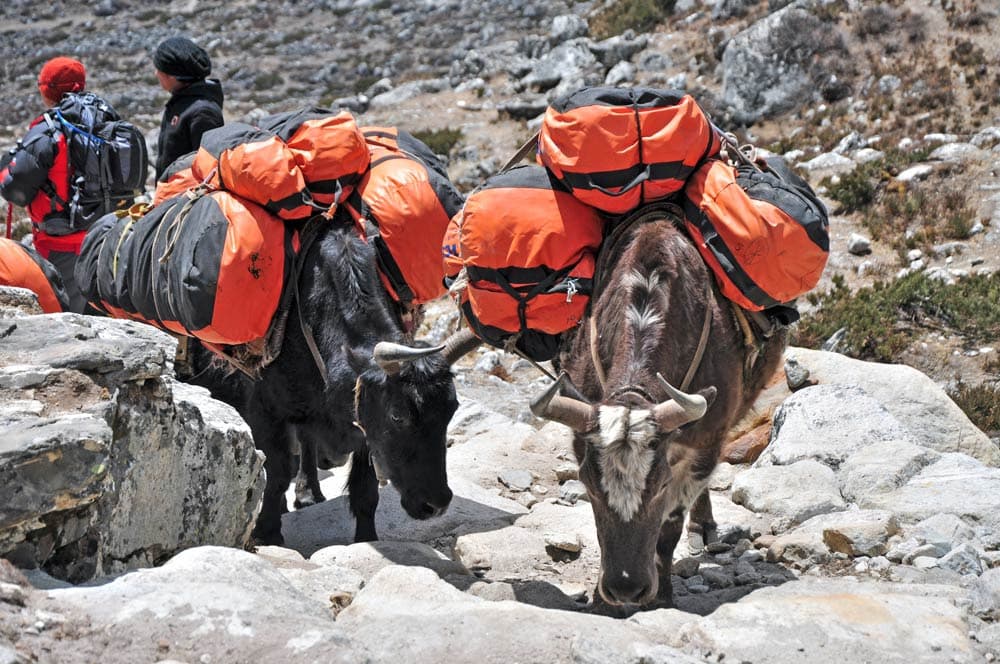
There are no roads in Khumbu: all internal travel is on foot, sometimes with porters or pack yaks.
Nearby
- Namche Bazaar: gateway to Khumbu and main acclimatization village.
- Annapurna: another major trekking region in Nepal, to the west, to extend a high-altitude journey.
- Swayambhunath: iconic stupa of Kathmandu, typical stop before or after trekking.
- Begnas Lake: low-altitude break in the Pokhara region on return.
Frequently asked questions
Frequently asked questions
Preparing your trip
A trek in Khumbu combines naturally with a cultural stop in the Kathmandu valley and, depending on available time, with the Annapurna region or Pokhara. To build a custom itinerary, explore our trips to Nepal.

Nearby

Interested in this visit?
We can include it in your personalised itinerary.