International Mountain Museum
International Mountain Museum
In Pokhara, the IMM traces the history of Himalayan mountaineering, mountain peoples and the 14 peaks over 8,000 metres.
The International Mountain Museum (IMM) is located in Pokhara, Nepal's second city and gateway to the Annapurna massif. Spanning 5.10 hectares, it houses the memory of Himalayan mountaineering: expedition equipment, biographies of pioneers, documentation on the 14 peaks over 8,000 metres and galleries dedicated to mountain peoples. With nearly 70,000 annual visitors, it is one of the country's most visited thematic museums.
Why visit the International Mountain Museum
The museum appeals to three audiences: those curious to understand the geography and cultures of Nepal's high valleys, trekkers preparing to set out towards Annapurna or Everest seeking historical context, and mountaineering enthusiasts who find rare documentation on major 20th-century expeditions.
The exhibitions cover both the geology of the Himalayas, high-altitude flora and fauna, the lifestyles of Himalayan peoples, and the history of ascents—British, French, Japanese and Nepalese. Allow 1.5 to 2.5 hours to explore at a leisurely pace.
Museum history
The project is backed by the Nepal Mountaineering Association (NMA), founded on 1 November 1973. The museum's foundation stone was laid in December 1995. After a lengthy construction phase, the IMM opened to a limited audience in 2002, then officially in February 2004.
The founders
Five key figures shaped the institution's genesis:
- Sherpa Dawa Norbu, the first major contributor to the project;
- Kumar Khadga Bikram Shah, a scholar from the royal family, who structured the funding;
- Dr Toni Hagen, Swiss geologist, known for helping approximately 1,500 Tibetan refugees reach Switzerland;
- Reverend Kawaguchi Ekai, the first Japanese to enter Nepal, on 26 January 1899;
- Dr Harka Gurung, a leading Nepalese geographer.
What to see inside
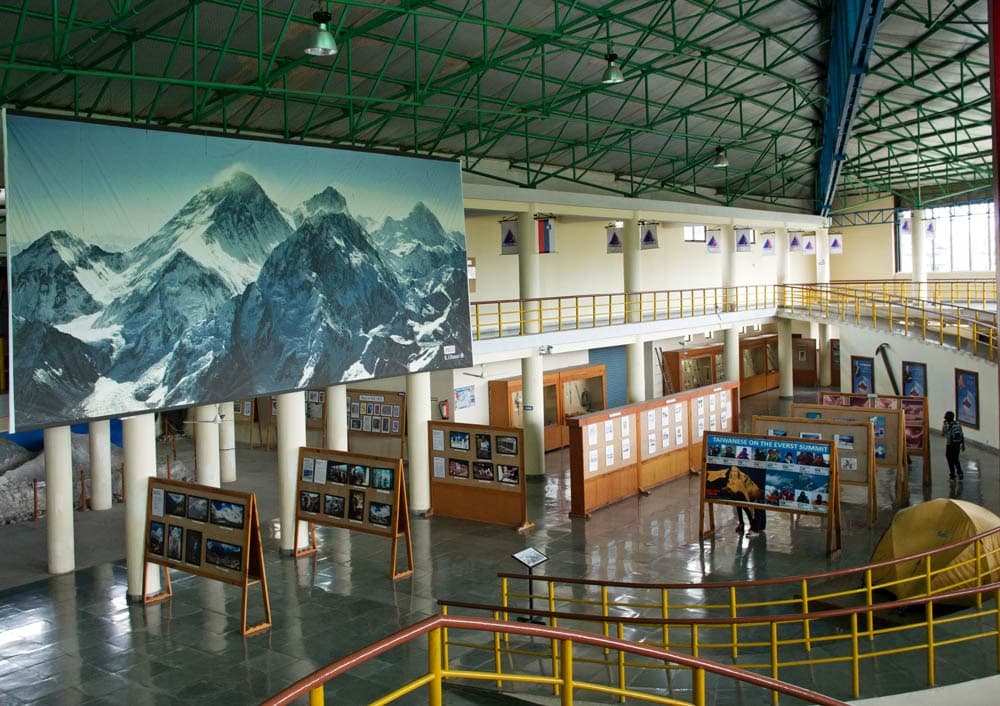
The main building is organized around three major halls: the Hall of Great Himalaya, the Hall of Fame and the World Mountains hall. At the entrance, a 21-metre climbing wall sets the tone, alongside replicas of high-altitude village huts.
The mountain peoples gallery
On the ground floor, this gallery showcases the lifestyles, traditional costumes and dwellings of Himalayan communities in Nepal, as well as those from Japan, Taiwan and Slovenia, in a comparative approach with the European Alps. An orientation video of approximately 18 minutes introduces the culture, geography and Khumbu region.
The world mountains gallery
Here you will find complete documentation on the 14 peaks over 8,000 metres, a geological section devoted to the formation of the Himalayas, as well as displays of high-altitude fauna and flora. This is also where portraits of the five founders are presented.
The mountain activities gallery
Ropes, ice axes, clothing and technical knots accompany rich expedition photography. Notable displays include:
- Maurice Herzog, the first mountaineer to climb a peak over 8,000 metres (Annapurna, 1950);
- The expedition of Junko Tabei, leading a team of 15 women, who achieved the first all-female ascent of Everest;
- Toshio Imanishi, among the first to climb Manaslu.
A section addresses environmental degradation at high altitude, featuring debris collected from Everest between 2000 and 2003. The Imaging Everest section brings together photographs from British expeditions from 1921 to 1953, provided by the Royal Geographical Society.
The Lhakhang hall and partners gallery
The Lhakhang hall is dedicated to Buddhism: a prayer space and research library. Upstairs, the partners gallery traces the programmes of IUCN and ICIMOD organizations on mountain ecosystem conservation.
The Manaslu model
In the park, a scale model of Mount Manaslu approximately 10 metres high was built with the support of Japan's international cooperation agency, in memory of the first Japanese explorers to climb the peak in 1956. Visitors can even scale it.
Practical information
- Opening hours: open daily during daylight hours. Exact hours vary by season; it's best to check before your visit.
- Admission fee: paid entry, moderate for foreign visitors, with reduced rates for residents and students.
- Recommended duration: 1.5 to 2.5 hours.
- On site: outdoor café, thematic bookshop and English-language signage.
What to see nearby
A visit to the museum pairs easily with other highlights in the region:
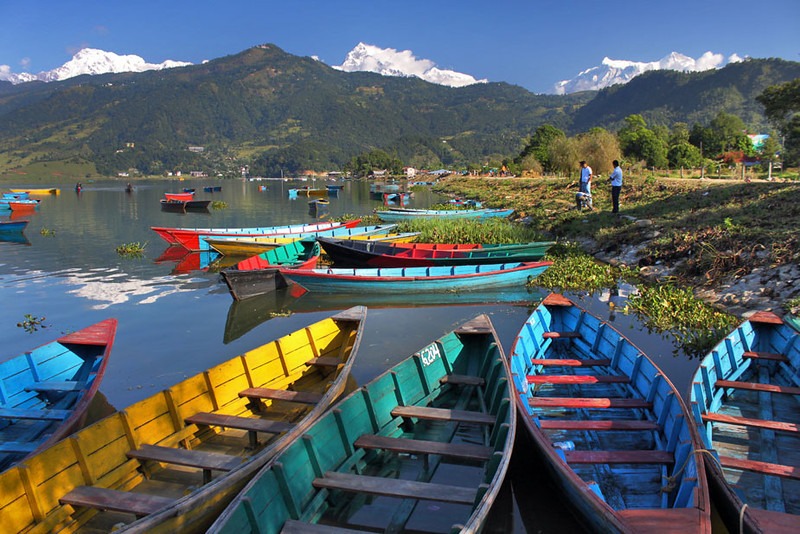
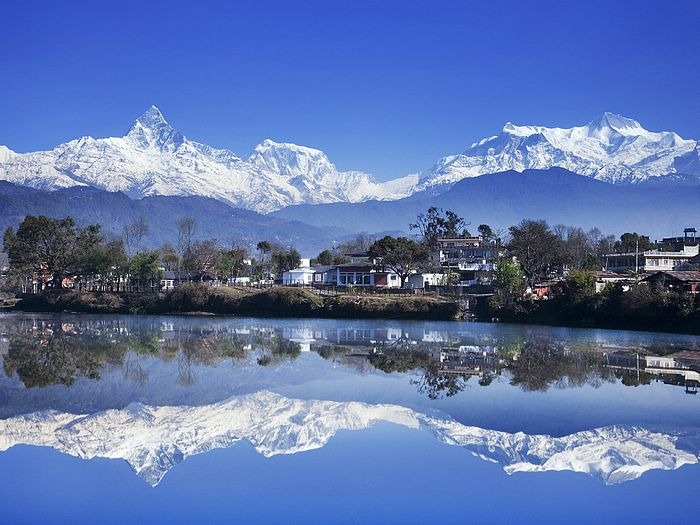
- Pokhara itself, its Phewa Lake shoreline and views of Machhapuchhre;
- The Annapurna massif, whose trekking routes depart from the valley;
- The Annapurna protected area, the country's largest protected zone.
For those continuing to the Kathmandu valley, the Swayambhunath stupa and Boudhanath sanctuary complete the spiritual and cultural panorama.
How to get there
The museum is located south of Pokhara, in the Ratopahiro district. From Lakeside, the city's tourist hub, taxi remains the most direct option (15 to 25 minutes depending on traffic). Local buses are more economical but require an inconvenient approach walk. By bicycle or scooter, the route is quite manageable outside peak heat hours.
Frequently asked questions
Frequently asked questions
Planning your trip
The International Mountain Museum fits naturally into a stay combining culture, trekking and Buddhist heritage. To build a custom itinerary including Pokhara, the Kathmandu valley and trekking in the Annapurnas, explore our Nepal journeys.
Nearby
Interested in this visit?
We can include it in your personalised itinerary.