Bhaktapur Durbar Square
Bhaktapur Durbar Square
Four monumental squares, a palace with 55 windows and Nepal's tallest temple: complete guide to Bhaktapur Durbar Square, a UNESCO-listed Malla jewel.
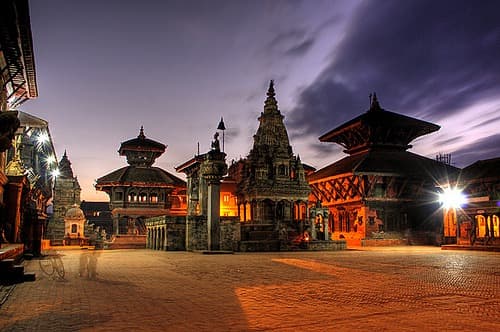
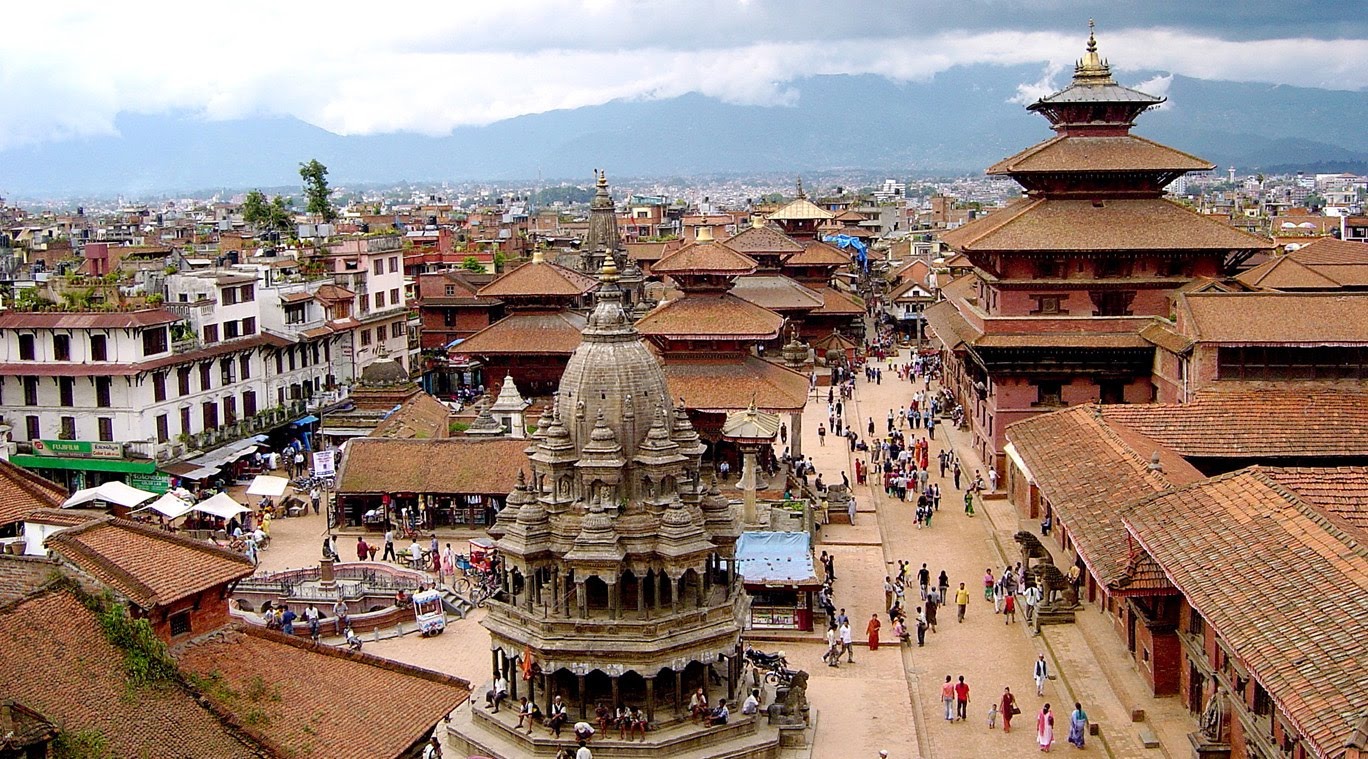
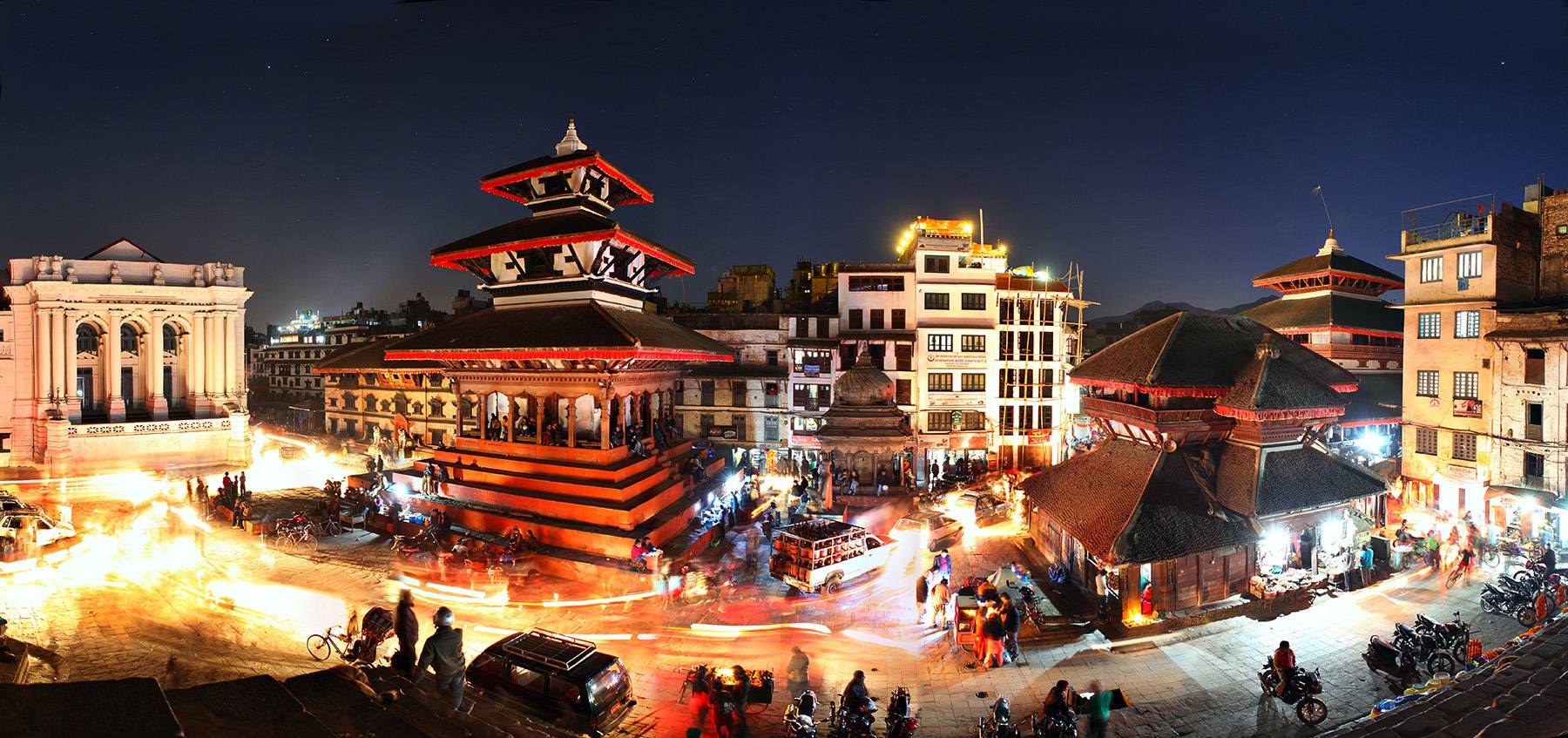
Bhaktapur Durbar Square is the monumental ensemble occupying the historic centre of Bhaktapur, the third royal city of the Kathmandu Valley. The site, inscribed on the UNESCO World Heritage List, actually comprises four contiguous squares: Durbar Square, Taumadhi Square, Dattatreya Square and Pottery Square. Palaces, pagoda temples, wooden sculptures and sacred fountains succeed one another across a few hundred metres.
Why visit Bhaktapur Durbar Square
Three reasons make a visit essential for anyone interested in Nepali heritage:
- Unique architectural concentration. Within a pedestrian zone, you traverse four squares, each with its own atmosphere — administrative for Durbar, religious for Taumadhi, artisanal for Pottery.
- A city still alive. Unlike a frozen archaeological site, Bhaktapur remains inhabited. The squares serve daily purposes: morning markets, pottery drying, Hindu ceremonies.
- Direct insight into Malla art. Wooden sculptures, red brick, stacked roofs: the style that made the valley's reputation is observed here in its most refined form.
History
Bhaktapur was founded in the 12th century by King Ananda Malla. It served as capital of the unified Malla kingdom until the kingdom's division into three separate entities in the late 15th century, after which it remained the capital of an autonomous Malla kingdom until the Gorkha conquest of 1769.
The city takes its present form in the early 18th century, the era when Malla rulers erected the most prestigious monuments on the square. This architectural layer constitutes the bulk of the visible heritage today.
Two catastrophes profoundly marked the site. The 1934 earthquake destroyed or damaged a large portion of the buildings. The 2015 earthquake weakened the monuments still standing, many of which are visible today only as ruins or restoration projects.
What to see
The 55 Windows Palace
The 55 Windows Palace is the most emblematic building on Durbar Square. Built in the 15th century and renovated in the 17th, it takes its name from the long balcony on the upper storey, whose 55 windows are carved in wood with remarkable finesse. The palace now houses part of the collections of the national art museum.
The Golden Gate
The palace's main entrance, the Golden Gate, is topped by a statue representing the goddess Kali accompanied by Garuda. The tympanum and frame are populated with finely carved Hindu mythical creatures in a gilded alloy. The gate provides access to the inner courtyard and the Taleju sanctuary, reserved for Hindu worshippers.
The Nyatapola Temple
On Taumadhi Square rises the Nyatapola, Nepal's tallest temple with its five stacked roofs. The building withstood the earthquakes of 1934 and 2015, a feat rare enough to be noted. Access to the sanctuary is reserved for the faithful, but access to the steps at the base, guarded by five pairs of protective figures, remains open and offers a clear view over the square.
The Batsala Temple
This stone temple, of more modest proportions, stands out for the quality of its sculptures. Most notably, it features a large silver bell, nicknamed "the bell of barking dogs": according to local tradition, neighbourhood dogs would start howling as soon as it rang.
Pottery Square
A few minutes' walk away, Pottery Square is the potters' quarter. You will see artisans turn clay vessels and leave them to dry in the open air on the cobblestones. It is one of the last squares in the valley where craftsmanship still occupies public space.
Practical information
- Entrance fee: a paid admission fee is required for foreign visitors. The rate is significantly higher than for other Durbar Squares in the valley. The ticket grants access to all four squares and is valid for the day.
- Recommended duration: allow half a day for a thorough visit, more if you wish to linger in the surrounding streets.
- Dress code: shoulders and legs covered to enter religious precincts.
- Photography: permitted on the squares, sometimes forbidden inside sanctuaries.
When to go
The dry season, from October to April, offers the best visiting conditions, with clear skies and mild temperatures. The monsoon period (June to September) remains passable but showers can hinder walking.
If you can, time your visit with Bisket Jatra, the Nepali New Year festival celebrated in Bhaktapur in April: a ceremonial chariot, erection of a ritual pole and jubilant crowds transform the square for several days.
How to get there
Bhaktapur is located about fifteen kilometres east of Kathmandu. Several options are available:
- Public bus: regular departures from Ratna Park or Bhaktapur Bus Park in Kathmandu. The most economical option, allow about an hour depending on traffic.
- Taxi: faster and more comfortable journey, to be negotiated on departure or booked in advance.
- Rickshaw: useful for getting around Bhaktapur once you arrive.
Nearby attractions
Several sites in the Kathmandu Valley combine easily with Bhaktapur:
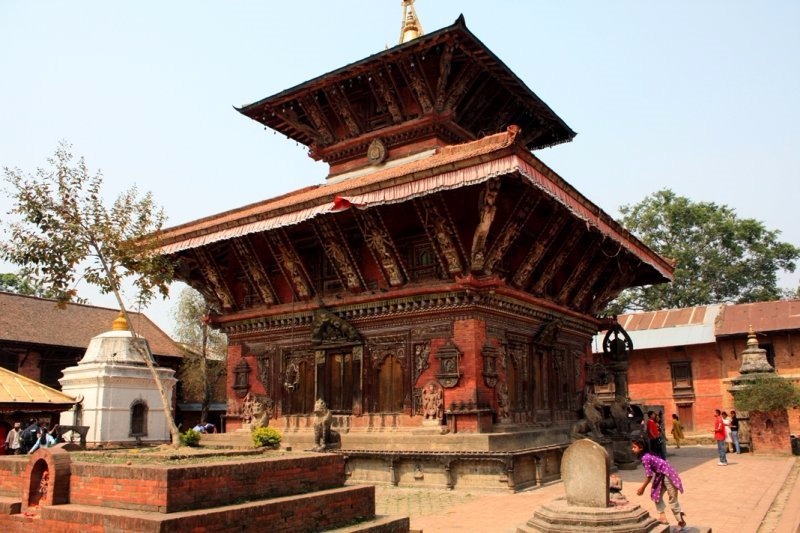
- Changu Narayan: the valley's oldest Hindu temple, about ten kilometres to the north.
- Kirtipur: an ancient Newar city perched at the other end of the valley.
- Bhaktapur: to understand the city as a whole, beyond Durbar Square alone.
Frequently asked questions
Frequently asked questions
Plan your trip
Bhaktapur Durbar Square naturally fits into an itinerary dedicated to the Kathmandu Valley and the ancient Newar royal cities. To build an itinerary combining heritage, hiking and encounters, consult our trips to Nepal.
Nearby
Interested in this visit?
We can include it in your personalised itinerary.