Muktinath
At 3,710 m in Mustang district, Muktinath is one of Asia's most venerated pilgrimage sites, sacred to both Hindu and Buddhist traditions, with its 108 sacred spouts and natural flames.
Muktinath rises above 3,700 meters in Mustang district, in northern Nepal, nestled against the foothills of the Himalayas. This site is simultaneously one of Asia's most venerated Hindu and Buddhist pilgrimage destinations, and a major waypoint on the Annapurna circuit. Its distinctiveness lies in a temple dedicated to Vishnu, natural flames fueled by a gas vent above a water source, and an arid, breathtaking high-altitude landscape.
Quick facts at a glance
- Altitude: approximately 3,710 m — plan for gradual acclimatization.
- Access: flight Pokhara–Jomsom (approximately 20 min), then jeep or hiking to Muktinath (approx. 18 km from Jomsom).
- Required permits: ACAP (Annapurna Conservation Area Permit) and TIMS card mandatory.
- Dress code: modest clothing required to enter the main temple.
- Recommended duration: half-day to full day for the site and its immediate surroundings.
- Season: accessible mainly from March to November; closed or difficult to access in winter (snow).
What to see
The Muktinath complex comprises several sanctuaries. The Mukti Narayan temple (dedicated to Vishnu) is the heart of the site, surrounded by 108 spouts shaped like cow heads from which glacial sacred water flows. Pilgrims ritually bathe in these waters. Nearby, the Buddhist temple of Jwala Mai houses the famous natural flames — gas, water and earth converging in one place, a rare symbol venerated in both traditions.
History and context
Muktinath ("place of liberation") is mentioned in several ancient Hindu texts as one of the 108 Divya Desams, sacred sites of Vishnu. For Tibetan Buddhists, it is associated with Guru Rinpoché (Padmasambhava) and known as Chumig Gyatsa ("hundred sources"). Its position on ancient trade routes between India and Tibet gave it a trans-regional spiritual and cultural role for centuries.
Highlights of the visit
The 108 sacred spouts
Arranged in a semicircle, these bronze spouts deliver glacial spring water. Passing beneath each is an act of purification for Hindu pilgrims. Even outside any religious context, the sight of this row of fountains set in a high mountain landscape is unforgettable.
The natural flames of Jwala Mai
Inside a small Buddhist temple, flames fueled by natural gas burn above a water source. This rare geological phenomenon — fire, water and earth at a single point — lies at the heart of the site's veneration in both religions.
The panorama over Mustang and the Himalayas
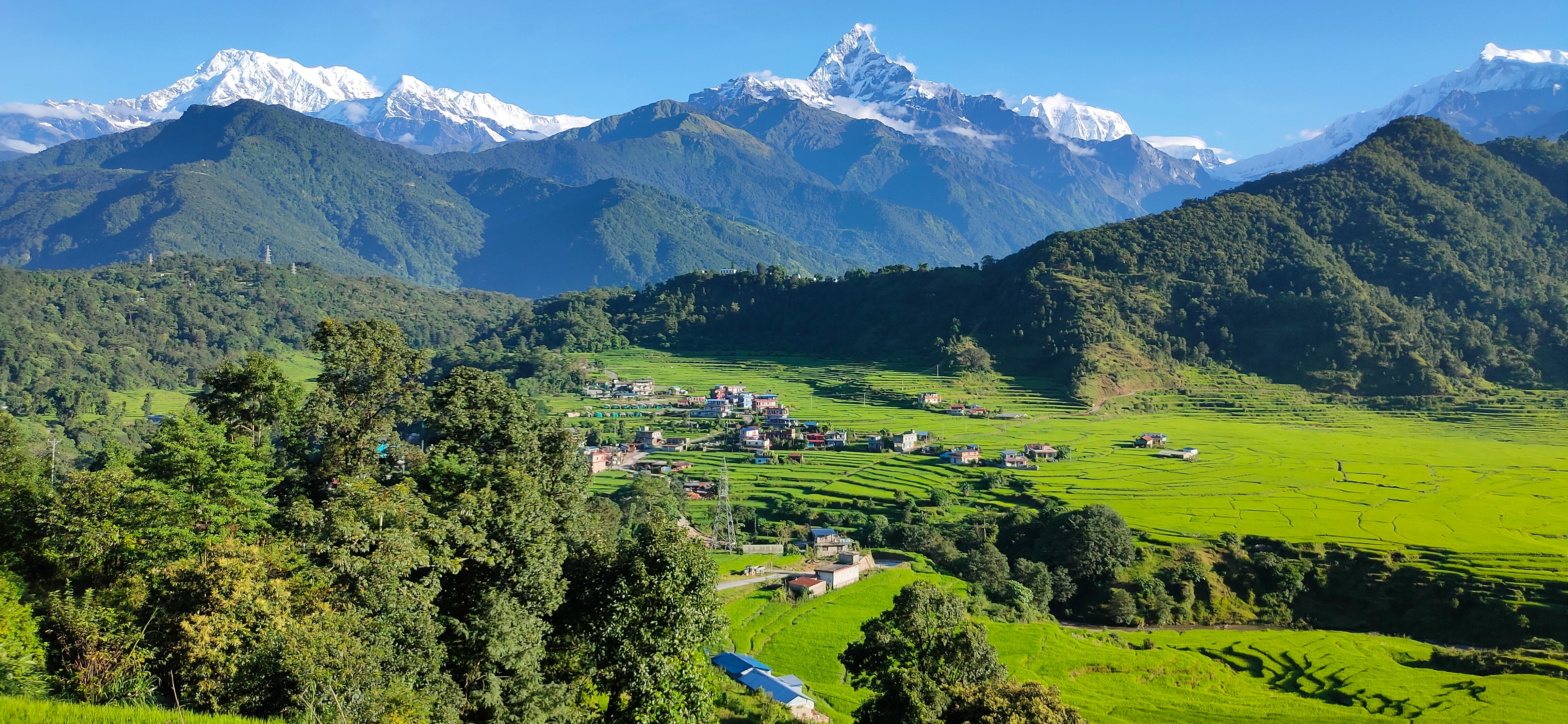
From Muktinath, the view stretches across Mustang's arid plateau, the Kali Gandaki gorges, and the snow-capped peaks of Dhaulagiri and Annapurna. The contrast between high-altitude desert and glaciers is particularly striking.
Etiquette and visiting rules
- Remove your shoes before entering temples.
- Wear clothing covering shoulders and knees.
- Circumambulate stupas and prayer wheels clockwise.
- Ask permission before photographing pilgrims or ceremonies.
- Avoid loud gestures or behavior inside sanctuaries.
Photography tips
Morning light is ideal: it illuminates the Jwala Mai flames without overexposing the background. The 108 spouts photograph well in slight upward angle to include the mountain setting. Late afternoon brings raking light across Mustang's plateau, creating remarkable ochre and golden tones. Avoid using flash inside temples.
Location and access
Muktinath is located in Mustang district, approximately 18 km north of Jomsom. The quickest access is via flight from Pokhara to Jomsom airport, followed by a jeep ride on a mountain track. It is also possible to reach it on foot from Jomsom in a day's hike, or from Kagbeni in a few hours. The site fits naturally into the Annapurna circuit.
Nearby attractions
- Jomsom — the administrative center of Mustang, departure point for flights to Pokhara and an essential logistical base.
- Kagbeni — medieval village at the confluence of two rivers, gateway to Upper Mustang.
- Marpha — white-washed village renowned for its apple orchards and local brandy production.
- Kali Gandaki Gorges — one of the world's deepest gorges, traversed by the violent winds characteristic of the valley.
Want to discover this destination?
Our local advisors design your tailor-made trip.