Bhaktapur
Bhaktapur
Just 13 km from Kathmandu, Bhaktapur is Nepal's best-preserved Newar city: three durbar squares, tiered temples, pottery crafts, and UNESCO-listed festivals.
Name: Bhaktapur
Nepali Name: भक्तपुर
Zone: Bagmati
Status: City
Population: 81,748 inhabitants (2011)
Area: 6.88 km²
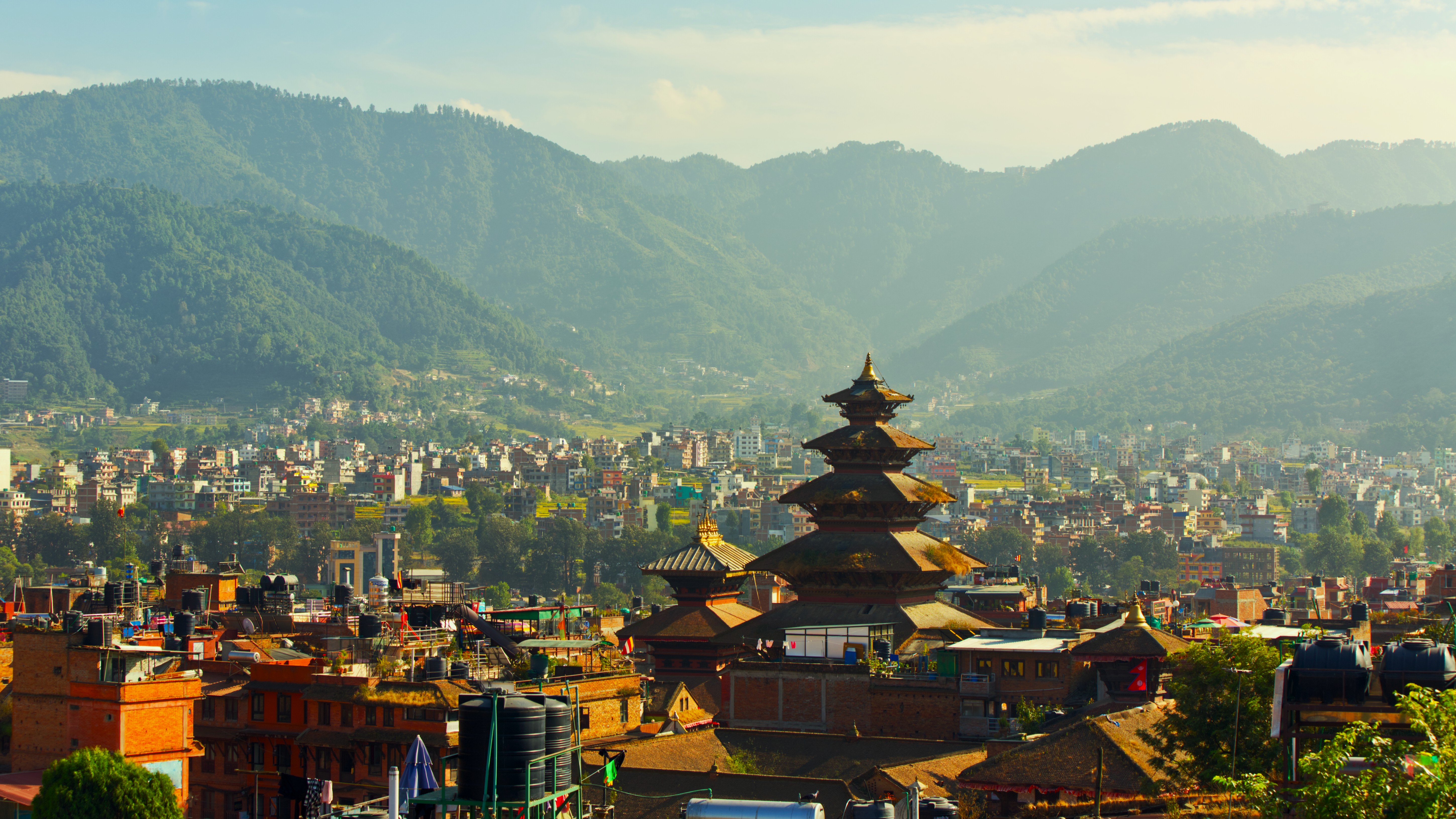
The city of Bhaktapur is a Nepali settlement located 13 kilometers east of Kathmandu. It defines itself as a small town that is both rural and artisanal in character. What makes it truly famous among travelers is undoubtedly its architectural style and remarkably well-preserved medieval character.
History
The city was founded by King Ananda Deva Malla. A former capital of the Malla rajahs until the 15th century, Bhaktapur subsequently became an independent kingdom until the 18th century. The last kings to rule Bhaktapur were Jitamitra Malla, Bhupatindra Malla, and Ranjit Malla. They were responsible for the palaces and temples present at Durbar Square. In 1744, Prithvi Narayan Shah, founder of the Gorkha dynasty, began a major conquest throughout the Kathmandu Valley and envisioned the unification of Kathmandu with Patan and Bhaktapur along with other cities in the valley.
A coup d'état struck the city for an extended period until Jang Bahadur Kunwar Ranaji eventually took control of Bhaktapur. In 1960, King Mahendra took control of the city and banned political party formation, implementing agrarian reforms. Political instability plagued Bhaktapur until the end of the 20th century.
The city was devastated by a major earthquake in 1934, which resulted in the loss of more than 2,000 houses and numerous lives. The main buildings were renovated with assistance from Germany and the United States. Bhaktapur was also affected by the last major earthquake in March 2015.
The city was inscribed in 1979 as a UNESCO World Heritage Site along with the entire Kathmandu Valley.
Today
Even today, few cars are permitted to circulate in Bhaktapur. As a result, the medieval character of the city remains perfectly preserved, immersing you in the heart of an ancient settlement.
Bhaktapur is characterized by its narrow streets adorned with centuries-old tiered houses, shops, and small stores. The city is like a large village where the most common activities are craftsmanship, agriculture, and small commerce.
Since the city still retains its medieval and rural character, you will easily notice the old habits and ways of life of the inhabitants. Around a street corner, you might encounter children running with wonderful smiles, or meet Newar women in their traditional clothing, washing clothes at public fountains.
The city is filled with great serenity, making one wonder if time has stopped in Bhaktapur.
Bhaktapur is a true living relic and indeed a cultural jewel for Nepal. It boasts many attractions to draw travelers from around the world. Its pottery production, colorful festivals, traditional dances, and the indigenous lifestyle of the Newar community give the city an undeniable appeal for tourists seeking authenticity.
Beyond its medieval character and unique atmosphere, Bhaktapur also possesses historical remains not to be missed. You cannot fail to notice the impressive quantity of temples scattered at every corner. Bhaktapur is said to have more temples than Kathmandu and other cities in the valley.
Inscribed as a UNESCO World Heritage Site, the preservation of its cultural heritage and the authenticity of the places is dear to the government, which has decided to impose an entrance fee for foreign visitors.
Following the major earthquake that struck Nepal in March 2015, Bhaktapur faces the need for significant renovation work. The visit will nonetheless remain worthwhile, as the inhabitants have resumed their daily lives and continue to cultivate their uniqueness, thus preserving the very rural and authentic character of the city.
The entrance fee for foreign visitors is currently announced at 1,500 NPR per person for each entry. Different rates apply for those staying in the city, allowing them to enter and exit without additional charges. Visitors from SAARC (South Asian Association for Regional Cooperation) member countries and China benefit from a substantial reduction.
Must-See Attractions in Bhaktapur
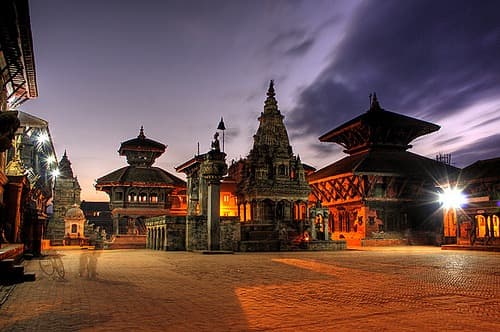
Bhaktapur Durbar Square
Bhaktapur Durbar Square is a grand palace featuring 55 windows that served as the residence of the city's sovereigns before 1769. Today, this palace is home to the National Art Gallery. The edifice is renowned for its grand golden gate dating to 1756, which provides access to the Taleju Temple. Behind this imposing gate, you can discover large courtyards and a pond where royal families once bathed.
You also cannot miss the Great Bell erected by Ranajit Malla, the last king of Bhaktapur. It was created in honor of the goddess Taleju and was used to gather inhabitants in the square.
Taumadhi Square
Taumadhi Square is home to the Nyataponla Temple, which dates to 1702. This colossal monument features five stories and is classified as the tallest temple in Nepal. Every aspect of this temple, including the brackets, windows, and tympanums, has been meticulously decorated and carved by Newar artisans, reflecting Newar culture throughout. The temple is dedicated to Siddhi Laxmi, the goddess embodying feminine power and fertility. Near the temple stands the Bhairavanath Temple, which houses a large statue of the god Shiva.
Dattatreya Square Temple
In Dattatreya Square stands the Dattatreya Temple, which is the main attraction of the square. It was erected by King Yaksha Malla and consists of three stories. According to legend, the temple's stories were constructed using a single tree. Though it has suffered from various natural disasters, it remains a remarkable testament to the constructions undertaken by royal families throughout Nepal.
Other temples and cultural vestiges in the city were destroyed during the major Gorkha earthquake. Among these are the Pottery Square, the Peacock Window, one of Nepal's largest collections of lingams at Hanumanghat, the ghats, and the cremation river.
Religious Sites and Arts of Bhaktapur
Beyond the cultural sites within the city, Bhaktapur is also rich in religious sites and arts reflecting both Hinduism and Buddhism. While the majority of the population practices Hinduism, there are nonetheless 19 Buddhist monasteries in the region.
Among these religious sites, the Indra Varna Madavihar Monastery ranks foremost. It was erected in 1671 and is located between Durbar Square and Dattatreya Square. When visiting the temple, you can admire the great beauty of two lion statues, one featuring a Patinga Hiti. There are also several Buddhist monuments and sanctuaries in the city, including the Lokeswor Mahavihar, Prasannasheel Mahavihar, Chatu Brahma Mahavihar, Jaya Kirti Mahavihar, Sukravarna Mahavihar, and Dipanker Mahavihar.
Famous Festivals in Bhaktapur
Several festivals are celebrated throughout the year to mark each season in Bhaktapur. Festivals are also organized to honor the gods and commemorate all historical and legendary events in the city. These include:
Dashain, the longest festival of the year. This festival can last up to 15 days and was designed in honor of the great goddess Devi Durga, during which offerings and animal sacrifices are made. The festival takes place in September or October.
Gai-Jatra, also called the Festival of the Cow. This festival honors families in mourning who have lost loved ones in the past year. For this occasion, they participate in a procession with a cow or a young boy dressed as a cow. According to legend, the cow helps the deceased reach the gates of heaven. It takes place in July and August.
Bisket Jatra celebrates the Nepali New Year. During this festival, many chariots are pulled through the city. This festival, which takes place in April, is very festive, with all inhabitants gathering in the streets with their families to eat and enjoy the celebrations.
Tihar, also called the Festival of Lights, pays homage to Laxmi, the goddess of wealth. During this festival, Nepali people light their homes with candles or oil lamps to welcome the goddess.
Craftsmanship
When visiting the city, you can observe the meticulous work of potters creating splendid works of art. The typical craftsmanship of the Newars is especially marked by "paubha" paintings, papier-mâché masks, cotton fabrics, jewelry, and ceramic products.
Climate
The weather is highly unpredictable in Bhaktapur and can change from moment to moment. Nevertheless, the city's average temperature ranges between 10° and 23.3°C throughout the year.
The annual maximum temperature is estimated between 16°C and 28°C, while the minimum ranges between 4.5°C and 18°C. The city also experiences a rainfall rate of 12 mm in January and a high rate of up to 383 mm in July.
Located just a few kilometers from Kathmandu, Bhaktapur is easily accessible by bus from the Nepali capital.
Mini buses depart daily for the Kamal Binayak station in Bhaktapur or larger buses for the Chyamasingha station from the stop near Bhadrakali.
Recently, microbuses have been put into service traveling between Kathmandu and Bhaktapur. They have the advantage of being faster.
Note: Trips to Bhaktapur cost approximately 10 NPR for minibus or bus travel. Taxi fares can reach up to 300 NPR.
Motorized vehicles are not permitted to circulate within Bhaktapur. Exploration is done on foot.
What to Do in Bhaktapur?
- Visit the city's famous squares such as Bhaktapur Durbar Square, Taumadhi Square, and Dattatreya Square to admire some of Nepal's most beautiful temples.
- Explore Hindu and Buddhist religious sites in the region, including the Indra Varna Madavihar Monastery and Jaya Kirti Mahavihar.
- Participate in the city's numerous celebrated festivals.
- Witness the marvels of Bhaktapur's pottery artistry.
Attractions in Bhaktapur
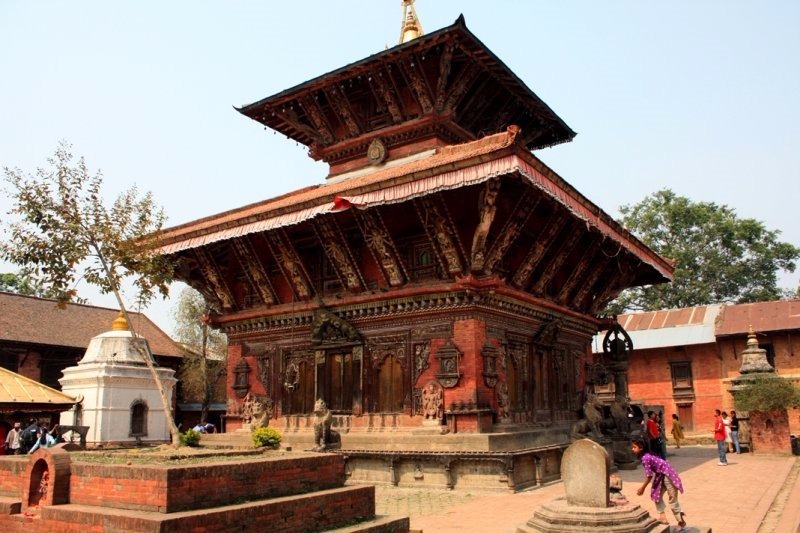
Changu Narayan
Perché sur une colline au nord de Bhaktapur, Changu Narayan abrite des sculptures vishnouïtes du Ve au IXe siècle et compte parmi les plus anciens temples hindous du Népal.
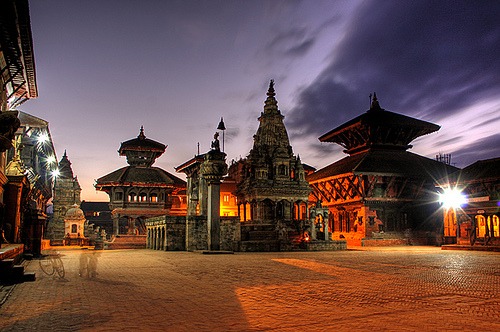
Bhaktapur Durbar Square
Quatre places monumentales, un palais aux 55 fenêtres et le plus haut temple du Népal : guide complet de Bhaktapur Durbar Square, joyau Malla classé à l'UNESCO.
Want to discover this destination?
Our local advisors design your tailor-made trip.