Potala Palace
Potala Palace
Former residence of the Dalai Lamas overlooking Lhasa at 3,700 m, the Potala Palace combines a white palace, red palace and funerary stupas, UNESCO-listed since 1994.
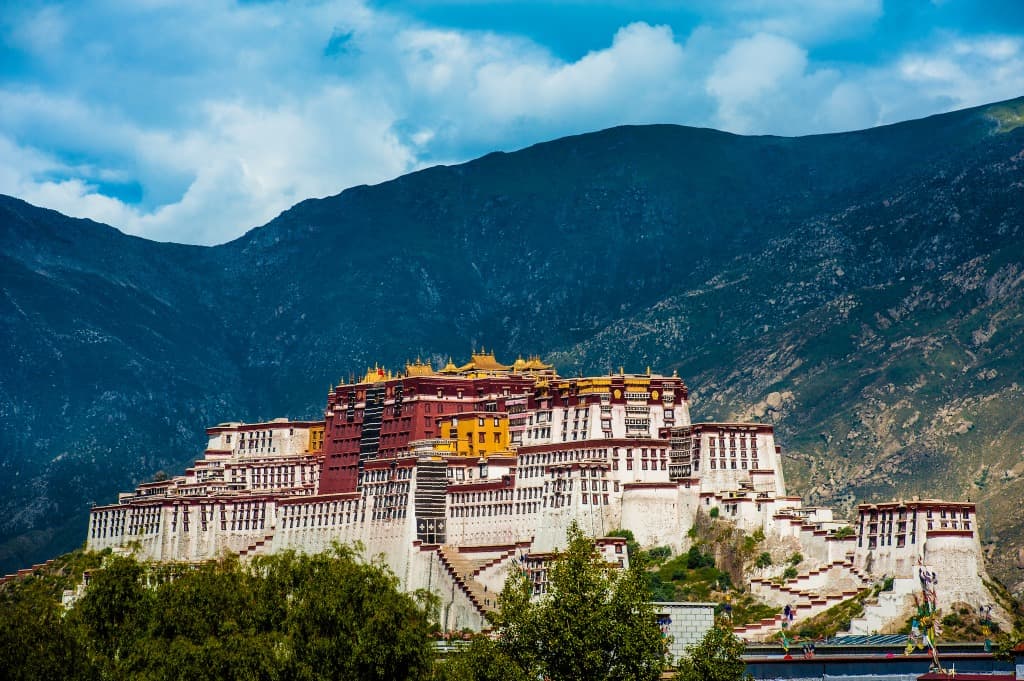
The Potala Palace dominates the Lhasa valley from the Marpari hillside, known as "the red hill." This seventeenth-century palace-fortress — or dzong — long embodied the union of spiritual and temporal power in Tibet's administration, serving as the residence of the Dalai Lamas. Listed as a UNESCO World Heritage Site since 1994, it stands today as one of the Himalaya's most emblematic monumental complexes.
Geographic note: although this page is linked to Nepal, the Potala Palace is located in Lhasa, within the Tibet Autonomous Region (China). A visit therefore requires a cross-border itinerary, frequently combined with a Nepal journey via the Friendship Highway.
Why visit the Potala Palace
- A unique architectural ensemble merging a white palace (administrative and residential function) and a red palace (religious and funerary function).
- The historic seat of successive Dalai Lamas until 1959, charged with dense political and spiritual heritage.
- A considerable collection of chapels, statues, thangkas, manuscripts and funerary stupas preserved in situ.
- A remarkable panorama over Lhasa and the surrounding valley, from a platform situated at over 3,700 meters altitude.
- A site designated as Chinese state-level cultural heritage since 1961 and inscribed on the UNESCO World Heritage List since 1994.
History of the Potala
The current palace was built starting in 1645 on the initiative of the 5th Dalai Lama, Lobsang Gyatso (1617-1682), on the site of an older building attributed to King Songtsen Gampo (7th century). Construction of the white palace was completed within a few years, while the more complex red palace would not be finished until after the 5th Dalai Lama's death, in the 1690s.
For nearly three centuries, the Potala fulfilled a dual purpose: winter residence of the Dalai Lamas and seat of the Tibetan government. This concentration of spiritual and temporal powers made it the nerve center of historic Tibet.
The palace's modern history changed course in 1959: following the Tibetan uprising, the 14th Dalai Lama fled to Dharamsala, India, where he established his government in exile. The Potala then lost its role as an active residence and became a museum of the People's Republic of China. It was protected as Chinese national heritage in 1961, then inscribed on the UNESCO World Heritage List in 1994.
What to see on your visit
The white palace (Potrang Karpo)
The oldest part of the current complex, the white palace housed the private quarters of the Dalai Lamas, administrative offices and state ceremony halls. You will see the great eastern hall, site of enthronement, as well as the former residential quarters.
The red palace (Potrang Marpo)
Built on the central and upper portion of the complex, it groups religious functions: chapels, libraries, assembly halls and above all the funerary stupas of the Dalai Lamas. That of the 5th Dalai Lama, covered with over 3,000 kilos of gold and inlaid with precious stones, constitutes its masterpiece.
Adjoining buildings
The surroundings include a traditional medicine school (at the hilltop), administrative dependencies, as well as the boundary wall punctuated by monumental gates. Below, the Lukhang park and lake complete the visit.
Practical information
- Tibet Travel Permit (TTP): mandatory for foreign visitors; it is obtained through an approved travel agency and cannot be purchased on-site.
- Visitor quota: access is limited daily and the duration of visits inside the palaces is restricted (typically around one hour). Still allow 2 to 3 hours on-site including the surroundings.
- Ticketing: advance booking is recommended, often arranged by the local agency. Entry fees vary by season (higher in peak season).
- Photography: permitted outside, generally forbidden inside chapels.
- Dress code: respect the religious dress code (shoulders and legs covered, head covering removed in chapels).
When to visit
Lhasa sits at approximately 3,650 meters altitude and the Potala's summit exceeds 3,700 meters. The most comfortable period runs from April to October, with dry climate, sunny days and mild daytime temperatures. May-June and September offer the best balance between weather, visitor numbers and light quality.
Winter (December to February) remains accessible but cold; tourist flows are then lighter. Regardless of season, allow 2 to 3 days for altitude acclimatization before climbing the stairs to the palace, which can prove demanding.
How to get there
The Potala is located in central Lhasa, immediately near the main tourist quarters (Barkhor, Jokhang). Several access options:
- On foot from the old town (15 to 25 minutes depending on starting point).
- By taxi or private vehicle provided by your local agency, recommended if fatigued from altitude.
- From Nepal: air connection Kathmandu–Lhasa, or overland route via the Friendship Highway through Gyirong, subject to current authorizations.
Visitor entry occurs through the western gate, followed by a climb via external stairs to the white palace.
Nearby attractions to combine
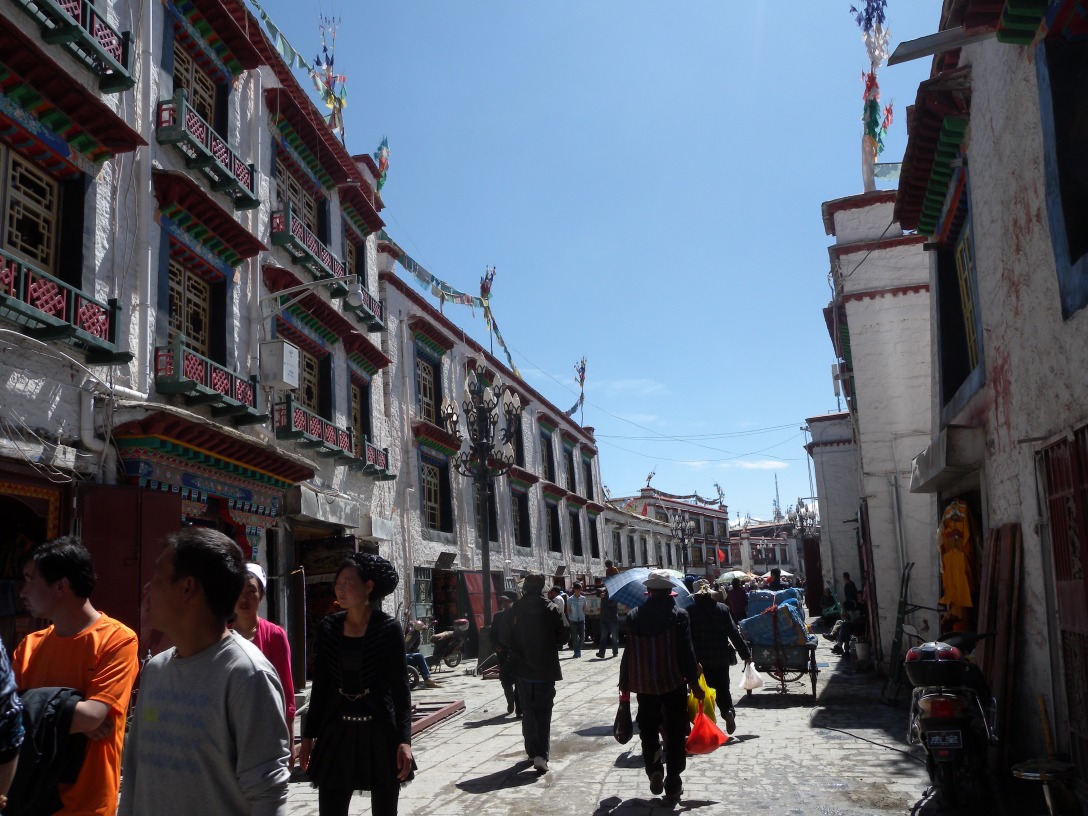
- The Jokhang Temple and the Barkhor pilgrimage circuit, a short distance from the Potala.
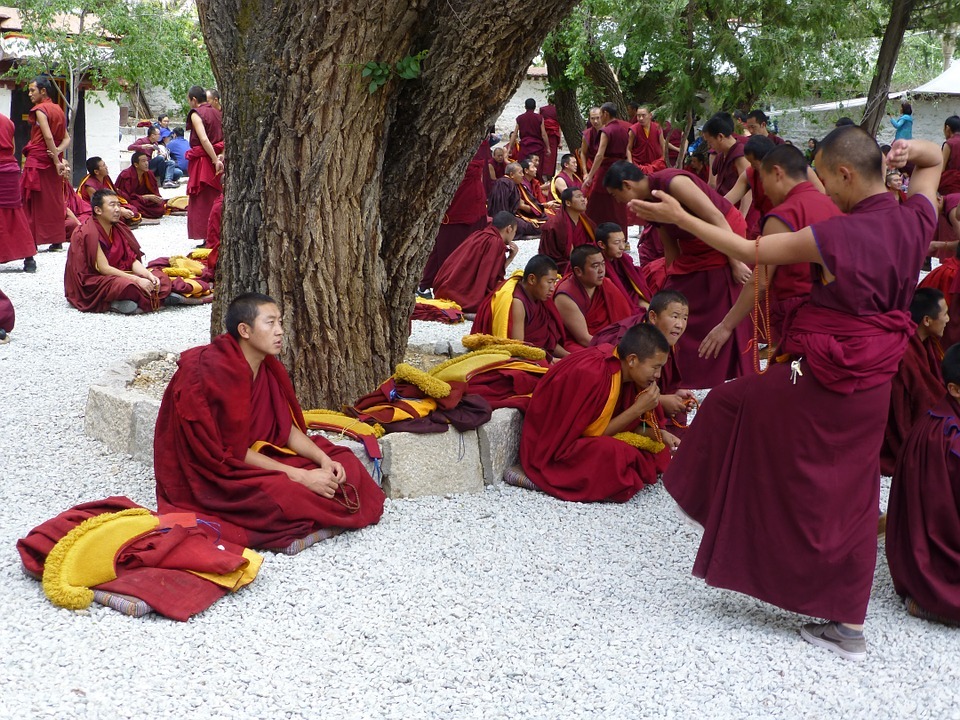
- The Sera Monastery, famous for its philosophical debates between monks.
- On the Nepal side, extend your journey with Boudhanath and Swayambhunath, two major centers of Tibetan Buddhism in the Kathmandu valley.
Frequently asked questions
Frequently asked questions
Yes. In addition to your Chinese visa, foreign visitors must obtain the Tibet Travel Permit (TTP), issued only through an approved agency, as well as a local guide for the duration of your Tibet stay.
The duration inside the palaces is regulated by authorities (often around one hour). Including the climb, surroundings and security checks, allow 2 to 3 hours for your visit.
The ascent involves several hundred steps at over 3,700 meters. A prior acclimatization period of 2 to 3 days in Lhasa is strongly recommended to avoid acute mountain sickness symptoms.
Photography is generally allowed outside and in courtyards, but forbidden inside chapels and before funerary stupas.
No. Since his flight to Dharamsala, India in 1959, the 14th Dalai Lama has lived in exile. The Potala no longer serves a residential function and operates today as a state museum.
Include the Potala in your journey
The Potala Palace naturally integrates into a combined Tibet–Nepal itinerary, centered on Lhasa, Shigatse and the Kathmandu valley. To design a route suited to your pace and altitude tolerance, consult our suggestions for Nepal travel and their Tibetan extensions.
Interested in this visit?
We can include it in your personalised itinerary.