Phewa Lake
Phewa Lake
At the foot of the Annapurna, Phewa Lake borders Pokhara and shelters the Taal Barahi temple on an island. Boat rides, mountain reflections and a cycling tour around the lake.
Phewa Lake borders the city of Pokhara to the southwest, at the foot of the Annapurna range. Nepal's second largest lake, it forms the gravitational centre of tourism in the city: the Lakeside district stretches along its eastern shore, concentrating hotels, restaurants and boat docks for rides to the island temple of Taal Barahi.
Why visit Phewa Lake
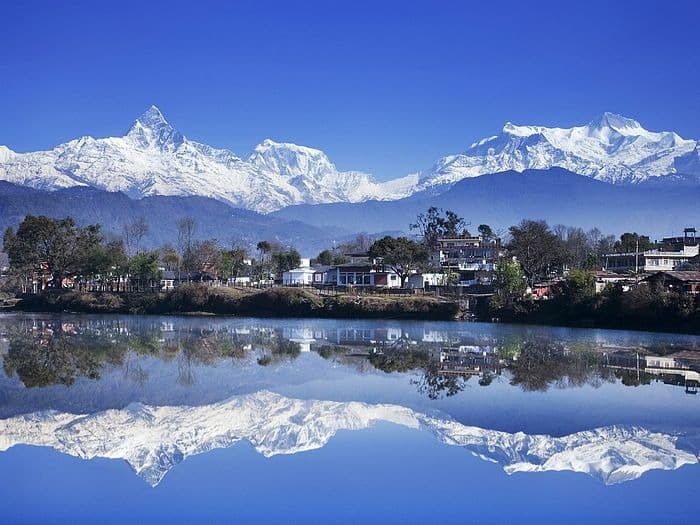
Phewa Lake offers one of the rare Nepali panoramas where you can observe the Annapurna peaks without trekking. On clear days, Machapuchare and Annapurna South are reflected on the water's surface, typically early in the morning before the wind stirs the ripples. The site combines several assets rarely found together: a mountainous setting, accessible water activities (boats, paddleboats, kayaks), a temple on an island, and a pleasant pedestrian district where you can rest after a day of hiking. It's also the logical starting point for treks to the Annapurna sanctuary, making it a natural stop on most Nepalese itineraries.
History and origins
The lake is known by several names — Phewa Tal, Fewa Lake, Phewa Lake — all designating the same semi-natural freshwater expanse, now regulated by a dam at its southern end.
A local legend tells of a fertile valley that once occupied the lake's place, populated by selfish villagers. A god, descended to earth disguised as a beggar to test their hospitality, was turned away with contempt. Divine wrath engulfed the valley under water, leaving only a pious family to escape. Geologically speaking, the lake's formation is more prosaically attributed to ancient tectonic movements, possibly combined with glacial blockage of Pokhara valley: a tale not unlike the legend.
What to see and do
Taal Barahi Temple
In the centre of the lake, a small island shelters Taal Barahi temple, a two-storey sanctuary dedicated to the goddess Barahi, a form of Durga venerated as the protector of the valley. It is one of Pokhara's most frequently visited places of worship, particularly on Saturdays, an auspicious day for offerings. It can be reached in a few minutes by boat from the Lakeside docks.
Water activities
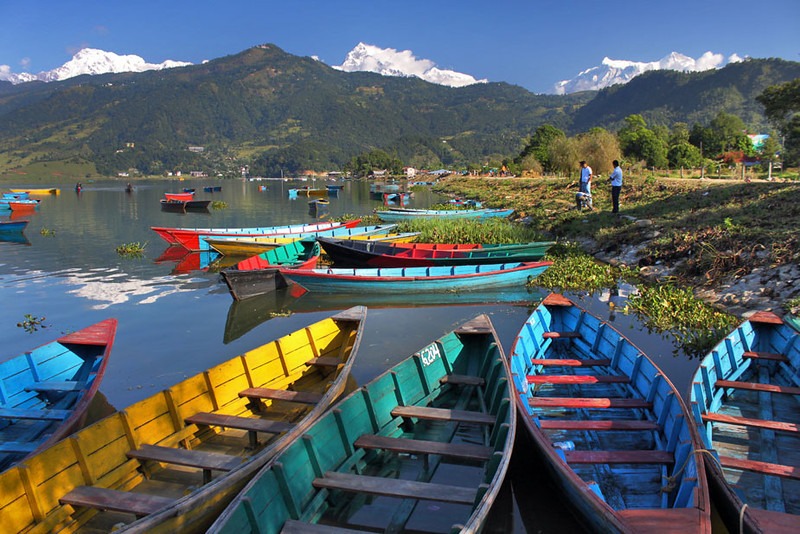
Boat rental is the lake's main attraction:
- colourful rowboats, with or without a boatman
- paddleboats for a short outing near the shores
- small sailboats and kayaks for the more experienced
The crossing to the temple and return along the western shore typically take one to two hours.
Lake characteristics
- Altitude: 742 metres
- Surface area: approximately 5.23 km²
- Average depth: 8.6 metres
- Maximum depth: 24 metres
Around the lake
The circuit of the lake, by bike or on foot, runs along rice paddies and small hamlets on the western side, quieter than the urbanised eastern shore. Allow half a day to cycle around the entire lake.
When to go
The best period runs from October to early December: the monsoon has just ended, the air is clear, and the Annapurna peaks appear clear at sunrise. March–April also offers good visibility, with the bonus of rhododendrons flowering on the surrounding hills.
From June to September, the monsoon makes reflections rare and the sky often overcast; the lake remains accessible however and the Lakeside district functions year-round. January–February mornings are cool but often offer a clear sky.
Practical information
- Free access to shores and Lakeside district, paid for boat rides (moderate rate, negotiable at the dock)
- Life jackets usually provided with the boat: check before departing
- Tour of the island and temple visit take 1 to 1.5 hours depending on crowds
- To photograph Annapurna reflections, favour sunrise from the eastern or northern shore
How to get there
Pokhara is located approximately 200 km west of Kathmandu. The lake borders directly the tourist centre: from any Lakeside hotel, it can be reached on foot in a few minutes.
From Kathmandu by air: several private airlines operate daily flights of around 30 minutes to Pokhara airport. A taxi reaches Lakeside in 15 to 20 minutes.
From Kathmandu by bus: public and tourist buses connect the two cities in approximately 7 hours, with stops. Tourist buses drop passengers immediately near the lake district.
To see in the surroundings
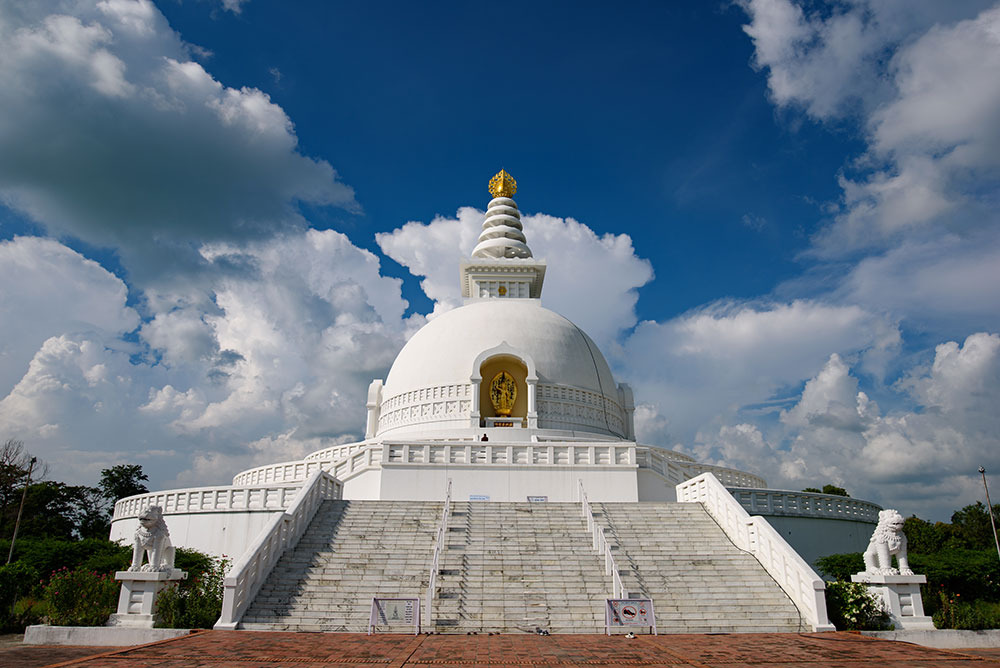
- The World Peace Pagoda, perched on the hill across from the lake, accessible by boat then 30 minutes on foot: panoramic view over Pokhara and the Annapurna.
- Sarangkot, a famous viewpoint for sunrise over the peaks, about thirty minutes' drive away.
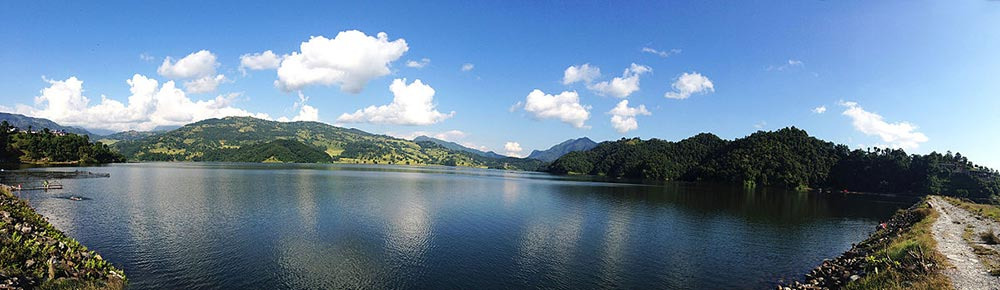
- Begnas Lake, quieter and less touristy, east of Pokhara.
- The Annapurna protected area, accessible directly from Pokhara for treks ranging from a few days to several weeks.
- The Annapurna massif, from which the lake offers one of the finest reflected views.
Frequently asked questions
Frequently asked questions
Half a day is enough for a boat ride to Taal Barahi temple and a stroll along Lakeside. Allow a full day if you add a bike ride around the lake or a climb to the World Peace Pagoda.
Swimming is not really encouraged: water quality varies by season and shores are poorly developed. Most visitors prefer water activities by boat or kayak.
Taal Barahi temple is dedicated to the goddess Barahi, a form of Durga (Shakti) venerated as protector of the lake and Pokhara valley.
Yes, on clear days, mainly from October to April. Machapuchare ("Fish Tail") and Annapurna South are most visible, with beautiful reflections in the water in the early morning hours.
No, rental is done directly at Lakeside docks, where numerous boats await visitors. Rates are negotiable on site and remain moderate.
Prepare your trip
Phewa Lake naturally fits into an itinerary combining Kathmandu, Pokhara and a trek in the Annapurna region. To build a stay tailored to your pace, consult our Nepal travel suggestions.
Nearby
Interested in this visit?
We can include it in your personalised itinerary.