Drepung Monastery
Drepung Monastery
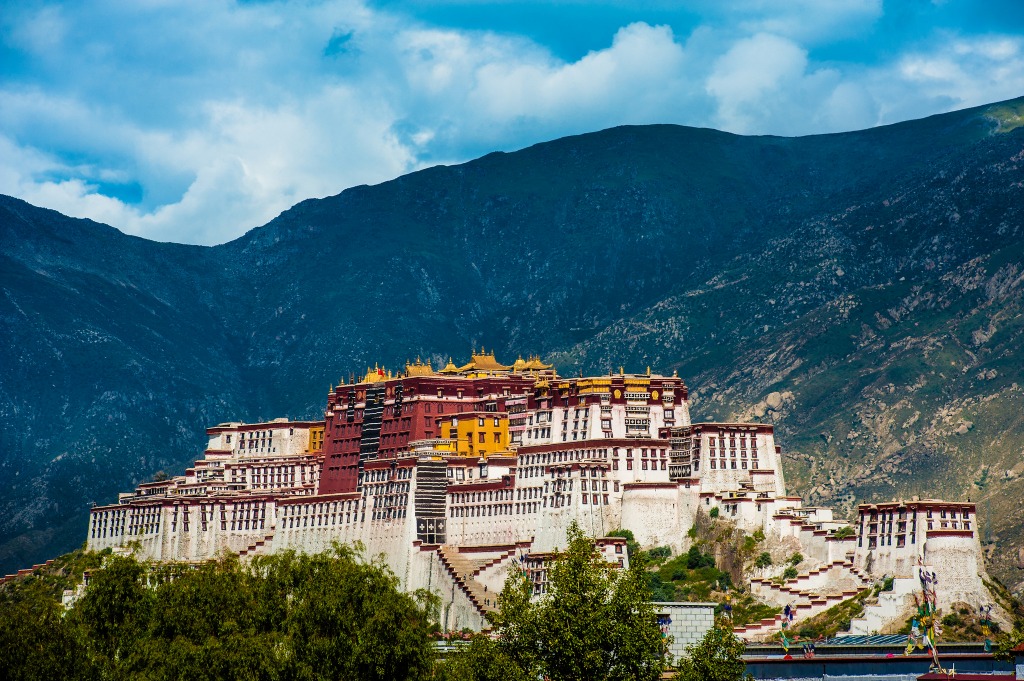
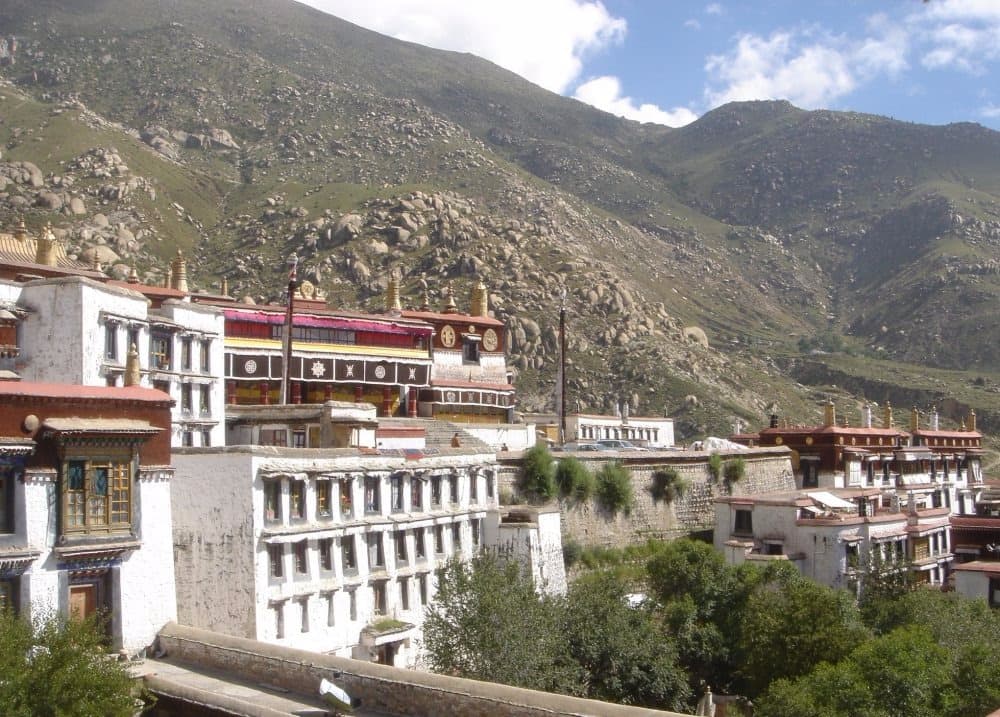
At the foot of Mount Gephel, Drepung Monastery was once the world's largest monastic complex and one of Tibet's three great Gelugpa universities.
Drepung Monastery, located at the foot of Mount Gephel some ten kilometers west of Lhasa, is one of three major monasteries of the Gelugpa school of Tibetan Buddhism. Before the exile of the 14th Dalai Lama, it housed up to 10,000 monks and was the world's largest monastic complex. Though administratively situated in the Tibet Autonomous Region (China), it frequently appears in itineraries combining Népal and Tibet, which is why it features in this guide.
Why visit Drepung Monastery
Drepung is a monastic city rather than a simple temple: a labyrinth of chapels, assembly halls, and colleges built into the mountainside, where Tibetan Buddhism has been studied and taught for six centuries. The site reveals how a great monastic university functioned: its organization into colleges, philosophical debates, transmission of texts, and the daily life of monks.
The monastery also carries substantial historical weight. It was here that the first Dalai Lamas lived and studied, before the 5th moved to the Potala Palace. For travelers extending a Népal stay with a Tibetan excursion, Drepung logically complements visits to the Jokhang and Potala in Lhasa.
History of the monastery
Drepung was founded in 1416 by Jamyang Choje, a disciple of Tsongkhapa, the reformer who established the Gelugpa school. The name Drepung means "heap of rice" in Tibetan, a translation of its Sanskrit equivalent, referring to the white mass formed by its buildings cascading down the mountainside. Along with Ganden and Sera, it constitutes one of Tibet's three great Gelugpa monastic universities.
The monastery played a significant political role. It served as the residence of the 2nd, 3rd, and 4th Dalai Lamas, and the 5th Dalai Lama lived here before establishing the Tibetan government seat at the Potala Palace in the 17th century. At its height, Drepung comprised seven colleges and over 10,000 monks, making it arguably the world's largest monastery.
The site suffered partial damage during the Cultural Revolution in the 1960s, then underwent restoration from the 1980s onward. Today, several hundred monks live and study here, under strict administrative oversight.
What to see on-site
The great colleges
Drepung is organized around four principal colleges still active today: Gomang, Loseling, Deyang, and Ngagpa. Loseling, the largest, is renowned for its teaching of Buddhist philosophy. Each college has its own assembly hall, secondary chapels, and dormitories.
The Tsogchen, the great assembly hall
This is the monastery's central building. The hall can accommodate thousands of monks during major prayers. On the upper floor, several chapels house important statues, including a representation of Maitreya (the Buddha of the future) at age twelve.
The Ganden Phodrang
This residence housed several Dalai Lamas before the construction of the Potala. The building, modest compared to the assembly halls, carries strong symbolic significance for Tibetan pilgrims.
Murals and thangkas
The chapels preserve an important collection of wall paintings, thangkas (paintings on fabric), and ancient statues. Pilgrims move clockwise while reciting mantras and leaving offerings of yak butter.
When to visit
The best period to visit Drepung extends from April to October, when the altitude (approximately 3,800 m) is more manageable and roads are passable. Tibetan winter is dry but extremely cold, with freezing nights.
The year's highlight is the Shoton Festival, held in late summer (typically August, following the Tibetan lunar calendar). At dawn, an enormous thangka of Buddha is unfurled across the hillside behind the monastery, drawing thousands of pilgrims. It is one of Tibet's most photographed religious events.
Morning hours see lighter crowds, and the light enhances the whitewashed facades clinging to the mountainside. Plan for half a day to a full day to explore the site without rushing.
Practical information
- Altitude: approximately 3,800 m; plan prior acclimatization in Lhasa.
- Duration: 3 to 5 hours for a complete tour; longer during the festival.
- Admission: paid entry, modest fee by Tibetan major site standards.
- Dress code: shoulders and knees covered; remove hats inside chapels.
- Photography: generally prohibited inside chapels, or subject to additional fees.
- Permits: a specific Tibet Travel Permit is mandatory in addition to your Chinese visa, to be arranged through an authorized agency.
Bring water, a hat, and sunscreen: UV rays are intense at this altitude.
How to get there
Drepung is located approximately 10 km west of central Lhasa. Several options are available from the city:
- By taxi: the simplest option, a 20 to 30-minute drive depending on traffic.
- By local bus: routes serve the foot of the hill, from which a 15 to 20-minute walk leads to the monastery entrance.
- With an agency: most foreign travelers visit Drepung as part of an organized tour, as the Tibetan permit requires an English-speaking guide.
To reach Lhasa from Népal, two options: the Kathmandu-Lhasa flight (approximately 1.5 hours) or the scenic overland route via the Gyirong border crossing.
What to combine nearby
Drepung is visited as a complement to Lhasa's other major sites and the surrounding valley. Notable sites include:
- Sera Monastery, famous for its outdoor philosophical debates.
- Jokhang Temple, the spiritual heart of Tibetan Buddhism, at Lhasa's center.
Should you continue your stay on the Népal side, several major sites in the Kathmandu Valley merit a visit:
- Swayambhunath, the "Monkey Temple" overlooking Kathmandu.
- Kirtipur, an ancient Newar city perched on a hilltop.
- Begnas Lake, a peaceful stop near Pokhara.
Planning your journey
To incorporate Drepung and Tibet into your itinerary, consult our tour suggestions on our Népal travel page. Our advisors can organize your Tibetan extension, permits, and combination with the must-see sites of the Kathmandu Valley.
Interested in this visit?
We can include it in your personalised itinerary.