Local Elections in Nepal
On Sunday, May 14th, the first phase of local elections took place. It was a historic event for Nepal, as these elections had not been held for 20 years.
On Sunday, May 14th, the first phase of local elections took place. It was a historic event for Nepal, as these elections had not been held for 20 years. Today, the Nepali people are ready to turn the page on 10 years of civil war that brought down the Hindu monarchy that had ruled for centuries. These elections are seen as a major step in developing democracy in this federal republic.
Elections of Great Importance
Since 2002, during the revolution, no local representatives had been elected in Nepal. Since then, bureaucrats had succeeded one another in these positions, working for themselves or their parties before the citizens. Public services were therefore unable to keep pace and fell far behind. Transportation, health, administration, and even education stagnated, making life difficult in this country. But thanks to the new constitution, local governments have been granted greater freedom of action, particularly in managing the funds allocated to them. Experts agree that elected representatives will be better equipped to fulfill their duties and break free from the corruption system that has been in place for ten years. Residents hold hope that conditions will improve and corruption will diminish.
Surprising Measures
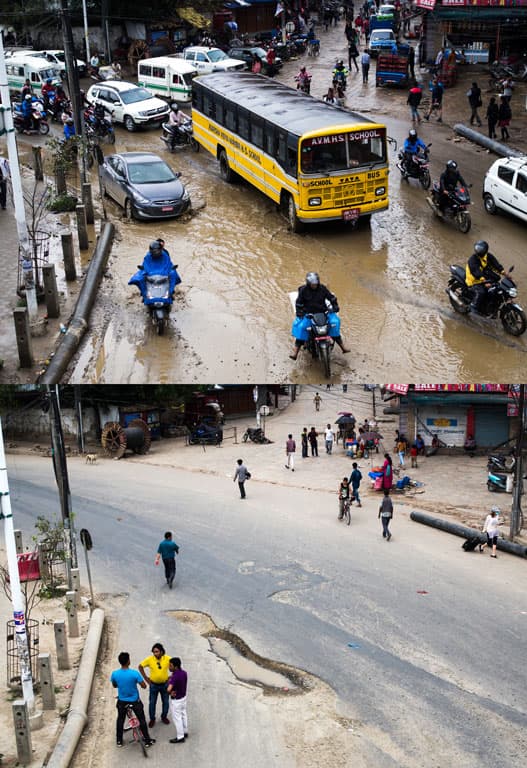
Certain rules can seem truly peculiar. For example, a tenant in Kathmandu cannot vote in Kathmandu. They must vote at their place of residence, which means where they own land. Thus, approximately 2,240,000 people left the city that weekend to return to their native villages. All 878 candidates running for election in Kathmandu had their names on a single ballot. When voting, electors choose a mayor and 4 elected officials. Among these 4 officials, at least two must be women, and among these two women, at least one must be from the "Dalit" caste, whose members are nicknamed "the untouchables". But perhaps the most surprising measure is the impossibility of traveling without a special permit on election day. Kathmandu thus plunged into a kind of lethargy, drained of all its energy and incessant engine noise. It was then possible to walk in the middle of the road, which in normal times is impossible, or at least very dangerous. The potholed roads and settled dust offered a vision worthy of a post-apocalyptic novel. Because images sometimes speak louder than words, here is a Before/After illustration.
A day of great importance for all Nepali people, who voted for the first time for the future of their country. Now it remains for the elected officials to hold up their end of the bargain and work towards improving living conditions in Nepal.
Frequently asked questions
The May 2017 local elections are the first held in Nepal in 20 years. Since 2002, a period of revolution and civil war, no local representatives had been elected, leaving unelected bureaucrats to manage local affairs. These elections mark a major step in consolidating democracy in the new federal Nepali republic.
Several rules astonish foreign observers: a tenant must vote at their place of origin and not where they reside, which caused 2,240,000 people to leave Kathmandu. Among the 4 elected local officials, at least two must be women, including one from the Dalit caste (the untouchables). Additionally, vehicle circulation was prohibited without a special permit on voting day.
The Dalit caste, nicknamed 'the untouchables', refers to the most marginalized members of Nepal's caste system. Historically discriminated against, they now benefit from mandatory representation in local governments thanks to the new constitution, which represents a significant social advance.
During Nepal's local elections, as in May 2017, travel restrictions are imposed: vehicle circulation is prohibited without a special permit on voting day. This can affect your movements in Kathmandu or other cities. It is advisable to check in advance with your travel agency if you are visiting Nepal during an election period.
These elections aim to free Nepal from a corruption system in place for ten years by entrusting the management of public funds to elected officials directly accountable to citizens. The areas most expected to improve are transportation, health, education, and administration, which had fallen considerably behind due to the lack of legitimate representatives.